
We read your photo as:
1 Create a one-week schedule planner that outlines SIX actions that need to be taken to ensure the success of the flea market.
ScanSolve AI Answer
Answer
Step-by-step solution
4 stepsHere are the answers to Question 4:
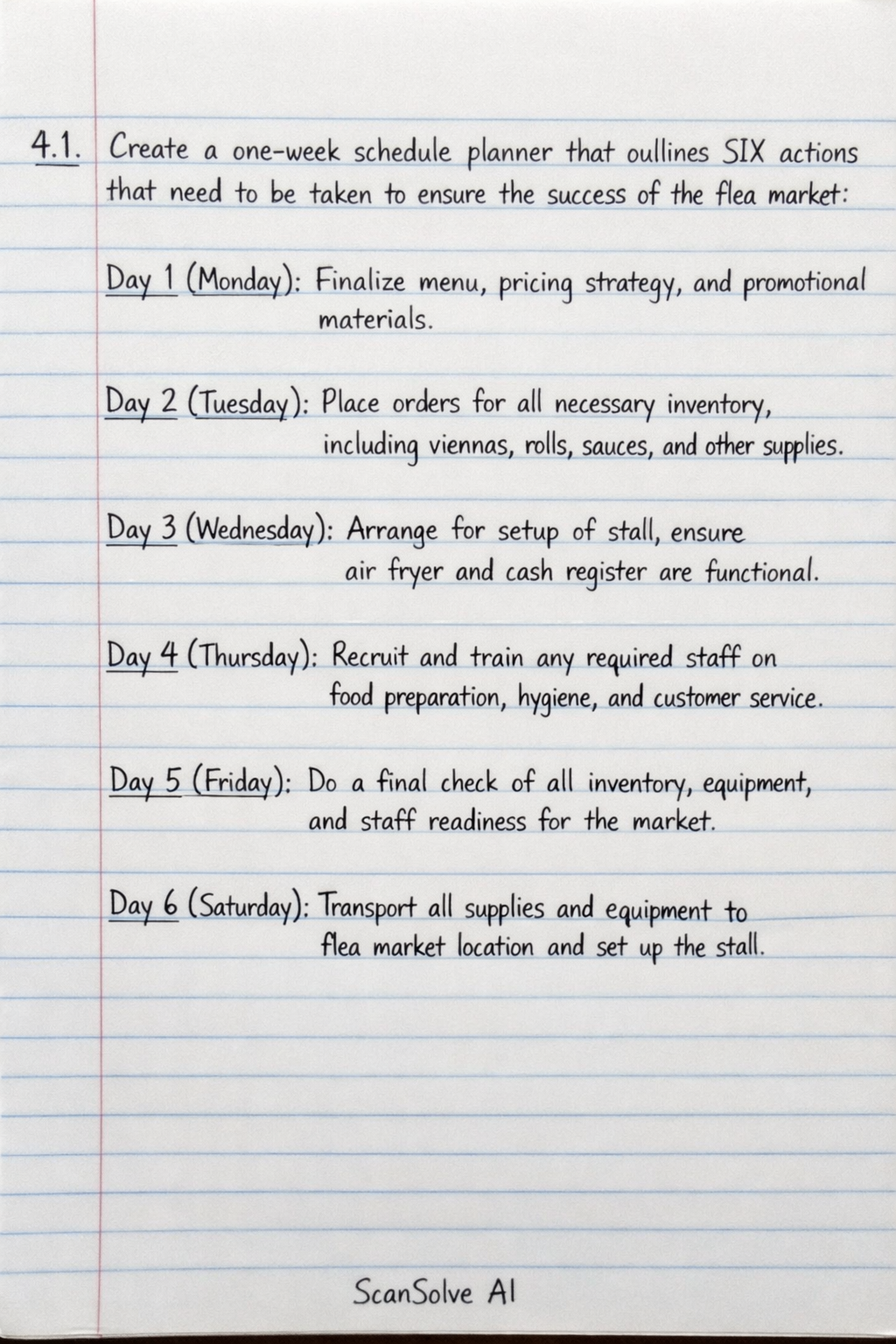
4.1 Create a one-week schedule planner that outlines SIX actions that need to be taken to ensure the success of the flea market.
- Day 1 (Monday): Finalize the menu, pricing strategy, and promotional materials.
- Day 2 (Tuesday): Place orders for all necessary inventory, including viennas, rolls, sauces, and other supplies.
- Day 3 (Wednesday): Arrange for the setup of the stall, ensuring all equipment like the air fryer and cash register are functional.
- Day 4 (Thursday): Recruit and train any required staff on food preparation, hygiene, and customer service.
- Day 5 (Friday): Conduct a final check of all inventory, equipment, and staff readiness for the market.
- Day 6 (Saturday): Transport all supplies and equipment to the flea market location and set up the stall.
4.2 Identify the task that the finance department is responsible for.
The finance department is responsible for managing the budget, calculating the costs associated with purchasing inventory (like viennas), determining selling prices to ensure profitability, and handling all financial transactions including payments to suppliers and managing sales revenue.
4.3 Name and describe the different types of power.
- Legitimate Power: This power is derived from an individual's formal position or role within an organization. People comply because they recognize the authority of the position.
- Expert Power: This power comes from an individual's specialized knowledge, skills, or expertise that others value. People follow because they believe the expert has superior understanding.
- Referent Power: This power is based on an individual's personal charisma, likability, and the respect or admiration they inspire in others. People comply because they identify with or admire the person.
4.4.1 Give FIVE inventory items of raw materials, work in progress, support, repair and maintenance that Ekasie Vibes will need.
- Viennas (raw material)
- Hot dog rolls (raw material)
- Sauces (e.g., ketchup, mustard) (raw material)
- Onions (raw material)
- Serviettes/Napkins (support material)
4.4.2 Name and explain THREE aspects that Ekasi Vibes should cover in their control policy.
- Quality Control: This aspect ensures that the hot dogs are prepared consistently to a high standard, using fresh ingredients and maintaining proper hygiene, to satisfy customers and build a good reputation.
- Inventory Control: This involves managing the stock levels of viennas, rolls, and other supplies to prevent shortages during peak times and avoid spoilage or waste due to excess stock.
- Financial Control: This covers monitoring sales, expenses, and cash flow to ensure the business is profitable, prevent theft, and accurately track all financial transactions.
4.4.3 Calculate the total annual cost.
Given:
Annual Demand () = 5 760 units
Cost per unit () = R6
Ordering Cost per order () = R4
Holding Cost per unit per year () = R1,25
Quantity ordered per time () = 192 units
The total annual cost (TAC) is calculated as the sum of the annual purchase cost, annual ordering cost, and annual holding cost.
Calculate Annual Purchase Cost
Calculate Annual Ordering Cost
Calculate Annual Holding Cost
Calculate Total Annual Cost
The total annual cost is .
4.5 Identify and explain the different variables that should be considered when purchasing.
- Quality: This refers to the standard and specifications of the goods or services being purchased. It's crucial to ensure that the purchased items meet the required quality to satisfy customers and maintain the business's reputation.
- Quantity: This involves determining the exact amount of goods needed to meet demand without incurring excessive holding costs or running out of stock. It requires careful forecasting and inventory management.
- Price: This is the cost of the goods or services. Buyers must seek competitive prices to ensure profitability while not compromising on quality. It involves negotiation and comparing different suppliers.
- Delivery/Lead Time: This is the time taken from placing an order to receiving the goods. It's important to consider lead time to ensure timely delivery, especially for perishable goods or items needed for a specific event like a flea market.
Try one yourself
A new problem that tests the same skill.
Still stuck on this one?
Ask a follow-up, and the answer starts from this question.
More Economics Questions
Handwritten Step-by-Step Solution
Get this as a handwritten image on WhatsApp — like a tutor wrote it for you.
Try on WhatsApp