
We read your photo as:
Acheng faces challenges including limited resources, reliance on rain-fed agriculture, lack of storage, and poor market access. a) How can parents manage this situation? b) What further recommendation
ScanSolve AI Answer
The "condition" or "situation" refers to the challenges Acheng faces, including limited resources, reliance on rain-fed agriculture, lack of storage, poor market access, and the resulting potential for food insecurity and malnutrition.
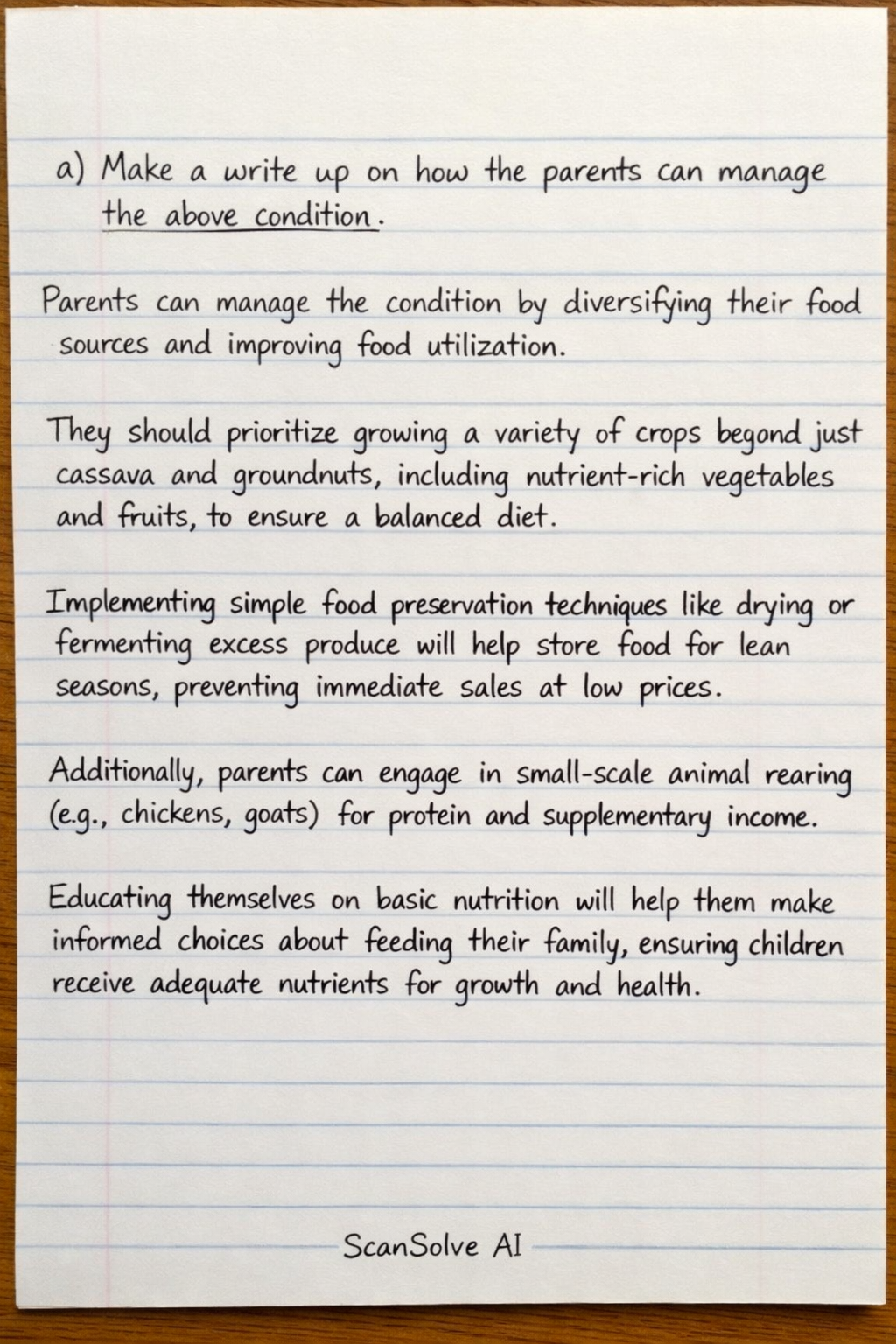
a) Make a write up on how the parents can manage the above condition
Parents can manage the condition by diversifying their food sources and improving food utilization. They should prioritize growing a variety of crops beyond just cassava and groundnuts, including nutrient-rich vegetables and fruits, to ensure a balanced diet. Implementing simple food preservation techniques like drying or fermenting excess produce will help store food for lean seasons, preventing immediate sales at low prices. Additionally, parents can engage in small-scale animal rearing (e.g., chickens, goats) for protein and supplementary income. Educating themselves on basic nutrition will help them make informed choices about feeding their family, ensuring children receive adequate nutrients for growth and health.
b) Give any recommendation for further management of the condition
Further management of the condition requires external support and long-term strategies. Acheng should seek access to agricultural extension services for training on improved farming techniques, pest management, and soil conservation methods. Connecting with farmer cooperatives or community savings groups can provide access to credit for purchasing improved seeds and tools, and facilitate better market access for her produce. Advocating for improved local infrastructure, such as better roads, would also significantly help in transporting produce to markets and getting fair prices.
c) With reasons, design a diet that can be used to manage the situation
Here is a sample diet designed to manage the situation, focusing on local and affordable foods:
- Breakfast: Cassava porridge with groundnut paste.
- Reason: Cassava provides essential carbohydrates for energy. Groundnut paste adds protein and healthy fats, crucial for growth and sustained energy.
- Lunch: Boiled cassava served with a stew of beans (or more groundnuts) and local green leafy vegetables (e.g., amaranth, spinach).
- Reason: Cassava remains the primary energy source. Beans or groundnuts provide vital plant-based protein. Green leafy vegetables are rich in vitamins (like Vitamin A and C) and minerals (like iron), which are essential for immunity and preventing deficiencies.
- Dinner: Roasted sweet potatoes or boiled maize, served with a small portion of fish or chicken (if available from small-scale rearing) and a side of cooked vegetables.
- Reason: Sweet potatoes or maize offer alternative carbohydrate sources. Fish or chicken provide high-quality animal protein. Vegetables continue to supply necessary vitamins and minerals.
Still stuck on this one?
Ask a follow-up, and the answer starts from this question.
More Economics Questions
Handwritten Step-by-Step Solution
Get this as a handwritten image on WhatsApp — like a tutor wrote it for you.
Try on WhatsApp