
We read your photo as:
Discuss the structure of the South African health system, the aims of the NHI, and its potential benefits.
ScanSolve AI Answer
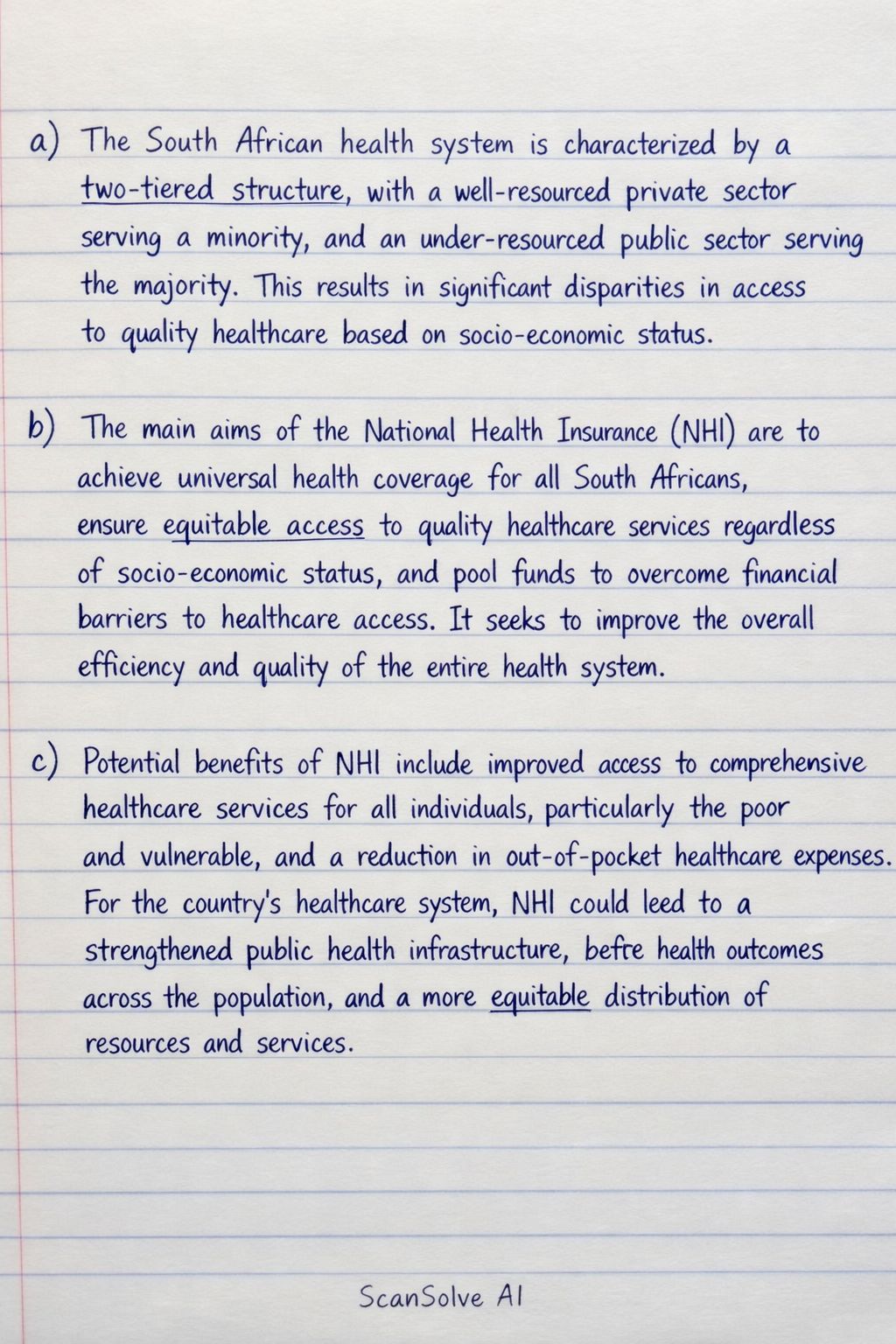
a) The South African health system is characterized by a two-tiered structure, with a well-resourced private sector serving a minority, and an under-resourced public sector serving the majority. This results in significant disparities in access to quality healthcare based on socio-economic status.
b) The main aims of the National Health Insurance (NHI) are to achieve universal health coverage for all South Africans, ensure equitable access to quality healthcare services regardless of socio-economic status, and pool funds to overcome financial barriers to healthcare access. It seeks to improve the overall efficiency and quality of the entire health system.
c) Potential benefits of NHI include improved access to comprehensive healthcare services for all individuals, particularly the poor and vulnerable, and a reduction in out-of-pocket healthcare expenses. For the country's healthcare system, NHI could lead to a strengthened public health infrastructure, better health outcomes across the population, and a more equitable distribution of resources and services.
Still stuck on this one?
Ask a follow-up, and the answer starts from this question.
More Economics Questions
Handwritten Step-by-Step Solution
Get this as a handwritten image on WhatsApp — like a tutor wrote it for you.
Try on WhatsApp