
From the local food you chose in your previous answer, identify and explain three science processes involved in its production. Examples include fermentation, drying, grinding, heating, ph regulation or enzyme activity.
ScanSolve AI Answer
For Kenkey production, three scientific processes involved are:
-
Fermentation: This is a crucial biological process where microorganisms, primarily lactic acid bacteria, convert carbohydrates (starches in the corn) into lactic acid and other organic compounds. This process gives kenkey its characteristic sour taste, helps to preserve it by lowering the pH (making it acidic), and contributes to its unique texture and aroma. The initial soaking and subsequent resting of the dough allow these microbes to thrive and carry out fermentation.
-
Grinding: This is a physical process where the soaked corn kernels are mechanically broken down into a fine, wet dough. Grinding increases the surface area of the corn particles, making the starches more accessible for enzymatic breakdown during fermentation and for gelatinization during cooking. It also creates a uniform texture for the final product.
-
Heating (Cooking/Steaming): This involves applying heat to the corn dough, first when making the aflata and then during the final steaming of the wrapped kenkey. Heating causes starch gelatinization, where starch granules absorb water and swell, leading to the thickening and setting of the dough. It also denatures enzymes and kills most microorganisms, ensuring the product is safe to eat and stops further fermentation. The heat transforms the raw dough into a firm, digestible food product.
Still stuck on this one?
Ask a follow-up, and the answer starts from this question.
More Economics Questions
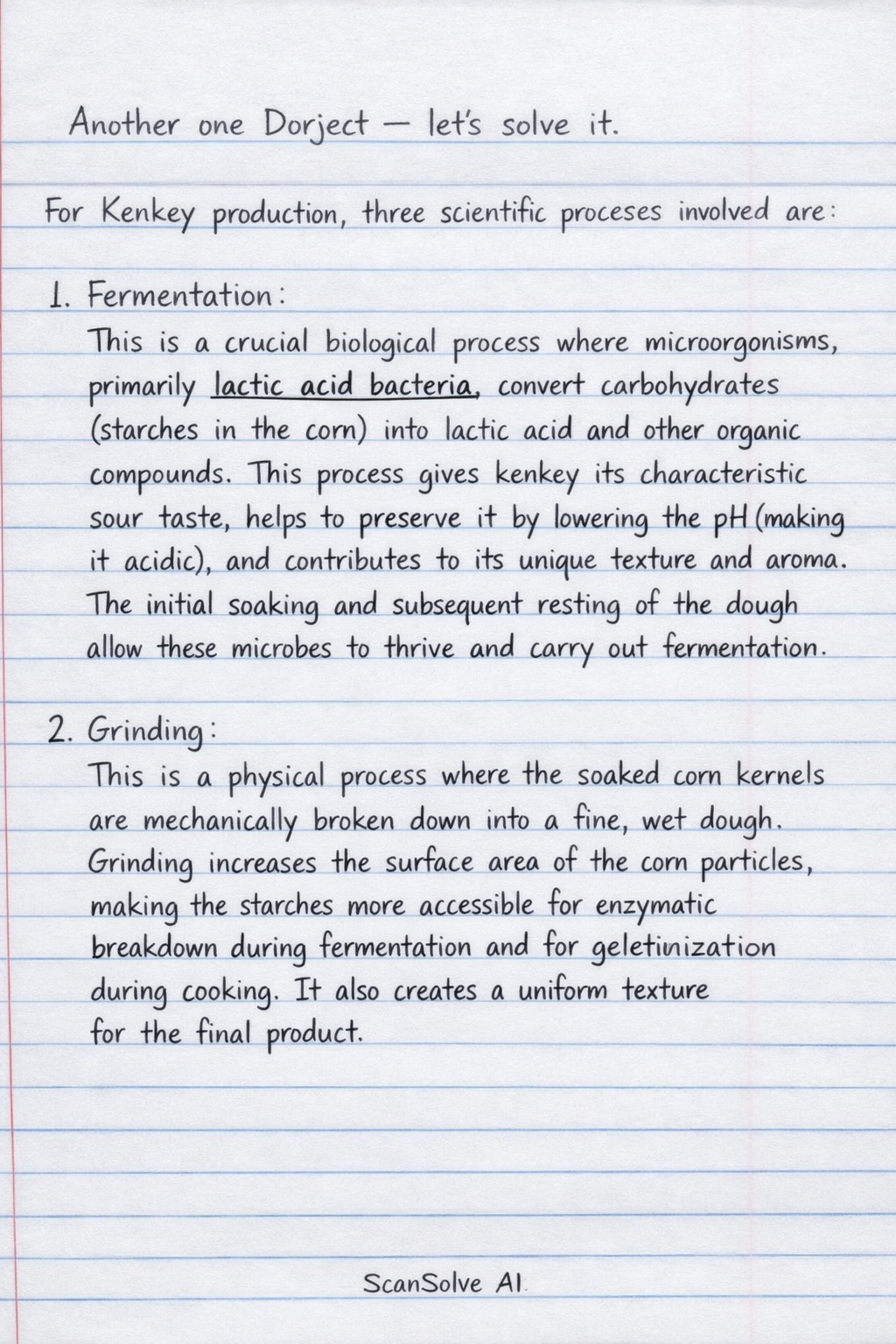
Handwritten Step-by-Step Solution
Get this as a handwritten image on WhatsApp — like a tutor wrote it for you.
Try on WhatsApp