
We read your photo as:
Identify four challenges associated with human resource development and four ways the government can use tourism to drive development in Ghana.
Economics
ScanSolve AI Answer
Here are the solutions to the questions from the image:
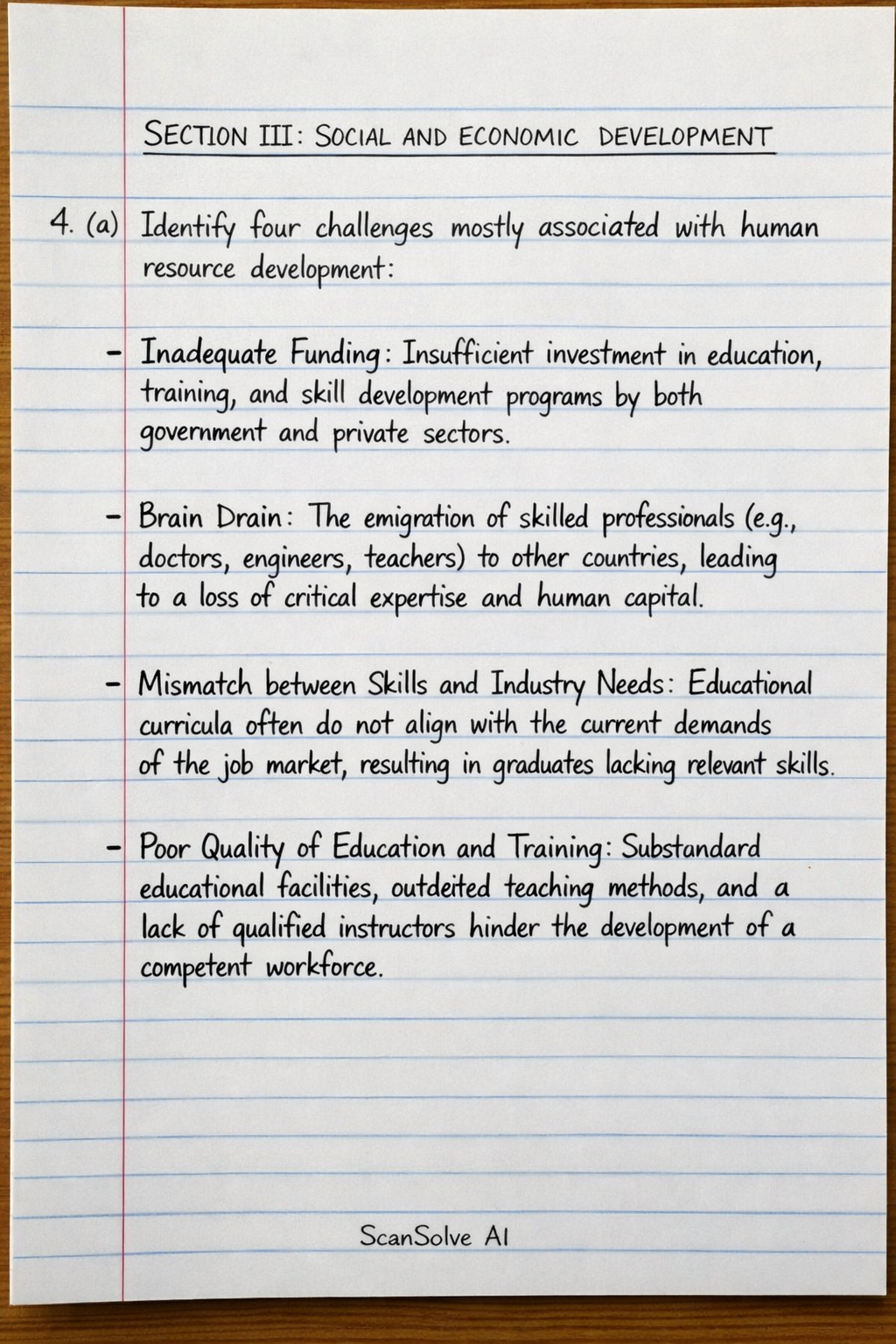
SECTION III: SOCIAL AND ECONOMIC DEVELOPMENT
4. (a) Identify four challenges mostly associated with human resource development:
- Inadequate Funding: Insufficient investment in education, training, and skill development programs by both government and private sectors.
- Brain Drain: The emigration of skilled professionals (e.g., doctors, engineers, teachers) to other countries, leading to a loss of critical expertise and human capital.
- Mismatch between Skills and Industry Needs: Educational curricula often do not align with the current demands of the job market, resulting in graduates lacking relevant skills.
- Poor Quality of Education and Training: Substandard educational facilities, outdated teaching methods, and a lack of qualified instructors hinder the development of a competent workforce.
4. (b) Identify four ways in which your government can use the tourism industry to drive development in Ghana:
- Infrastructure Development: Invest in improving roads, airports, hotels, and other facilities to support tourism, which also benefits local communities and other economic sectors.
- Job Creation: Promote tourism to create direct and indirect employment opportunities for locals in hospitality, transport, arts, and crafts, reducing unemployment.
- Foreign Exchange Earnings: Attract international tourists whose spending brings in foreign currency, boosting the national economy and improving the balance of payments.
- Preservation of Culture and Environment: Use tourism revenue and interest to fund the preservation of cultural heritage sites, traditional practices, and natural ecosystems, which are valuable national assets.
5. (a) As an individual, in what four ways can you contribute to the development of your community?
- Active Participation in Community Projects: Volunteer time and skills for local initiatives such as clean-up exercises, school renovations, or health awareness campaigns.
- Paying Taxes and Levies: Fulfill civic duties by paying taxes and local levies, which provide funds for public services and infrastructure development in the community.
- Adhering to Laws and Regulations: Maintain peace and order, respect community rules, and report criminal activities to create a safe and conducive environment for development.
- Promoting Education and Skill Development: Encourage children to attend school, mentor younger community members, or share personal skills to empower others.
5. (b) In your view, state four factors you will consider in the community decision-making process.
- Community Needs and Priorities: Identify the most pressing issues and what the community truly requires for improvement, based on direct input from residents.
- Resource Availability: Assess the financial, human, and material resources that can be realistically mobilized to implement a particular decision or project.
- Stakeholder Engagement and Participation: Ensure that all relevant groups, including marginalized populations, have a voice and are actively involved in the decision-making process.
- Sustainability and Long-Term Impact: Evaluate whether the decision will have lasting positive effects and if it is environmentally, socially, and economically viable for the community in the long run.
Was this helpful?
Still stuck on this one?
Ask a follow-up, and the answer starts from this question.
Got a different question?Ask your own question
More Economics Questions
QExplain how to develop tourist sites, list four in Ghana and state three challenges faced by the…QWhat is human resource development Discuss four factors/means that can be adopted to make human…QState 4 strategies for training manpower in Nigeria. Explain four problems encountered by Nigerian…QHow tourism and leisure can be used to promote economic growth in GhanaQOutline any four challenges in extractive resource in Ghana. 2. Highlight five natural resources you…
Handwritten Step-by-Step Solution
Get this as a handwritten image on WhatsApp — like a tutor wrote it for you.
Try on WhatsApp