
If the price rises by 3% the quantity demanded falls by 1.5%.calculate and interpret the price elasticity of demand.
Economics
ScanSolve AI Answer
Answer
Step-by-step solution
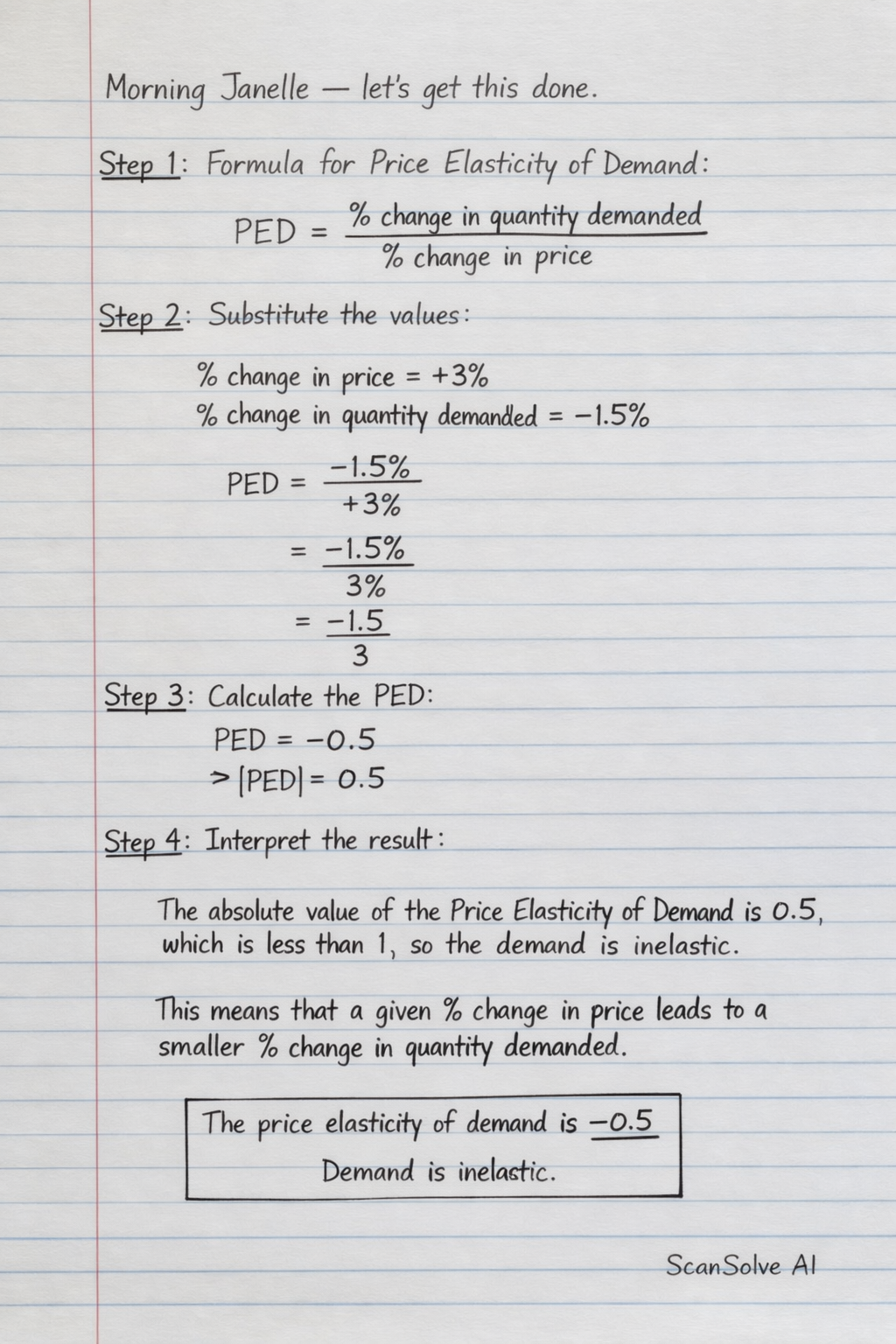
4 stepsState the formula for Price Elasticity of Demand (PED).
Substitute the given values into the formula.
The price rises by 3%, so the % change in price is .
The quantity demanded falls by 1.5%, so the % change in quantity demanded is .Calculate the Price Elasticity of Demand.
The absolute value of PED is 0.5.
Interpret the result.
Since the absolute value of the Price Elasticity of Demand is 0.5, which is less than 1, the demand is inelastic. This means that a given percentage change in price leads to a smaller percentage change in quantity demanded.
The price elasticity of demand is . Demand is inelastic.
Was this helpful?
Try one yourself
A new problem that tests the same skill.
Still stuck on this one?
Ask a follow-up, and the answer starts from this question.
Got a different question?Ask your own question
More Economics Questions
QAt a price of 50 per unit, the Qty demand of a commodity is 1000 units. When its price falls by 10%…QGiven a table showing price and quantity demanded, calculate the price elasticity of demand using…QCalculate the price elasticity of demand given initial and final prices and quantities.QWhat is price elasticity of demand?QUnderstand the concept of demand elasticity.
Browse by topic:Microeconomics
Handwritten Step-by-Step Solution
Get this as a handwritten image on WhatsApp — like a tutor wrote it for you.
Try on WhatsApp