
We read your photo as:
Explain the paradox of value and the factors influencing a producer's pricing decisions.
ScanSolve AI Answer
Here are the answers to the questions from the image:
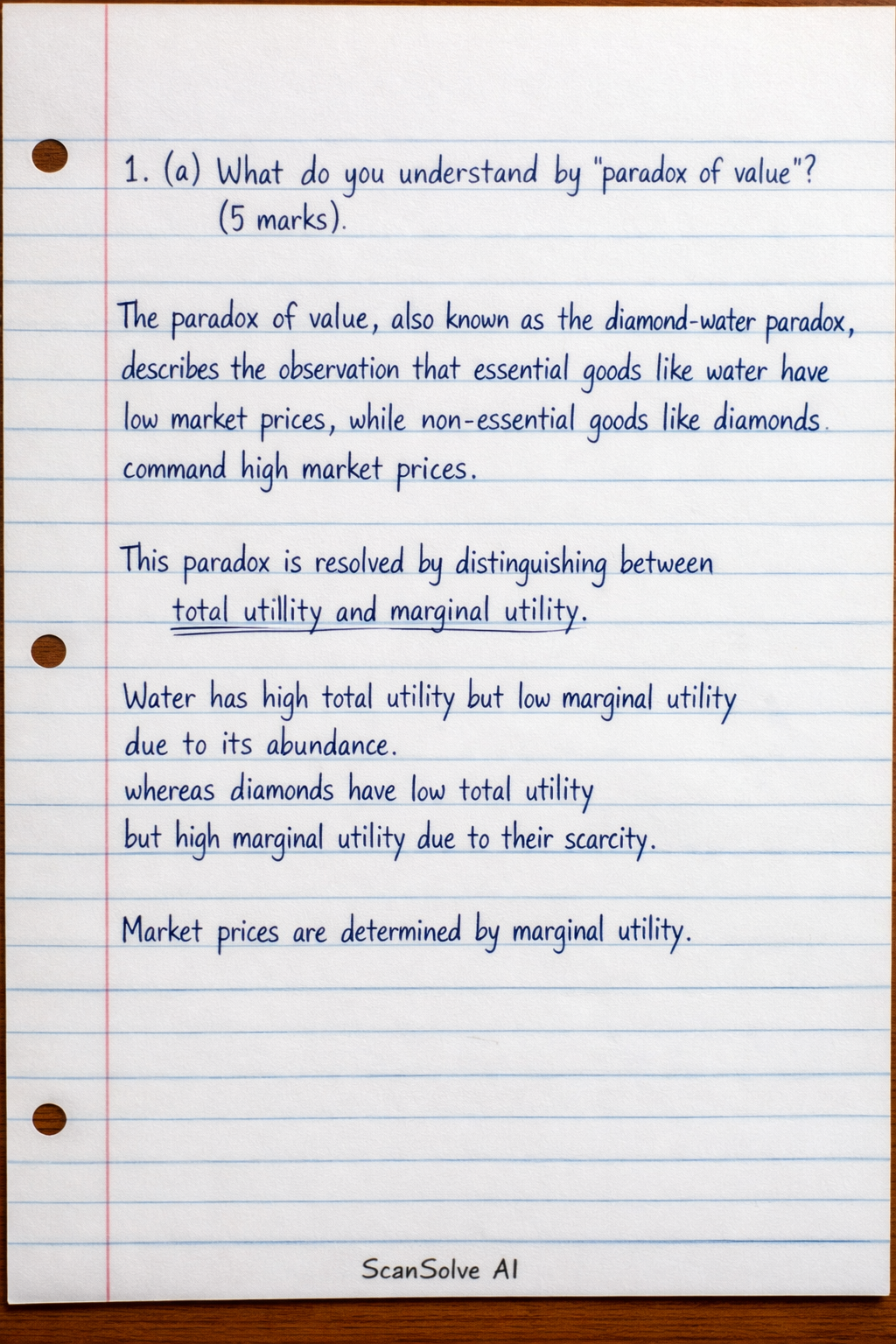
1. (a) What do you understand by "paradox of value"? (5 marks)
The paradox of value, also known as the diamond-water paradox, describes the observation that essential goods like water have low market prices, while non-essential goods like diamonds command high market prices. This paradox is resolved by distinguishing between total utility and marginal utility. Water has high total utility but low marginal utility due to its abundance, whereas diamonds have low total utility but high marginal utility due to their scarcity. Market prices are determined by marginal utility.
1. (b) Explain the factors that will guide a producer in setting the price of his/her product (5 marks)
A producer considers several factors when setting a product's price. These include the cost of production (covering all expenses to ensure profit), the demand for the product and its price elasticity (how sensitive quantity demanded is to price changes), the level of competition in the market (prices of rival products), and the producer's business objectives (e.g., profit maximization, market share, or survival).
Still stuck on this one?
Ask a follow-up, and the answer starts from this question.
More Economics Questions
Handwritten Step-by-Step Solution
Get this as a handwritten image on WhatsApp — like a tutor wrote it for you.
Try on WhatsApp