
We read your photo as:
Explain the role of government-owned businesses, the rationale behind not taxing essential goods, and the benefits of production subsidies for consumers.
ScanSolve AI Answer
1)
Two businesses owned by the South African government are:
- Eskom (electricity utility)
- Transnet (freight rail, ports, and pipelines)
2)
The government generally does not charge excise duty on essential goods and services. This is because excise duties are typically levied on specific goods like luxury items, tobacco, alcohol, or fuel, often to generate revenue, discourage consumption of harmful products, or internalize negative externalities. Applying excise duty to essential goods would disproportionately burden low-income households and could make basic necessities unaffordable, which would go against the government's goal of promoting welfare and economic stability.
3)
Consumers will benefit from production subsidies in the following ways:
- Lower prices: Subsidies reduce the production costs for firms, which often leads to a decrease in the market price of the subsidized good. This makes the product more affordable for consumers.
- Increased availability: With lower production costs and potentially higher profits, producers are incentivized to increase the supply of the good. This means more of the product is available in the market for consumers.
- Improved quality or innovation: In some cases, subsidies can allow firms to invest more in research and development or quality improvements without significantly raising prices, ultimately benefiting consumers with better products.
Still stuck on this one?
Ask a follow-up, and the answer starts from this question.
More Economics Questions
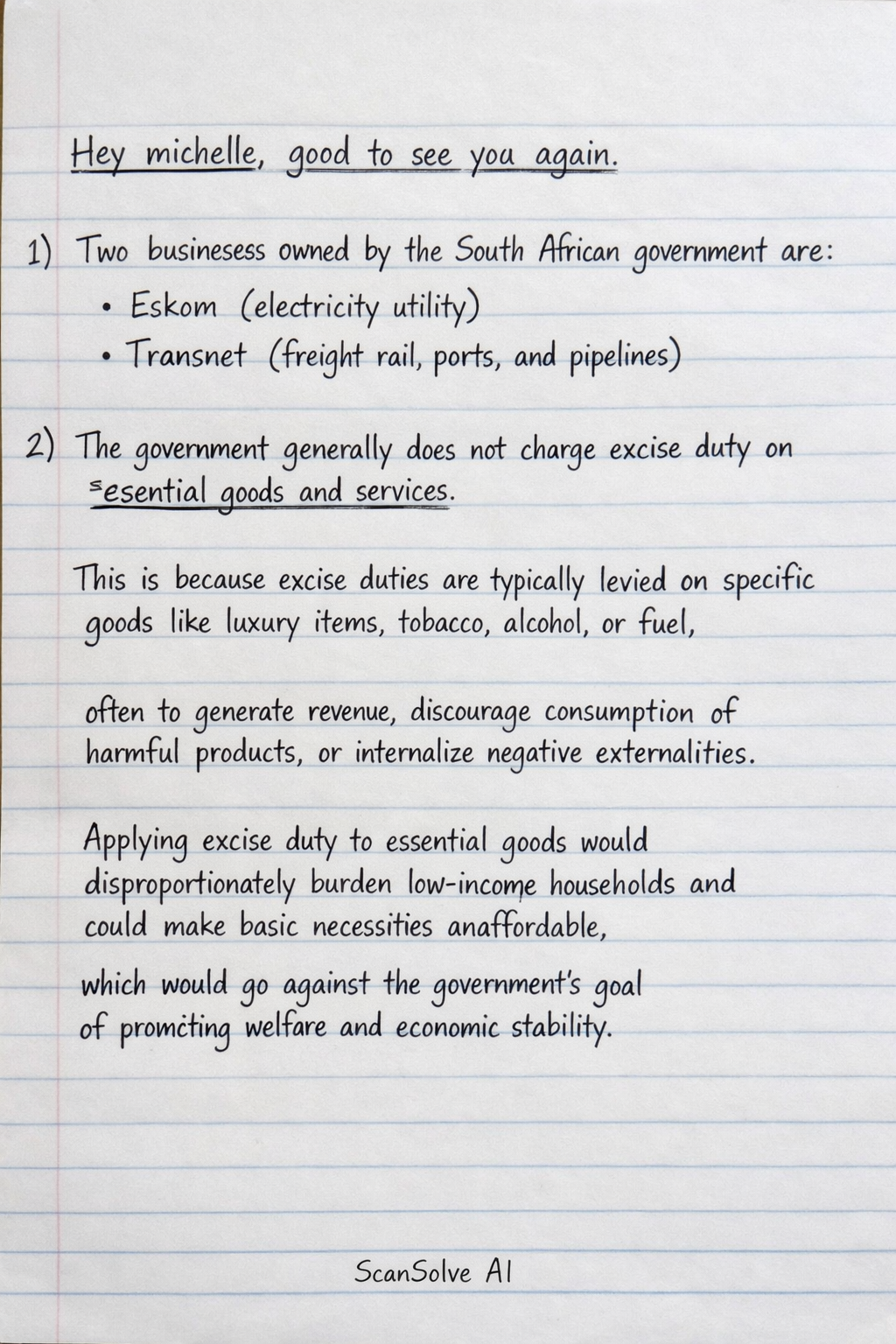
Handwritten Step-by-Step Solution
Get this as a handwritten image on WhatsApp — like a tutor wrote it for you.
Try on WhatsApp