
We read your photo as:
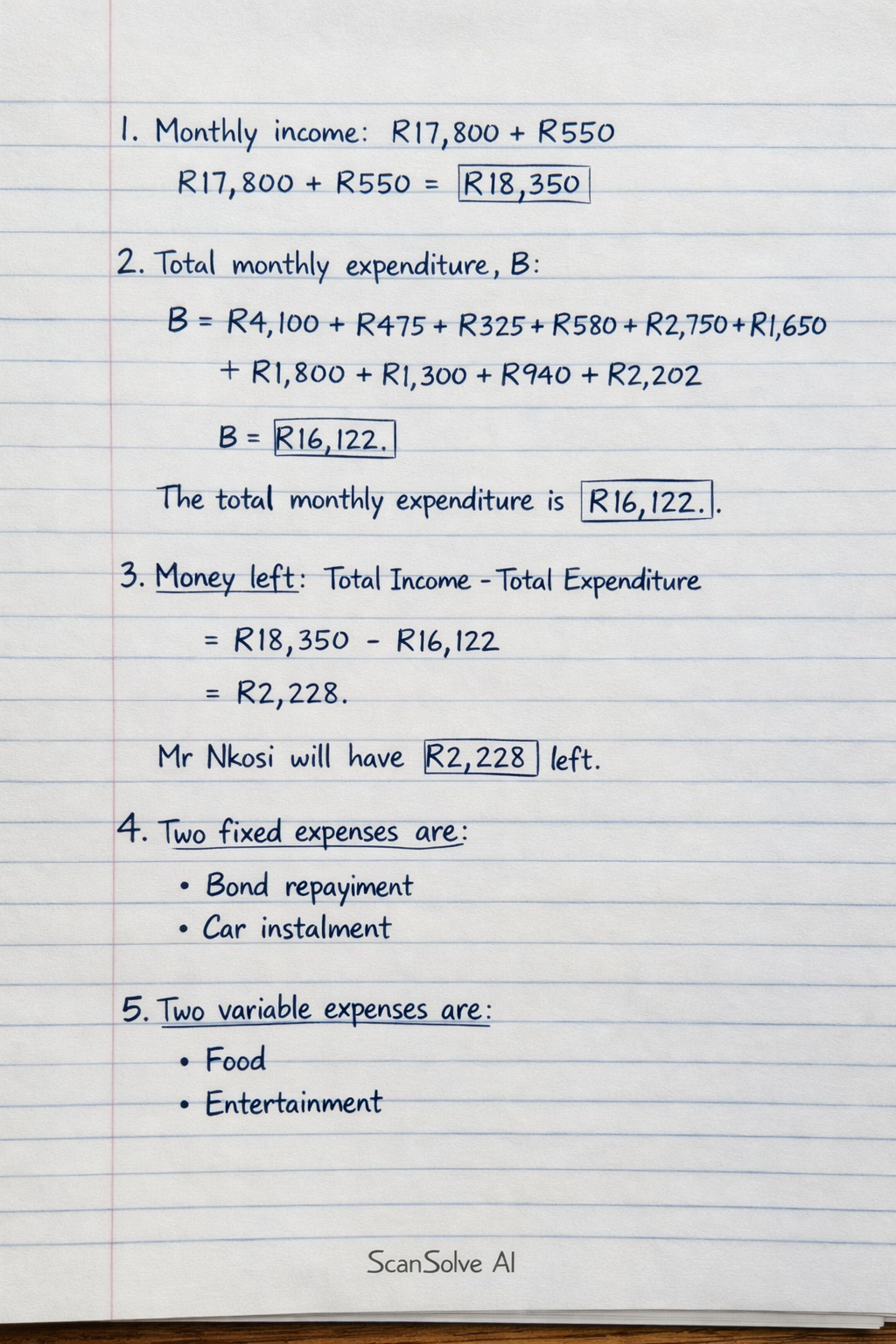
The monthly income of R18 350 was calculated by adding the Salary after deductions (R17 800) and the Housing subsidy (R550).
ScanSolve AI Answer
Here are the answers to your questions:
1. The monthly income of R18 350 was calculated by adding the Salary after deductions (R17 800) and the Housing subsidy (R550).
2. To determine B, the total monthly expenditure, we sum all the expenditure items:
The total monthly expenditure is .
3. To determine how much money Mr Nkosi will have left, we subtract the total expenditure from the total income:
Mr Nkosi will have left.
4. Two fixed expenses are:
- Bond repayment
- Car instalment
5. Two variable expenses are:
- Food
- Entertainment
6. Mr Nkosi can reduce his Entertainment expenditure. He can decrease this by reducing the frequency of outings, choosing cheaper activities, or opting for free entertainment at home.
7. One thing that could have been deducted from Mr Nkosi's salary in order to calculate "salary after deductions" is Income tax (PAYE).
Still stuck on this one?
Ask a follow-up, and the answer starts from this question.
More Economics Questions
Handwritten Step-by-Step Solution
Get this as a handwritten image on WhatsApp — like a tutor wrote it for you.
Try on WhatsApp