
We read your photo as:
Drama is a mode of fictional representation through performance, where actors portray characters and tell a story, typically on a stage before an audience. It involves dialogue, action, and ofte
ScanSolve AI Answer
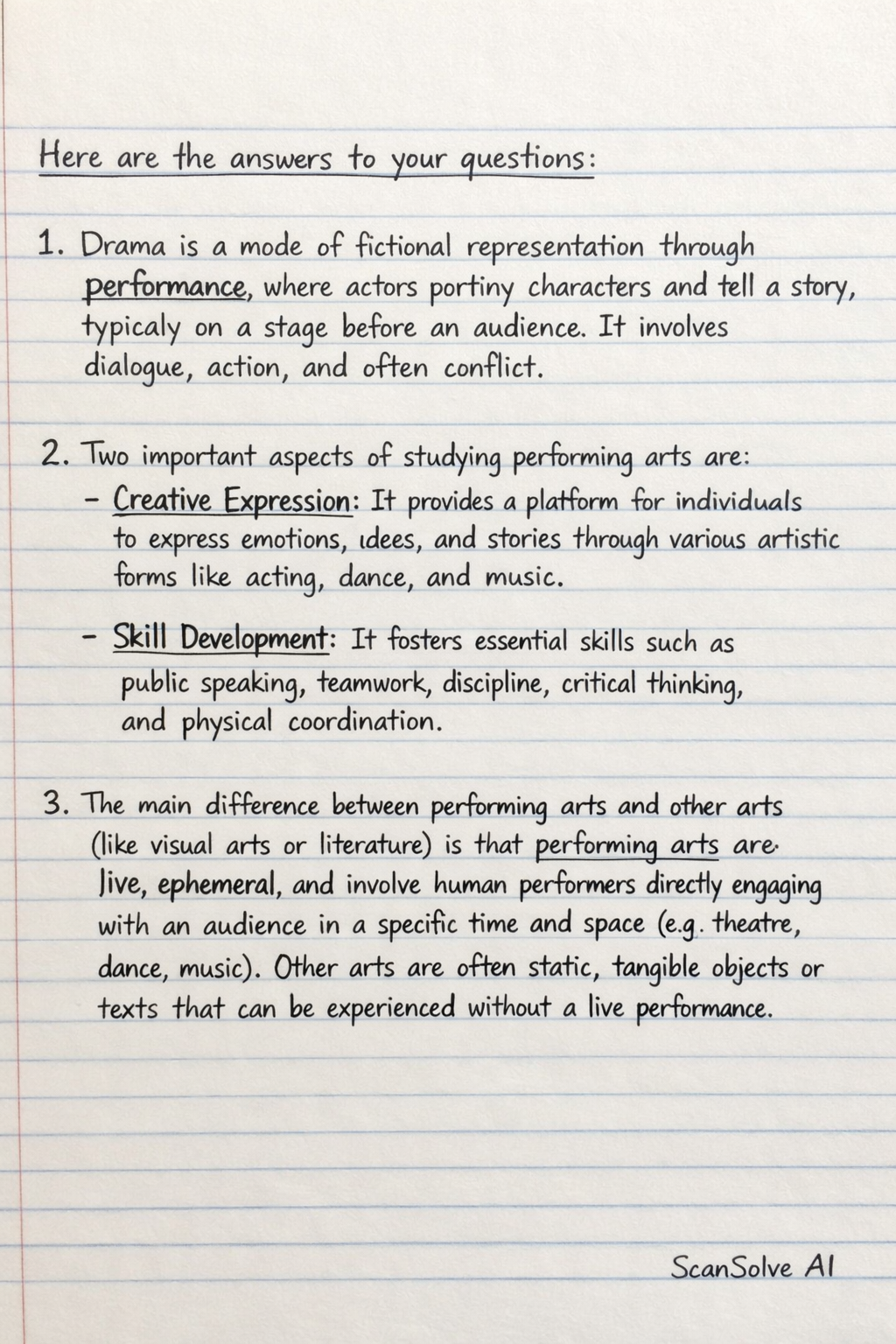
Here are the answers to your questions:
-
Drama is a mode of fictional representation through performance, where actors portray characters and tell a story, typically on a stage before an audience. It involves dialogue, action, and often conflict.
-
Two important aspects of studying performing arts are:
- Creative Expression: It provides a platform for individuals to express emotions, ideas, and stories through various artistic forms like acting, dance, and music.
- Skill Development: It fosters essential skills such as public speaking, teamwork, discipline, critical thinking, and physical coordination.
-
The main difference between performing arts and other arts (like visual arts or literature) is that performing arts are live, ephemeral, and involve human performers directly engaging with an audience in a specific time and space (e.g., theatre, dance, music). Other arts are often static, tangible objects or texts that can be experienced without a live performance.
-
Three elements of performing arts are:
- Performer: The individual or group who presents the artistic work (e.g., actors, dancers, musicians).
- Audience: The group of people who observe and experience the live performance.
- Space/Venue: The physical location where the performance takes place, such as a stage, concert hall, or open area.
Still stuck on this one?
Ask a follow-up, and the answer starts from this question.
More English Questions
Handwritten Step-by-Step Solution
Get this as a handwritten image on WhatsApp — like a tutor wrote it for you.
Try on WhatsApp