
25 + 1.25 kyu kiye English me samjhao
ScanSolve AI Answer
Step-by-step solution
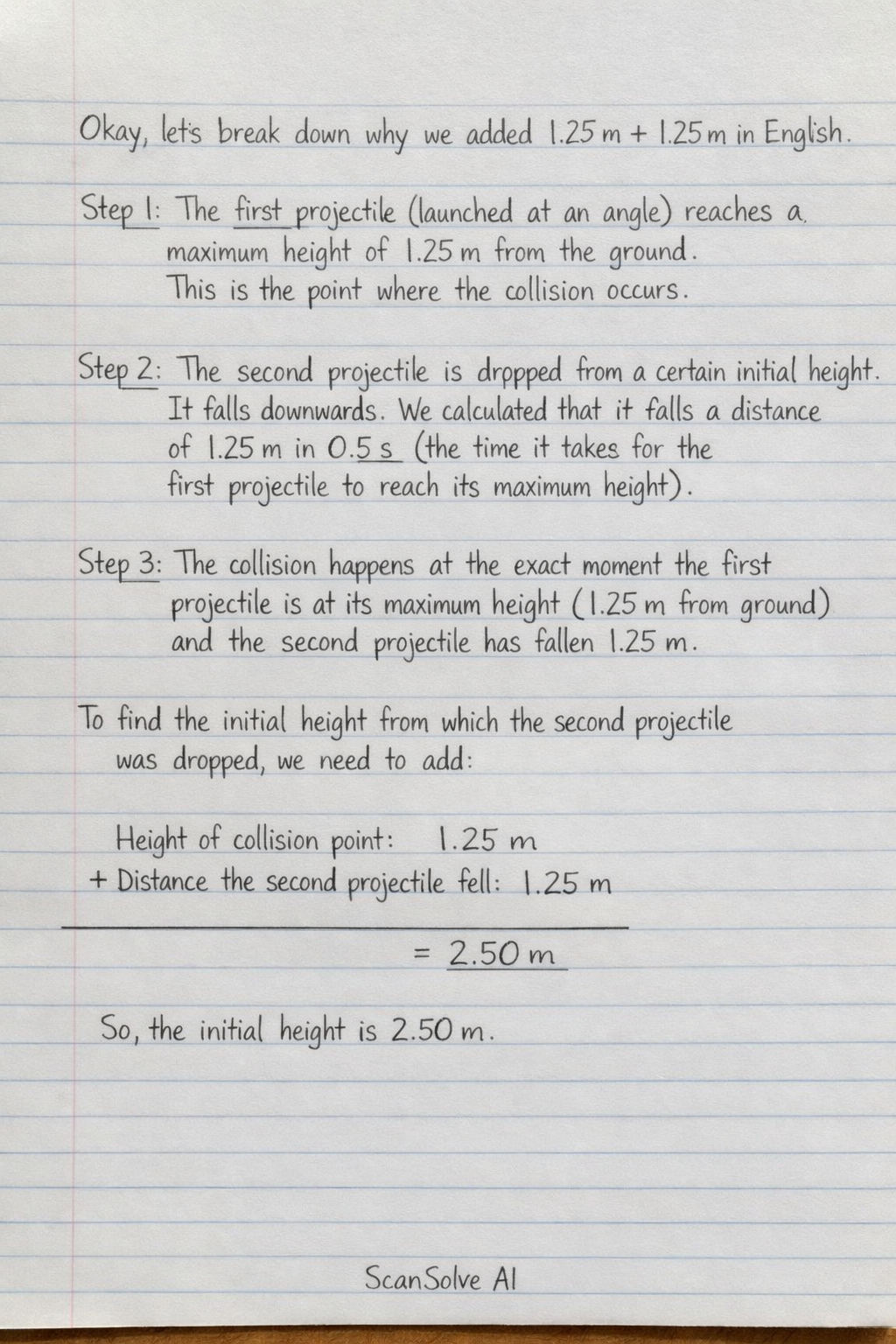
3 stepsOkay, let's break down why we added in English.
The first projectile (launched at an angle) reaches a maximum height of from the ground.
This is the point where the collision occurs.
The second projectile is dropped from a certain initial height.
It falls downwards. We calculated that it falls a distance of in (the time it takes for the first projectile to reach its maximum height).
The collision happens at the exact moment the first projectile is at its maximum height ( from the ground) and the second projectile has fallen .
To find the initial height from which the second projectile was dropped, we need to add:
- The height from the ground where the collision takes place ().
- The distance the second projectile fell before the collision ().
So, the initial height of the second projectile is:
This means the second projectile started at above the ground, fell , and then collided with the first projectile at above the ground.
Still stuck on this one?
Ask a follow-up, and the answer starts from this question.
More English Questions
Handwritten Step-by-Step Solution
Get this as a handwritten image on WhatsApp — like a tutor wrote it for you.
Try on WhatsApp