

This English question involves literary analysis, grammar, or writing skills. The detailed response below provides a well-structured answer with supporting evidence and clear explanations.
ScanSolve AI Answer
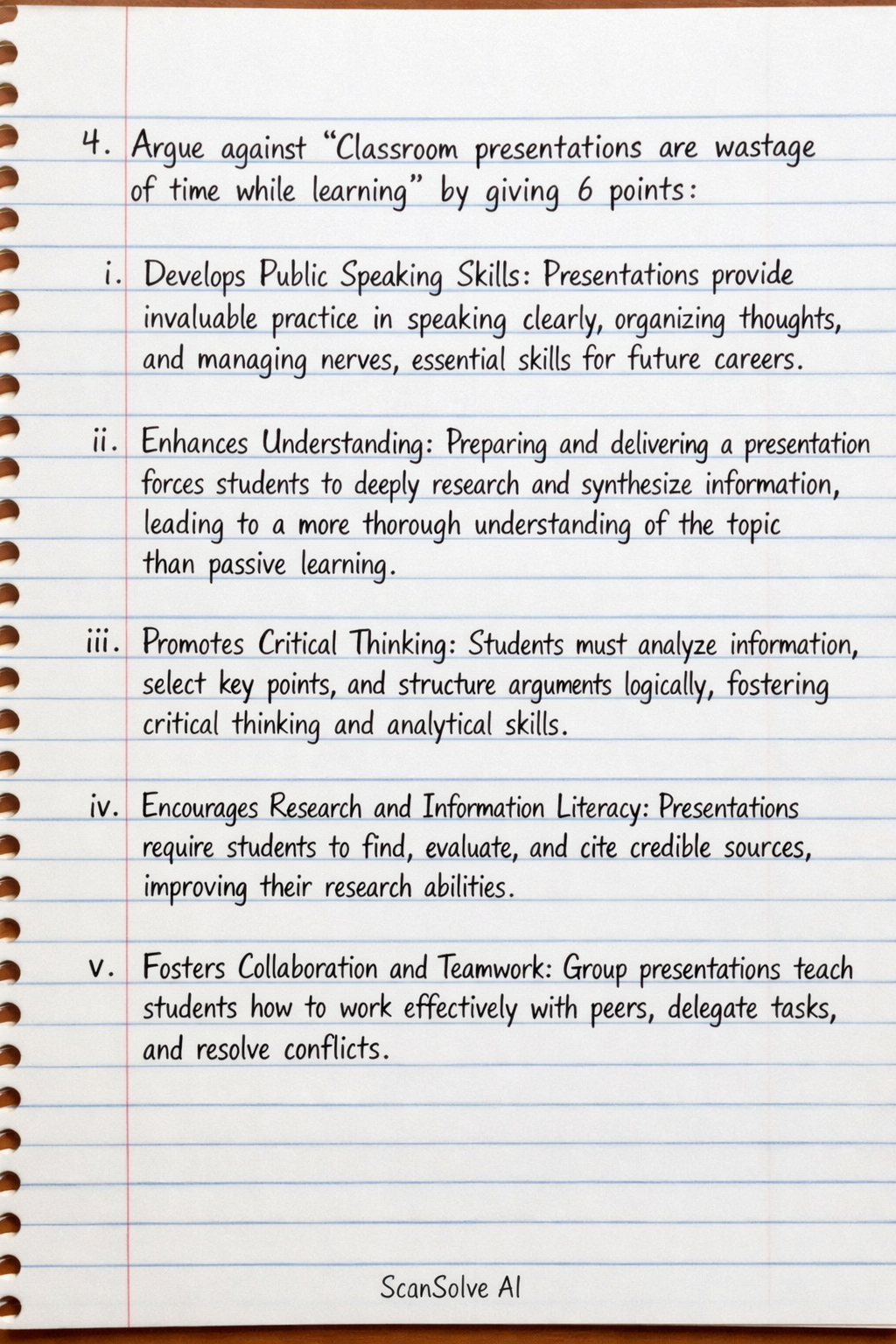
4. Argue against "Classroom presentations are wastage of time while learning" by giving 6 points: i. Develops Public Speaking Skills: Presentations provide invaluable practice in speaking clearly, organizing thoughts, and managing nerves, essential skills for future careers. ii. Enhances Understanding: Preparing and delivering a presentation forces students to deeply research and synthesize information, leading to a more thorough understanding of the topic than passive learning. iii. Promotes Critical Thinking: Students must analyze information, select key points, and structure arguments logically, fostering critical thinking and analytical skills. iv. Encourages Research and Information Literacy: Presentations require students to find, evaluate, and cite credible sources, improving their research abilities. v. Fosters Collaboration and Teamwork: Group presentations teach students how to work effectively with peers, delegate tasks, and resolve conflicts. vi. Provides Immediate Feedback: Presenters receive feedback from instructors and peers, allowing them to identify areas for improvement in their communication and content delivery. 5. Analyze six roles of illustrations in academic communication: i. Clarifying Complex Data: Illustrations like graphs, charts, and diagrams can simplify complex numerical data or intricate processes, making them easier for the audience to understand at a glance. ii. Enhancing Engagement and Interest: Visuals break up text, making academic documents more appealing and preventing reader fatigue, thereby increasing engagement with the content. iii. Summarizing Information: Infographics and flowcharts can condense large amounts of textual information into a concise visual format, allowing for quick comprehension of key points. iv. Providing Visual Evidence: Photographs, maps, or technical drawings can serve as direct evidence or examples, supporting arguments and adding credibility to academic claims. v. Aiding Memory and Retention: Visual information is often more memorable than text alone. Illustrations help readers recall key concepts and relationships long after reading. vi. Simplifying Abstract Concepts: For abstract theories or models, illustrations can provide concrete representations, helping to bridge the gap between theoretical ideas and practical understanding.