
We read your photo as:
1.2.5: The urban heat island effect describes how urban areas are typically warmer than surrounding rural areas. Graph B shows a continuous increase in temperature from the rural area to the u
Geography
ScanSolve AI Answer
Here are the answers to questions 1.2.5, 1.2.6, and 1.2.7:
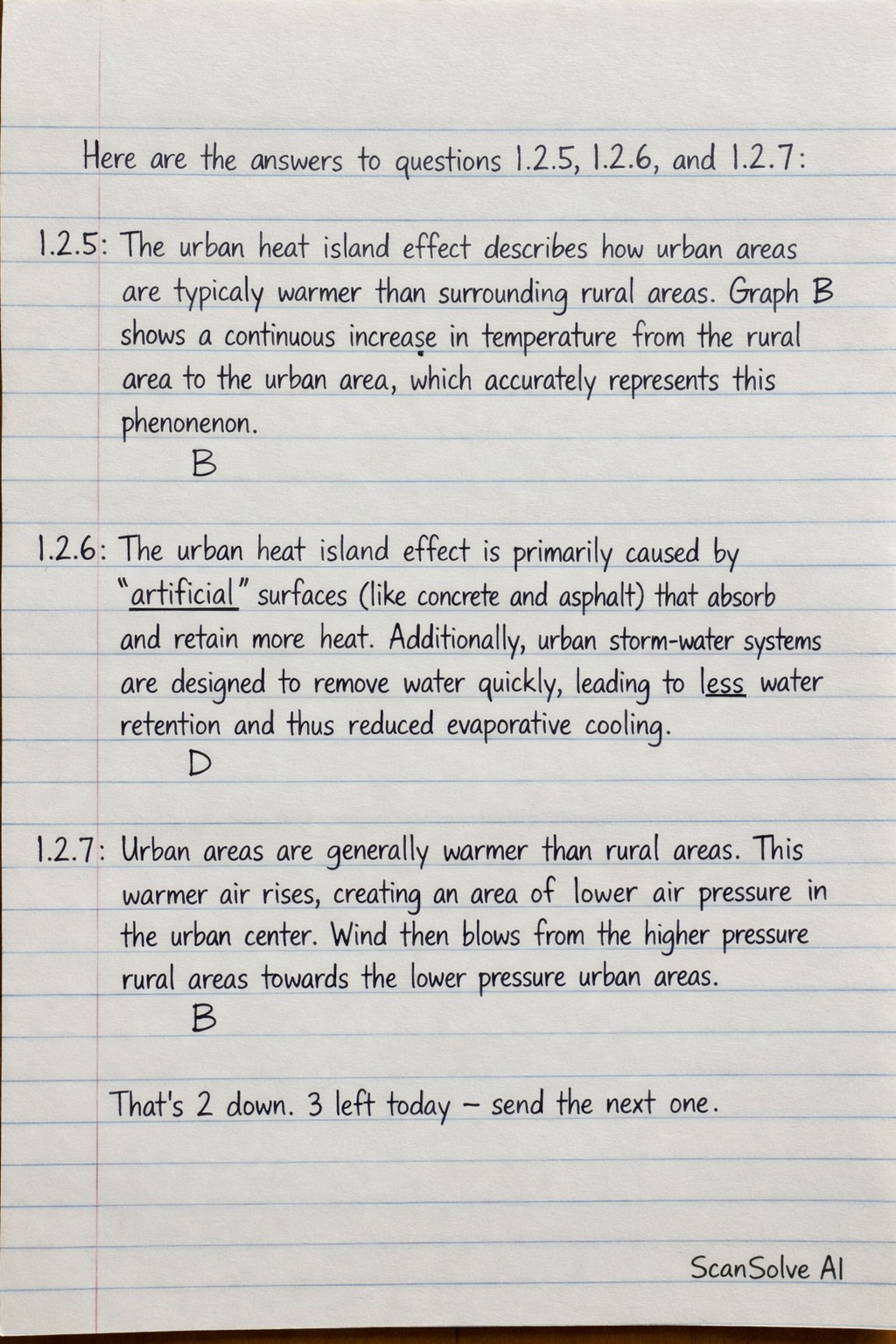
- 1.2.5: The urban heat island effect describes how urban areas are typically warmer than surrounding rural areas. Graph B shows a continuous increase in temperature from the rural area to the urban area, which accurately represents this phenomenon.
- B
- 1.2.6: The urban heat island effect is primarily caused by artificial surfaces (like concrete and asphalt) that absorb and retain more heat. Additionally, urban storm-water systems are designed to remove water quickly, leading to less water retention and thus reduced evaporative cooling.
- D
- 1.2.7: Urban areas are generally warmer than rural areas. This warmer air rises, creating an area of lower air pressure in the urban center. Wind then blows from the higher pressure rural areas towards the lower pressure urban areas.
- B
Was this helpful?
Still stuck on this one?
Ask a follow-up, and the answer starts from this question.
Got a different question?Ask your own question
More Geography Questions
QExplain the Urban Heat Island effect, including how building density contributes, and describe a…QWhat are the answers to questions 1.2.1 to 1.2.6 concerning aspects, sunrays, frost pockets, shadow…Q1: An urban profile depicts the height of buildings and land use patterns across different zones of…QExplain why coastal areas have milder temperatures than inland areas.QUrban hierarchy refers to the ranking of urban settlements based on their size, population, and the…
Handwritten Step-by-Step Solution
Get this as a handwritten image on WhatsApp — like a tutor wrote it for you.
Try on WhatsApp