
How to write 2026 kcse agriculture project on rabbit keeping under the following sub heading Locality analysis and problem identification Solution design and project proposal Infrastructure setup and stocking Rearing and routine management Value addition and marketing strategy Marketing,sales and reflection
Geography
ScanSolve AI Answer
Here's how to approach each subheading for your KCSE Agriculture project on rabbit keeping:
-
Locality analysis and problem identification:
- Locality Analysis: Describe the chosen location for your project. Include details like climate (temperature, rainfall), availability of resources (water, feed materials, labor), proximity to markets, and potential environmental factors.
- Problem Identification: Based on your analysis, identify specific challenges or opportunities related to rabbit keeping in that area. This could be a demand for rabbit meat, lack of local protein sources, high cost of other livestock, or issues like feed scarcity or disease prevalence.
-
Solution design and project proposal:
- Solution Design: Outline how your rabbit keeping project will address the identified problems. For example, if the problem is a lack of protein, your solution is to produce rabbit meat.
- Project Proposal: Detail your project's objectives (e.g., to produce X kg of rabbit meat in Y months), methodology (e.g., breed selection, feeding regime), expected outcomes, and a simple budget.
-
Infrastructure setup and stocking:
- Infrastructure Setup: Describe the housing you will use for the rabbits. This includes hutches or cages (materials, dimensions, design for ventilation and hygiene), feeders, waterers, and any other necessary equipment.
- Stocking: Explain how you will acquire your initial rabbits (e.g., from a reputable breeder). Specify the breed(s) chosen, their age, sex ratio, and criteria for selection (e.g., health, growth rate, fertility).
-
Rearing and routine management:
- Feeding: Detail the feeding schedule, types of feed (e.g., commercial pellets, greens, hay), and water provision.
- Health Management: Describe common rabbit diseases and parasites, their prevention (e.g., hygiene, vaccination if applicable), and treatment.
- Breeding Management: Outline the breeding plan, including mating, gestation, kindling (birth), and weaning.
- Hygiene and Sanitation: Explain the routine cleaning of hutches, waste disposal, and general farm hygiene practices.
-
Value addition and marketing strategy:
- Value Addition: Discuss ways to process rabbit products to increase their value. This could include processing meat (e.g., cuts, sausages), utilizing fur, or composting manure for fertilizer.
- Marketing Strategy: Outline how you plan to reach your target customers. This includes identifying your market (e.g., local consumers, restaurants), pricing strategies, and promotional activities (e.g., word-of-mouth, local markets).
-
Marketing, sales and reflection:
- Marketing and Sales: Describe the actual implementation of your marketing strategy and the sales process. Document sales records, customer feedback, and any challenges encountered.
- Reflection: Evaluate the overall success of your project against your initial objectives. Discuss lessons learned, challenges faced, and recommendations for future improvements or expansion.
Was this helpful?
Still stuck on this one?
Ask a follow-up, and the answer starts from this question.
Got a different question?Ask your own question
More Geography Questions
QExplain step by step: How to write 2026 kcse agriculture project on rabbit keeping under the…QHow to write a report for rabbit farming based on KCSE ReportQ2026 agriculture project report,about cattle problem solution and objectivesQHow to write a field project about farmingQThat is agriculture project I want you to plan and give answers
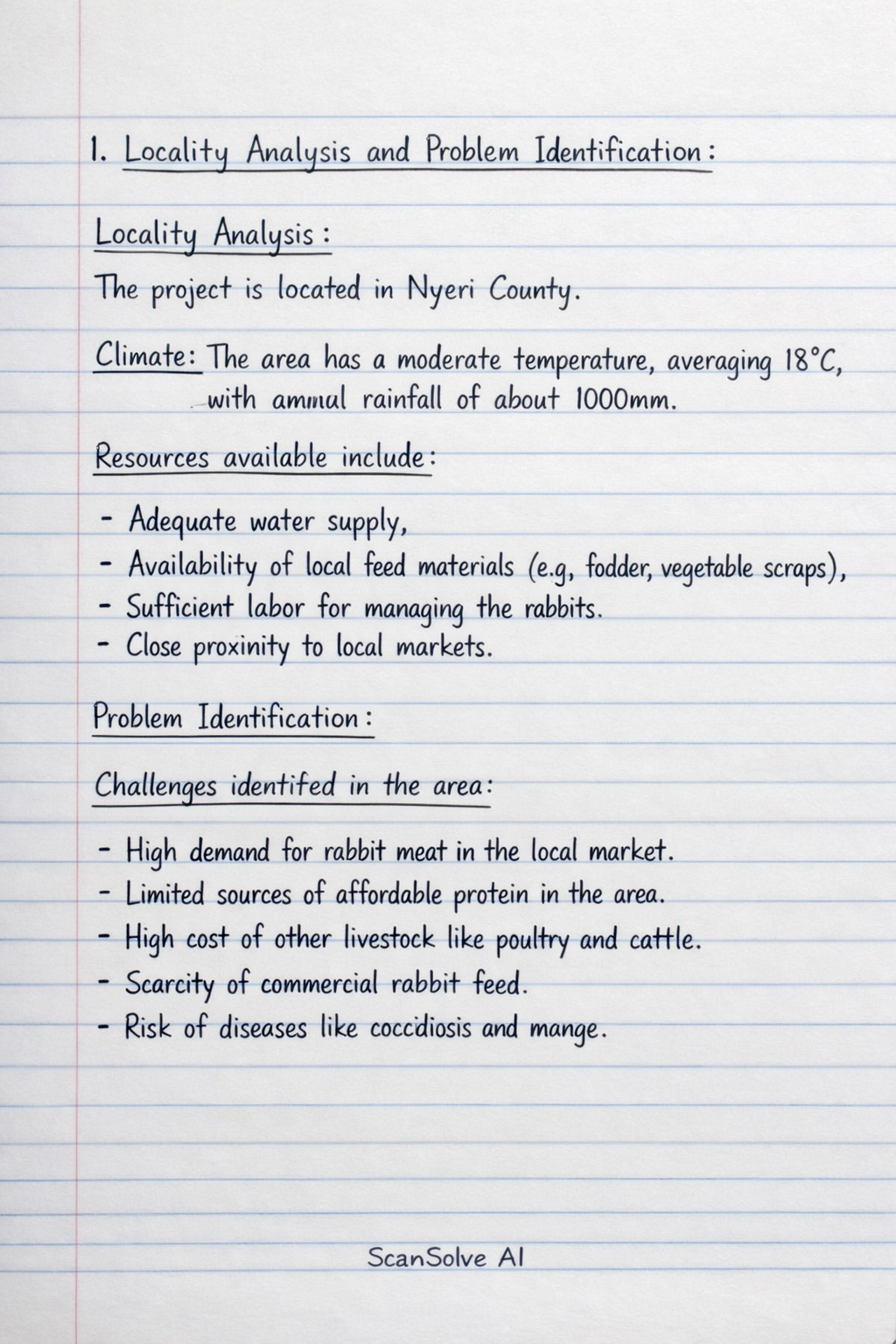
Handwritten Step-by-Step Solution
Get this as a handwritten image on WhatsApp — like a tutor wrote it for you.
Try on WhatsApp