
We read your photo as:
A) The mountains identified in the scenario, such as Rwenzori and Usambara, are primarily fault-block mountains. Their formation is linked to the tectonic activity of the East African Rift Syst
ScanSolve AI Answer
a) The mountains identified in the scenario, such as Rwenzori and Usambara, are primarily fault-block mountains. Their formation is linked to the tectonic activity of the East African Rift System. This process involves the uplift of large blocks of the Earth's crust along fault lines, while adjacent blocks may subside. Over geological time, these elevated blocks are further shaped by erosion, resulting in the distinct mountain ranges seen today.
b) The characteristics of these mountains that have enabled community members to live a successful life include:
- Reliable Water Sources: The text mentions "rivers that originate from these mountains." These rivers provide a consistent supply of fresh water for domestic use, irrigation, and livestock, which is vital for sustaining life and agriculture.
- Fertile Soils: Mountain slopes, often enriched by volcanic ash or good drainage, typically possess fertile soils. This supports productive agriculture, allowing communities to grow crops for food and income, which explains the "dense settlement."
- Biodiversity and Natural Resources: Mountains are rich in diverse ecosystems, offering a variety of natural resources such as timber, medicinal plants, and wild foods, which are essential for livelihoods and traditional practices.
- Favorable Climate: Higher altitudes generally provide cooler temperatures and higher rainfall compared to surrounding lowlands, creating a more comfortable living environment and suitable conditions for specific agricultural practices.
Still stuck on this one?
Ask a follow-up, and the answer starts from this question.
More Geography Questions
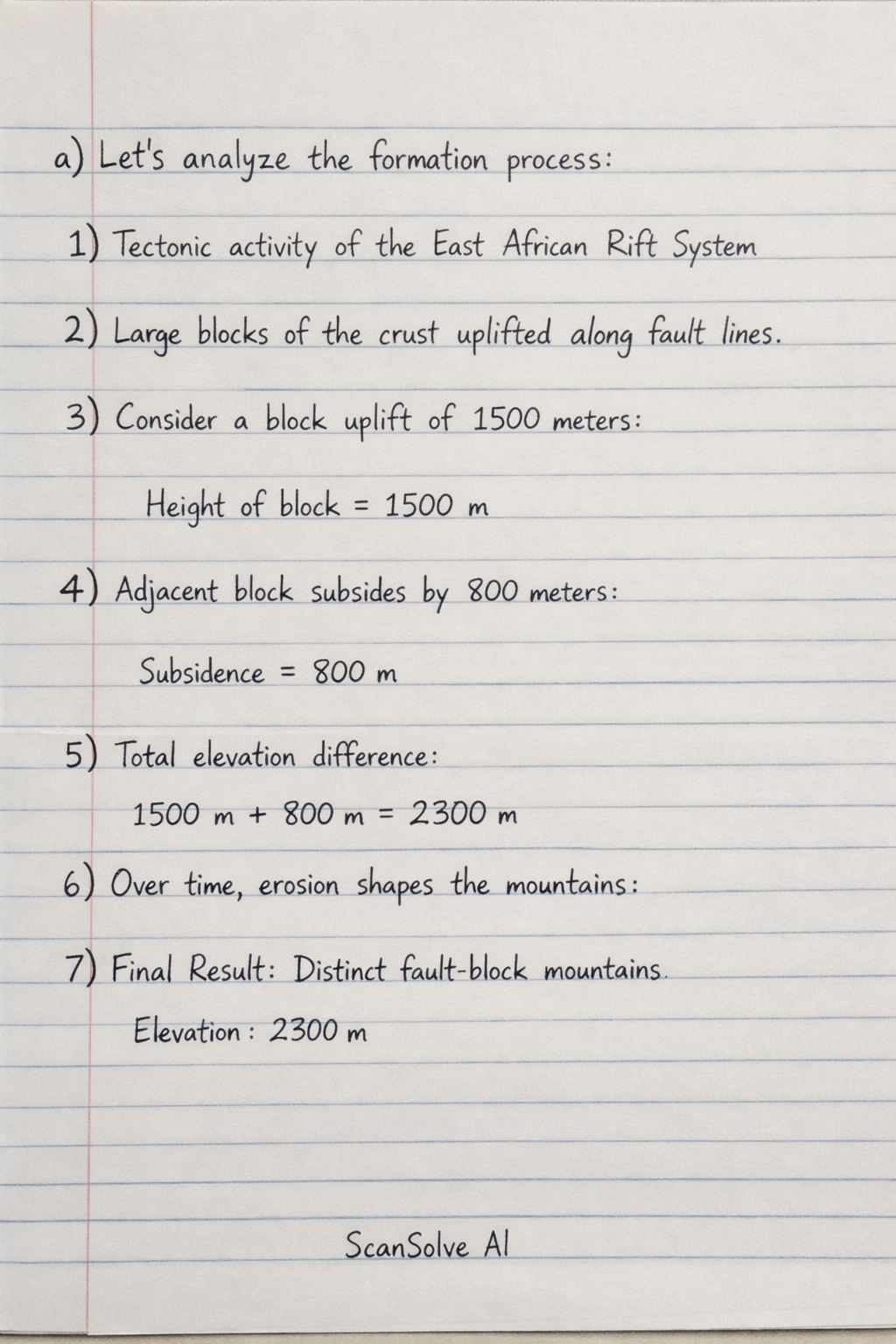
Handwritten Step-by-Step Solution
Get this as a handwritten image on WhatsApp — like a tutor wrote it for you.
Try on WhatsApp