
We read your photo as:
Describe the components of an industrial system and explain why industrialization is low in developing countries. Also, suggest ways to improve tourism.
Geography
ScanSolve AI Answer
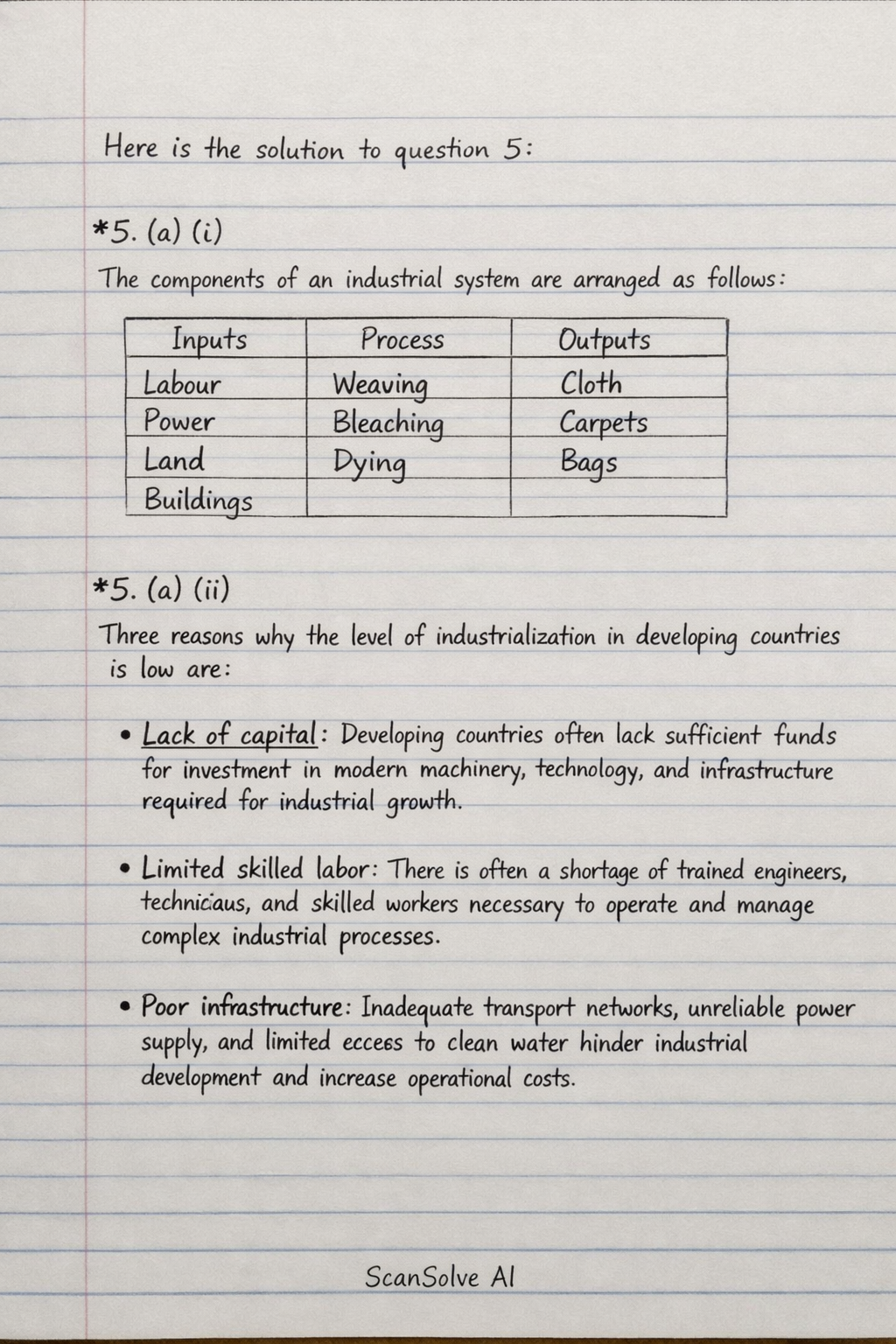
Here is the solution to question 5:
5. (a) (i)
The components of an industrial system are arranged as follows:
| Inputs | Process | Outputs |
|---|---|---|
| Labour | Weaving | Cloth |
| Power | Bleaching | Carpets |
| Land | Dying | Bags |
| Buildings |
5. (a) (ii)
Three reasons why the level of industrialization in developing countries is low are:
- Lack of capital: Developing countries often lack sufficient funds for investment in modern machinery, technology, and infrastructure required for industrial growth.
- Limited skilled labor: There is often a shortage of trained engineers, technicians, and skilled workers necessary to operate and manage complex industrial processes.
- Poor infrastructure: Inadequate transport networks, unreliable power supply, and limited access to clean water hinder industrial development and increase operational costs.
5. (b)
Three ways to make the tourism sector more attractive are:
- Improve infrastructure: Develop better roads, airports, hotels, and communication networks to enhance accessibility and comfort for tourists.
- Promote diverse attractions: Market a wider range of tourist sites, including cultural heritage, natural landscapes, and adventure tourism, to appeal to different interests.
- Enhance security and safety: Implement measures to ensure the safety and well-being of tourists, building trust and encouraging visits.
5. (c) (i)
Four advantages of Hydroelectric Power (HEP) over other sources of energy are:
- Renewable: HEP uses the continuous water cycle, making it a sustainable and inexhaustible source of energy.
- Clean energy: It produces no greenhouse gas emissions during operation, contributing to cleaner air and mitigating climate change.
- Low operating costs: Once constructed, the cost of generating electricity from HEP is relatively low compared to fossil fuel plants.
- Multi-purpose benefits: Dams built for HEP can also provide benefits such as flood control, irrigation, and water supply for domestic and industrial use.
5. (c) (ii)
Two renewable sources of energy are:
- Solar energy
- Wind energy
Was this helpful?
Still stuck on this one?
Ask a follow-up, and the answer starts from this question.
Got a different question?Ask your own question
More Geography Questions
QWhat is tourism? [ Outline five factors that promote the development of tourism. Highlight four…QWhat are the answers to the following questions about industrialization and transportation?QWhat are the main challenges faced by industrialization in many countries?QWrite short note on globalization and tourismQDefine industrialization. Distinguish between location of industry and localization of industry…
Handwritten Step-by-Step Solution
Get this as a handwritten image on WhatsApp — like a tutor wrote it for you.
Try on WhatsApp