
We read your photo as:
What are the main reasons for the slow development of African industries and what are some solutions?
Economics
ScanSolve AI Answer
Here are the reasons for the slow development of African industries and their solutions:
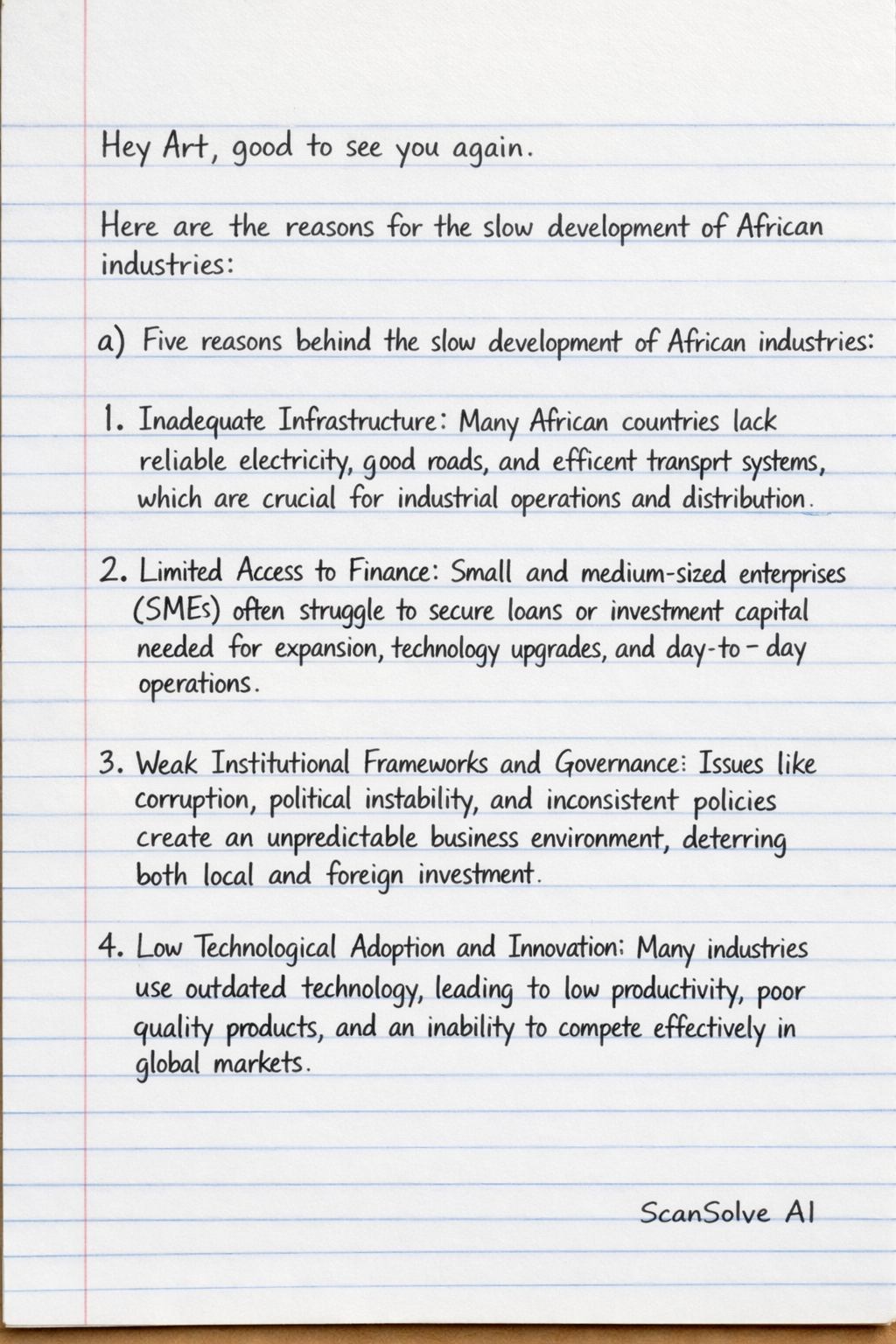
a) Five reasons behind the slow development of African industries:
- Inadequate Infrastructure: Many African countries lack reliable electricity, good roads, and efficient transport systems, which are crucial for industrial operations and distribution.
- Limited Access to Finance: Small and medium-sized enterprises (SMEs) often struggle to secure loans or investment capital needed for expansion, technology upgrades, and day-to-day operations.
- Weak Institutional Frameworks and Governance: Issues like corruption, political instability, and inconsistent policies create an unpredictable business environment, deterring both local and foreign investment.
- Low Technological Adoption and Innovation: Many industries use outdated technology, leading to low productivity, poor quality products, and an inability to compete effectively in global markets.
- Skills Gap and Human Capital Deficit: There is often a shortage of skilled labor, technical expertise, and managerial capabilities, which hinders industrial growth and the adoption of new technologies.
b) Five adequate solutions for each of the reasons above:
- For Inadequate Infrastructure: Governments should prioritize and invest heavily in developing critical infrastructure, including reliable power grids, modern transportation networks (roads, railways, ports), and digital communication systems, often through public-private partnerships.
- For Limited Access to Finance: Establish and strengthen financial institutions that offer affordable credit and microfinance options to SMEs. Governments can also provide loan guarantees and create incentives to attract foreign direct investment (FDI) into industrial sectors.
- For Weak Institutional Frameworks and Governance: Implement robust anti-corruption measures, strengthen legal and regulatory frameworks, ensure political stability, and develop transparent, consistent industrial policies to build investor confidence and reduce business risks.
- For Low Technological Adoption and Innovation: Promote technology transfer programs, invest in local research and development (R&D), establish innovation hubs, and offer incentives for industries to adopt modern production techniques and automation.
- For Skills Gap and Human Capital Deficit: Reform education systems to emphasize vocational and technical training relevant to industrial needs. Foster partnerships between industries and educational institutions to develop targeted training programs and invest in continuous professional development.
Was this helpful?
Still stuck on this one?
Ask a follow-up, and the answer starts from this question.
Got a different question?Ask your own question
More Economics Questions
QDefine modern technology and explain three reasons for slow technological development in Ghana.QWhat are the main challenges faced by industrialization in many countries?QExplain factors influencing industry location in Kenya, identify industries on a map, and list…QWhat would you say have been the problems preventing the Agricultural sector from contributing its…QThe common feature associated with African industries is
Handwritten Step-by-Step Solution
Get this as a handwritten image on WhatsApp — like a tutor wrote it for you.
Try on WhatsApp