

This geography problem is solved step by step below, with detailed explanations to help you understand the method and arrive at the correct answer.
ScanSolve AI Answer
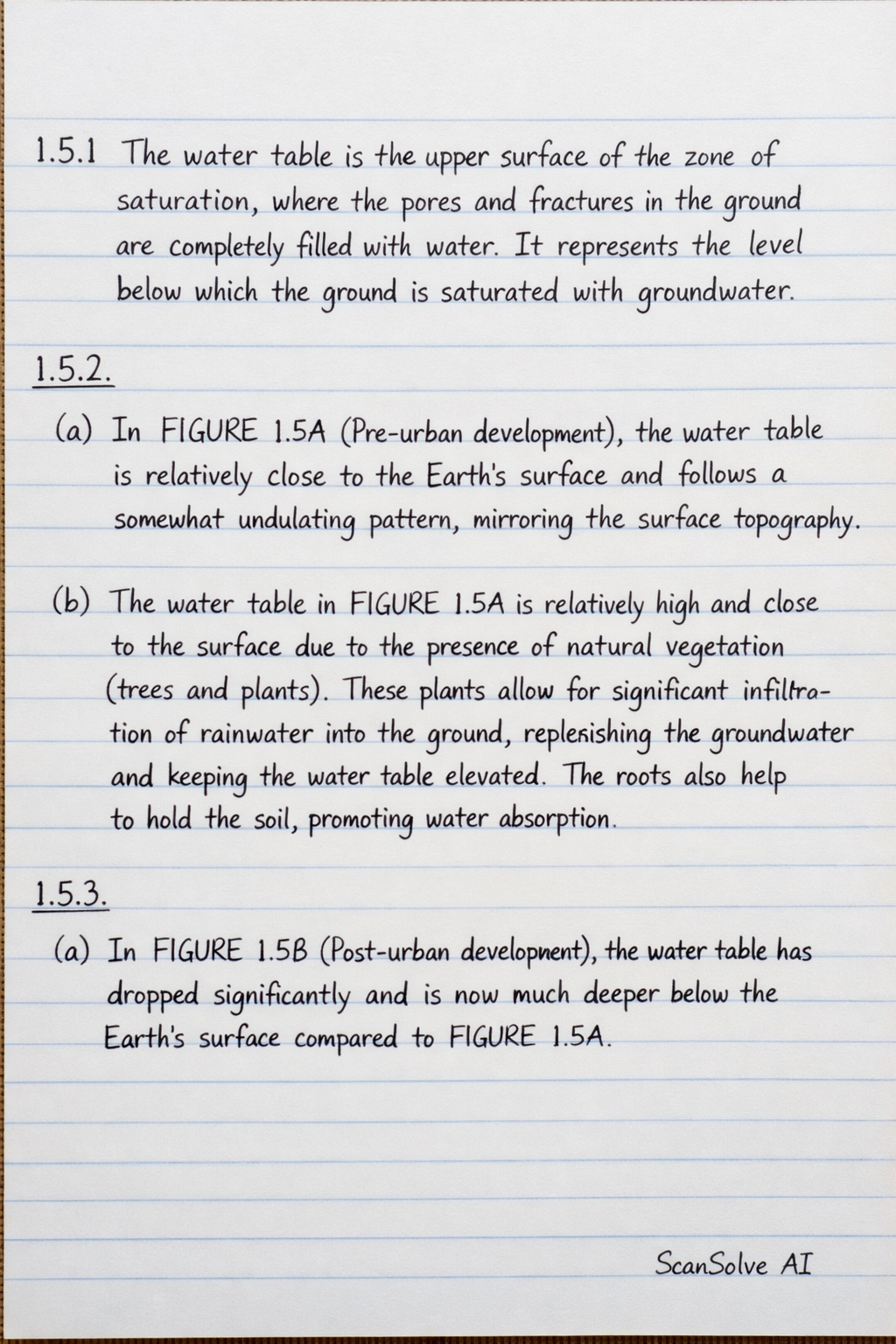
Here are the answers to your questions based on the provided image: 1.5.1 The water table is the upper surface of the zone of saturation, where the pores and fractures in the ground are completely filled with water. It represents the level below which the ground is saturated with groundwater. 1.5.2 a) In FIGURE 1.5A (Pre-urban development), the water table is relatively close to the Earth's surface and follows a somewhat undulating pattern, generally mirroring the surface topography. b) The water table in FIGURE 1.5A is relatively high and close to the surface due to the presence of natural vegetation (trees and plants). These plants allow for significant infiltration of rainwater into the ground, replenishing the groundwater and keeping the water table elevated. The roots also help to hold the soil, promoting water absorption. 1.5.3 a) In FIGURE 1.5B (Post-urban development), the water table has dropped significantly and is now much deeper below the Earth's surface compared to FIGURE 1.5A. b) Urban development changed the position of the water table because the construction of buildings and paved surfaces (like roads and sidewalks) creates impervious surfaces. These surfaces prevent rainwater from infiltrating into the ground. Instead, water becomes surface runoff, which is quickly drained away. Additionally, the removal of natural vegetation reduces transpiration and infiltration, leading to less water replenishing the groundwater, thus causing the water table to drop. 1.5.4 To maintain the water table after urban development as illustrated in FIGURE 1.5A, the following measures can be introduced: Implement permeable paving: Use materials like porous asphalt, permeable concrete, or paver blocks for roads, sidewalks, and parking lots. These materials allow rainwater to seep through them and infiltrate into the ground, replenishing the water table. Create green infrastructure: Establish more green spaces, parks, and urban gardens. Incorporate features like rain gardens and bioswales* which are designed to collect and filter stormwater runoff, allowing it to slowly infiltrate the soil rather than being directed into drainage systems. This increases groundwater recharge. Last free one today — make it count tomorrow, or type /upgrade for unlimited.