
We read your photo as:
Explain the dangers of poor water resource use and how to use them properly.
Geography
ScanSolve AI Answer
Here are the explanations for your community members:
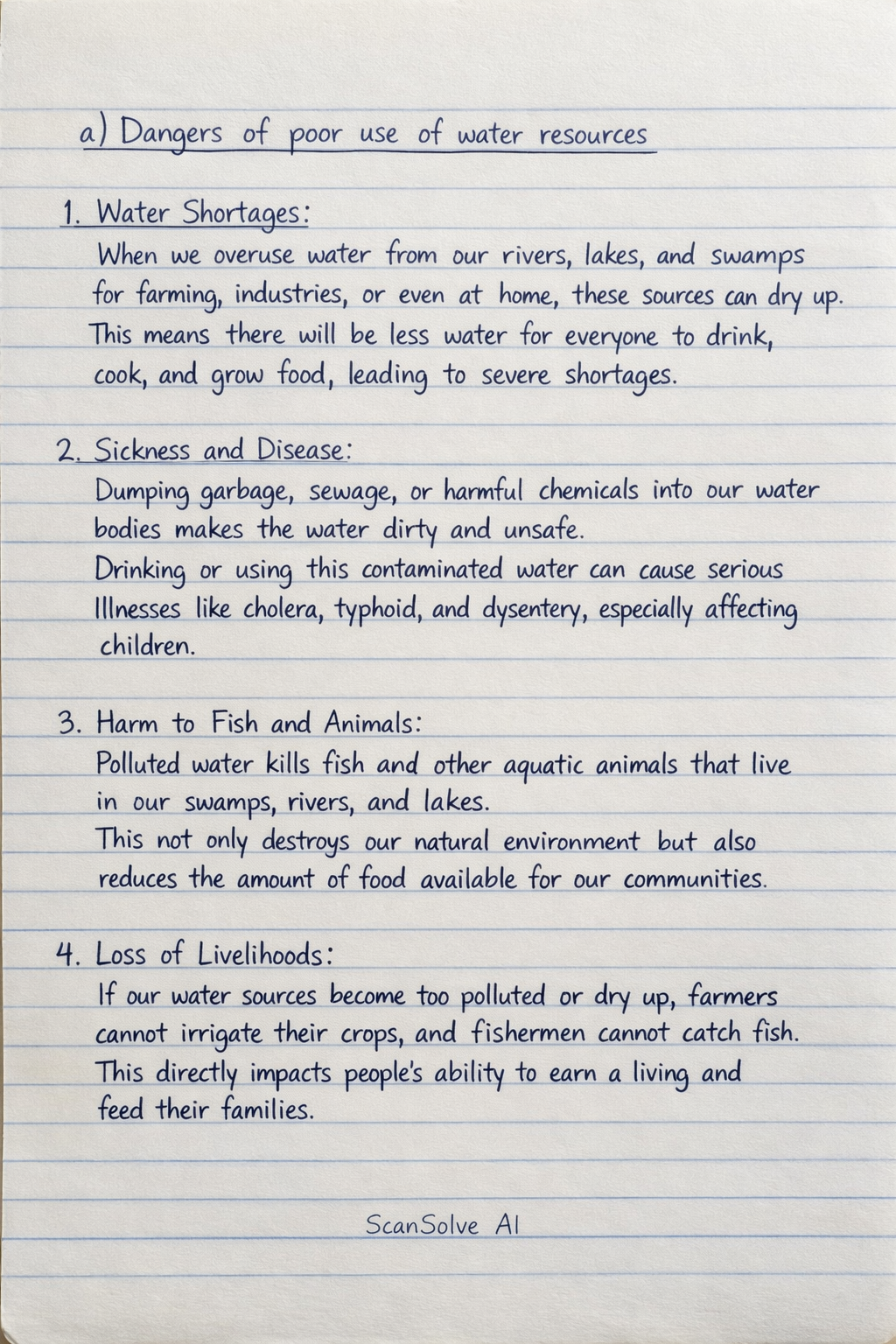
a) Dangers of poor use of water resources
- Water Shortages: When we overuse water from our rivers, lakes, and swamps for farming, industries, or even at home, these sources can dry up. This means there will be less water for everyone to drink, cook, and grow food, leading to severe shortages.
- Sickness and Disease: Dumping garbage, sewage, or harmful chemicals into our water bodies makes the water dirty and unsafe. Drinking or using this contaminated water can cause serious illnesses like cholera, typhoid, and dysentery, especially affecting children.
- Harm to Fish and Animals: Polluted water kills fish and other aquatic animals that live in our swamps, rivers, and lakes. This not only destroys our natural environment but also reduces the amount of food available for our communities.
- Loss of Livelihoods: If our water sources become too polluted or dry up, farmers cannot irrigate their crops, and fishermen cannot catch fish. This directly impacts people's ability to earn a living and feed their families.
- Increased Flooding and Land Degradation: Destroying swamps or building too close to riverbanks removes natural barriers that absorb excess water. This can lead to more severe floods during heavy rains and also makes the land less fertile over time.
b) Proper use of water resources
- Do Not Pollute: Never dump garbage, human waste, or harmful chemicals (like detergents, oils, or pesticides) directly into rivers, lakes, or swamps. Always use designated waste disposal areas.
- Conserve Water: Use water wisely in your homes and farms. Fix any leaky taps, collect rainwater for gardening, and avoid leaving water running unnecessarily.
- Protect Swamps and Riverbanks: Avoid building structures or farming too close to swamps and riverbanks. These areas act as natural filters for water and protect our main water sources.
- Practice Safe Farming: If you farm near water bodies, use natural fertilizers and pesticides whenever possible. Avoid over-applying chemicals that can wash into the water during rain.
- Report Pollution: If you see anyone polluting our water sources, please report it to your community leaders or local authorities so that action can be taken to protect our shared resources.
- Participate in Clean-ups: Join community efforts to clean up our rivers, lakes, and swamps. Keeping them clean benefits everyone.
Was this helpful?
Still stuck on this one?
Ask a follow-up, and the answer starts from this question.
Got a different question?Ask your own question
More Geography Questions
QWhat are the dangers of over-utilizing resources in a region?QImprove ways of storing and using water supplies to reduce water wastageQDescribe the landscape shown in the photograph and how humans have utilized the physical…QDiscuss the importance of sewage treatment, the qualities of a good pit latrine, and how purified…QExplain sustainable waste water management.put in English language
Handwritten Step-by-Step Solution
Get this as a handwritten image on WhatsApp — like a tutor wrote it for you.
Try on WhatsApp