
We read your photo as:
Differentiate between natural and national disasters, list three natural disasters in Limpopo since 2024, name two SA institutions dealing with disasters, and discuss one cause of floods there.
ScanSolve AI Answer
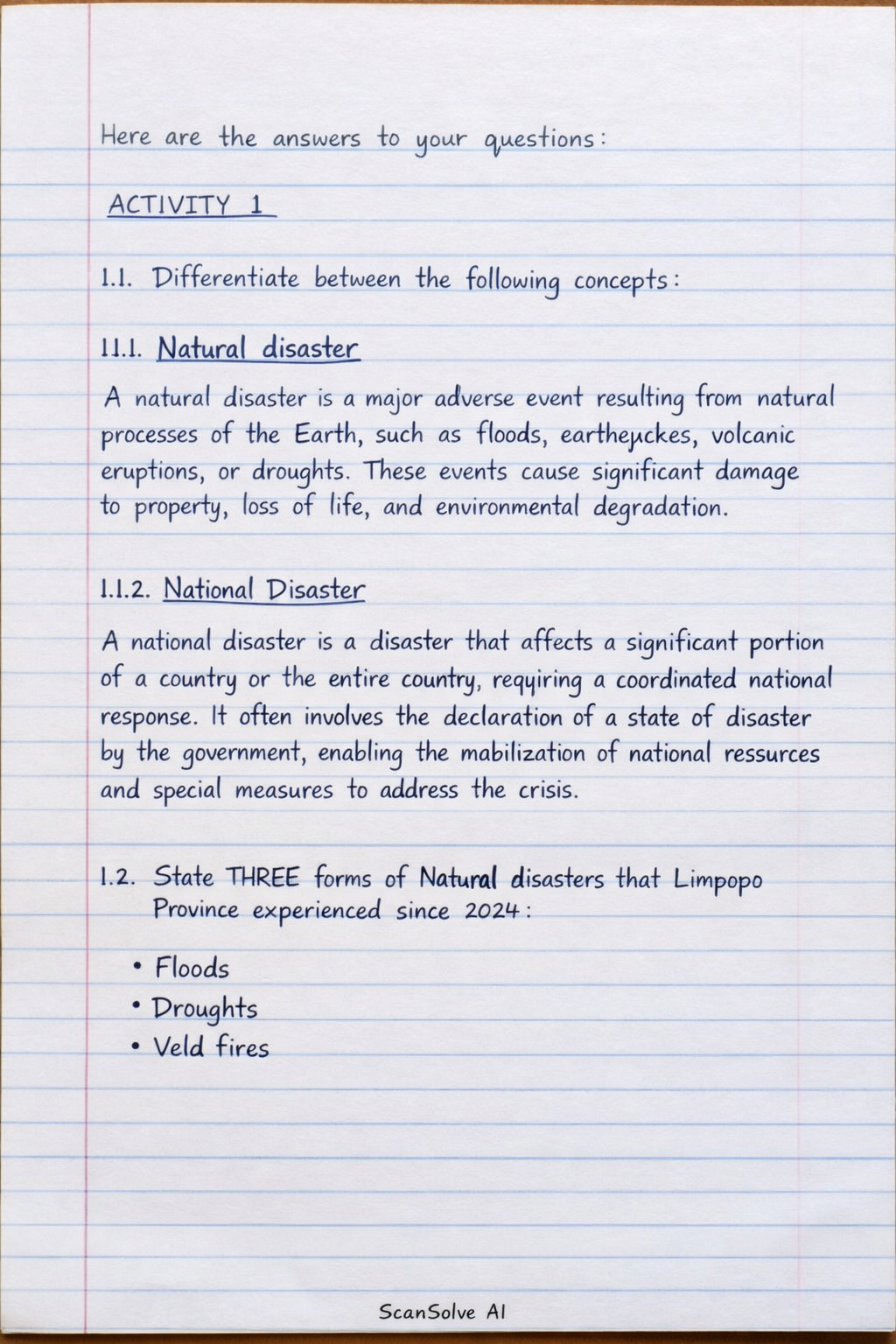
Here are the answers to your questions:
ACTIVITY 1
1.1. Differentiate between the following concepts:
-
1.1.1. Natural disaster A natural disaster is a major adverse event resulting from natural processes of the Earth, such as floods, earthquakes, volcanic eruptions, or droughts. These events cause significant damage to property, loss of life, and environmental degradation.
-
1.1.2. National Disaster A national disaster is a disaster that affects a significant portion of a country or the entire country, requiring a coordinated national response. It often involves the declaration of a state of disaster by the government, enabling the mobilization of national resources and special measures to address the crisis.
1.2. State THREE forms of Natural disasters that Limpopo Province experienced since 2024.
- Floods
- Droughts
- Veld fires
1.3. Mention TWO state institutions that deal with Natural disasters in South Africa.
- National Disaster Management Centre (NDMC)
- Department of Cooperative Governance and Traditional Affairs (COGTA)
1.4. Discuss ONE cause of floods in the Limpopo Province.
One significant cause of floods in the Limpopo Province is heavy rainfall. Prolonged periods of intense precipitation can lead to rivers overflowing their banks, dams reaching full capacity and releasing excess water, and saturated ground being unable to absorb further moisture, resulting in widespread inundation of low-lying areas.
ACTIVITY 2
2.1. Name ONE law that protects South African citizens against Natural disasters.
- The Disaster Management Act, 2002 (Act No. 57 of 2002).
2.2. Describe TWO ways in which the above law protects citizens against Natural disasters.
- The Disaster Management Act provides for an integrated and coordinated disaster management policy that focuses on preventing or reducing the risk of disasters, mitigating their severity, and ensuring effective emergency preparedness and response.
- It establishes institutional arrangements, such as the National Disaster Management Centre, which coordinates efforts across different spheres of government and other stakeholders to ensure effective response and recovery operations, thereby protecting affected communities.
2.3. Evaluate the negative effect of flood on food production.
Floods have severe negative effects on food production by destroying standing crops and washing away fertile topsoil, which reduces agricultural yields and future productivity. They also damage critical farming infrastructure like irrigation systems and access roads, hindering cultivation and the transport of produce. Furthermore, floods can lead to livestock losses and increase the risk of plant and animal diseases due to stagnant water, ultimately impacting food security and the livelihoods of farmers.
2.4. Recommend ONE strategy that communities can implement to protect themselves against natural disasters such as flood.
One effective strategy is to develop and regularly practice community disaster preparedness plans. This includes identifying safe evacuation routes, establishing emergency shelters, and ensuring that all community members are aware of what actions to take before, during, and after a flood. Such plans enhance a community's ability to respond quickly and minimize harm.
Still stuck on this one?
Ask a follow-up, and the answer starts from this question.
More Geography Questions
Handwritten Step-by-Step Solution
Get this as a handwritten image on WhatsApp — like a tutor wrote it for you.
Try on WhatsApp