
We read your photo as:
What are the definitions of natural and national disasters, name three natural disasters in Limpopo since 2024, name two disaster management institutions in SA, and discuss one cause of floods in Limp
ScanSolve AI Answer
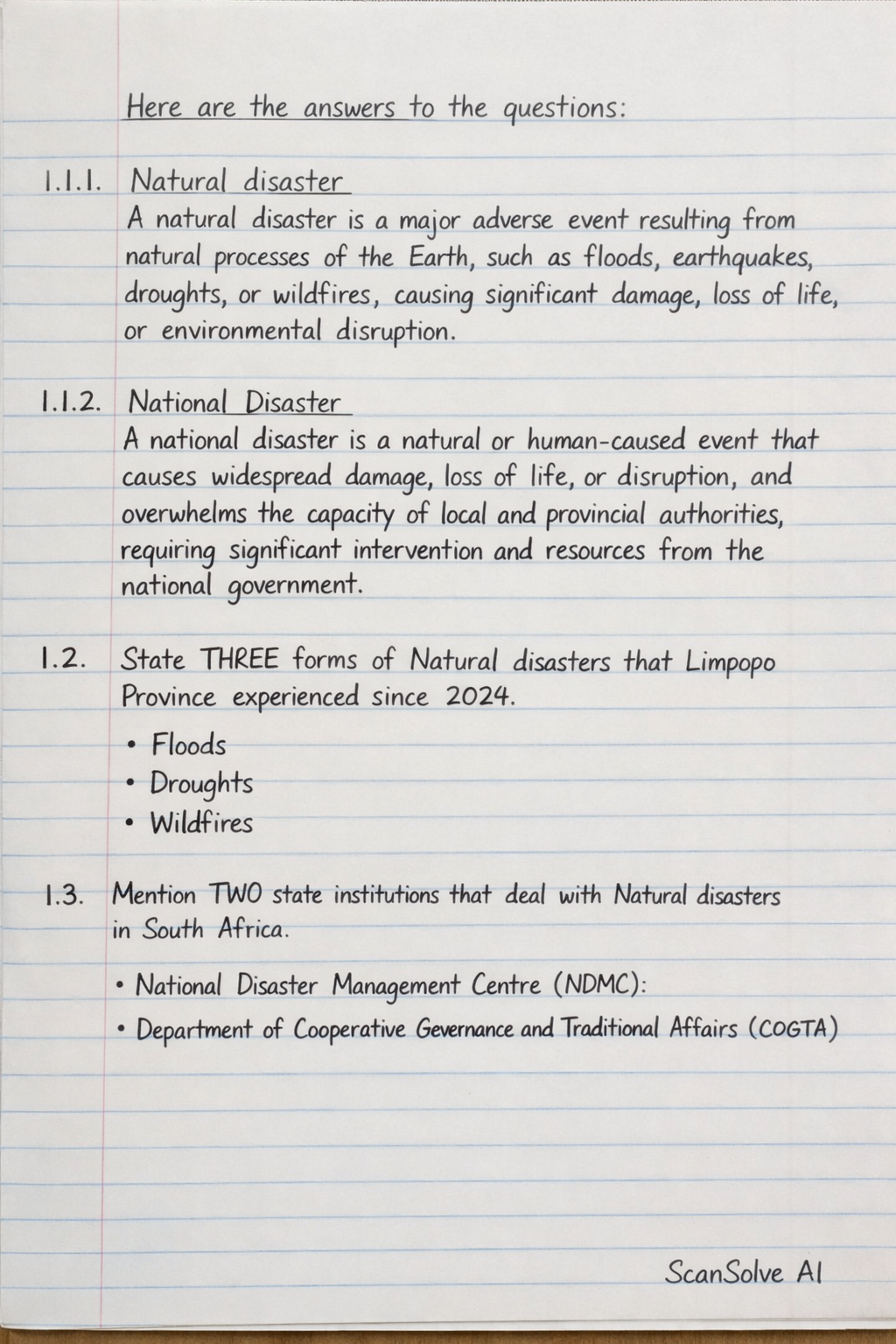
Here are the answers to the questions:
1.1.1. Natural disaster
A natural disaster is a major adverse event resulting from natural processes of the Earth, such as floods, earthquakes, droughts, or wildfires, causing significant damage, loss of life, or environmental disruption.
1.1.2. National Disaster
A national disaster is a natural or human-caused event that causes widespread damage, loss of life, or disruption, and overwhelms the capacity of local and provincial authorities, requiring significant intervention and resources from the national government.
1.2. State THREE forms of Natural disasters that Limpopo Province experienced since 2024.
- Floods
- Droughts
- Wildfires
1.3. Mention TWO state institutions that deal with Natural disasters in South Africa.
- National Disaster Management Centre (NDMC)
- Department of Cooperative Governance and Traditional Affairs (COGTA)
1.4. Discuss ONE cause of floods in the Limpopo Province.
One significant cause of floods in the Limpopo Province is heavy rainfall. During the summer rainy season, and particularly when tropical cyclones or depressions affect the region, the province can experience excessive amounts of rain over a short period. This intense rainfall overwhelms the capacity of rivers, dams, and urban drainage systems, leading to widespread inundation of land and infrastructure.
2.1. Name ONE law that protects South African citizens against Natural disasters
The Disaster Management Act, 2002 (Act No. 57 of 2002).
2.2. Describe TWO ways in which the above law protects citizens against Natural disasters.
- The Act establishes institutional arrangements such as the National Disaster Management Centre (NDMC) to coordinate disaster management activities across all spheres of government, ensuring a structured and unified response to disasters.
- It promotes risk reduction and prevention by mandating the development of disaster management plans that include measures for prevention, mitigation, and preparedness, thereby reducing the impact of potential disasters on communities.
2.3. Evaluate the negative effect of flood on food production
Floods have a severe negative effect on food production by causing widespread crop destruction. Floodwaters can submerge agricultural fields, leading to the rotting of standing crops and washing away fertile topsoil, which is crucial for future planting. Additionally, floods can damage essential farming infrastructure like irrigation systems and farm buildings, disrupt transportation routes for produce, and lead to the loss of livestock through drowning or disease, ultimately reducing food availability and increasing food insecurity.
2.4. Recommend ONE strategy that communities can implement to protect themselves against natural disasters such as flood.
Communities can implement community-based early warning systems. This involves establishing local networks to monitor weather conditions, river levels, and other relevant indicators, and then disseminating timely warnings to residents through various channels like community radio, SMS alerts, or local leaders. This allows community members to take proactive measures such as evacuating to safer areas, securing their property, or moving livestock, thereby reducing potential losses and saving lives.
Still stuck on this one?
Ask a follow-up, and the answer starts from this question.
More Geography Questions
Handwritten Step-by-Step Solution
Get this as a handwritten image on WhatsApp — like a tutor wrote it for you.
Try on WhatsApp