
We read your photo as:
Differentiate between natural disaster and national disaster, list 3 natural disasters in Limpopo since 2024, name 2 SA institutions dealing with disasters, and discuss one cause of floods in Limpopo.
ScanSolve AI Answer
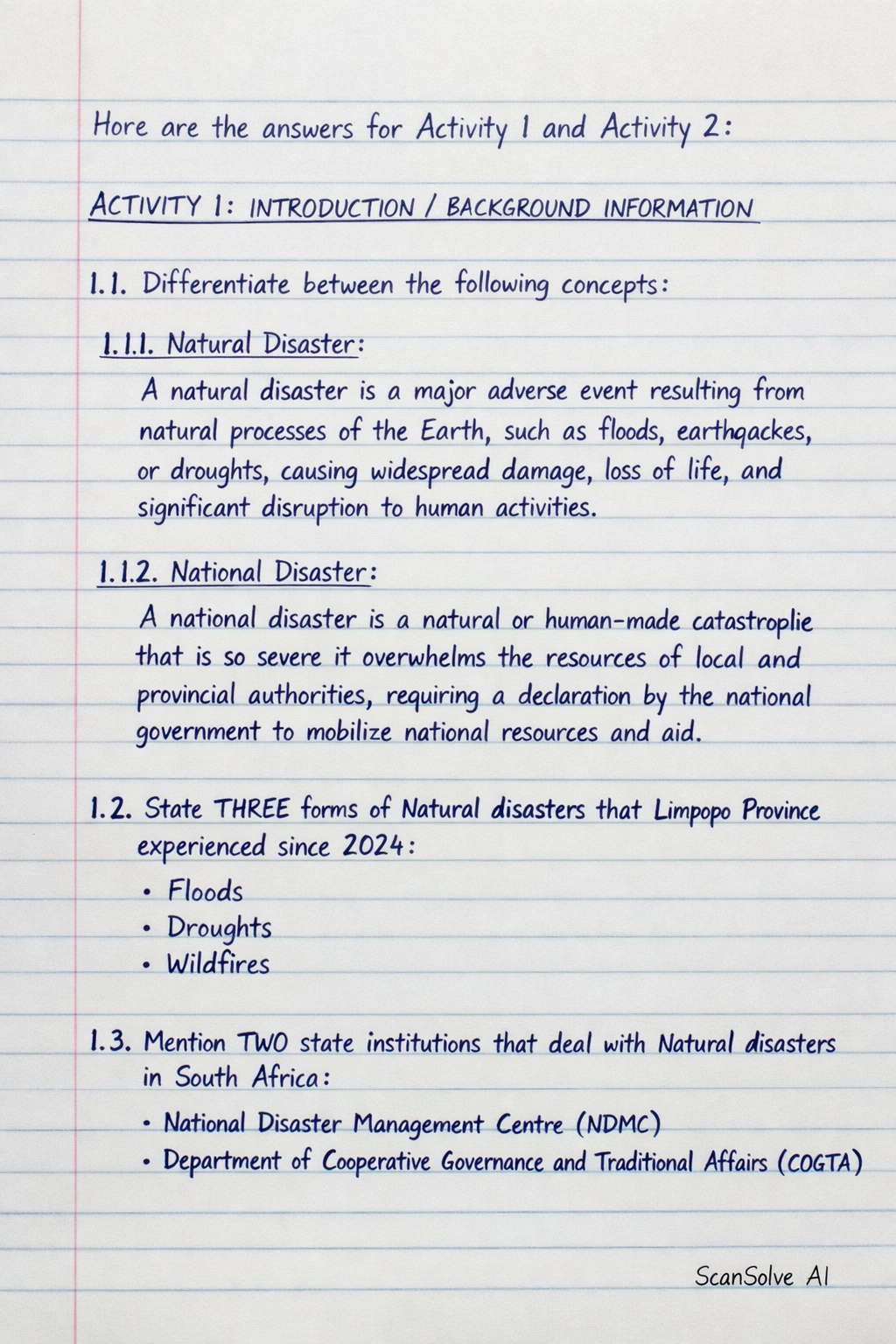
Here are the answers for Activity 1 and Activity 2:
ACTIVITY 1: INTRODUCTION / BACKGROUND INFORMATION
1.1. Differentiate between the following concepts:
-
1.1.1. Natural disaster: A natural disaster is a major adverse event resulting from natural processes of the Earth, such as floods, earthquakes, or droughts, causing widespread damage, loss of life, and significant disruption to human activities.
-
1.1.2. National Disaster: A national disaster is a natural or human-made catastrophe that is so severe it overwhelms the resources of local and provincial authorities, requiring a declaration by the national government to mobilize national resources and aid.
1.2. State THREE forms of Natural disasters that Limpopo Province experienced since 2024.
- Floods
- Droughts
- Wildfires
1.3. Mention TWO state institutions that deal with Natural disasters in South Africa.
- National Disaster Management Centre (NDMC)
- Department of Cooperative Governance and Traditional Affairs (COGTA)
1.4. Discuss ONE cause of floods in the Limpopo Province.
One significant cause of floods in Limpopo Province is heavy rainfall associated with tropical cyclones or severe thunderstorms. These intense and prolonged downpours can quickly overwhelm river systems and drainage infrastructure, leading to rivers overflowing their banks and widespread flash flooding, especially in low-lying areas.
ACTIVITY 2
2.1. Name ONE law that protects South African citizens against Natural disasters.
- The Disaster Management Act, 57 of 2002
2.2. Describe TWO ways in which the above law protects citizens against Natural disasters.
- The Disaster Management Act mandates the establishment of disaster management centers at national, provincial, and municipal levels, which are responsible for coordinating preparedness, response, and recovery efforts during and after natural disasters.
- It provides a framework for risk assessment and early warning systems, enabling authorities to identify potential hazards, inform the public about impending disasters, and facilitate timely evacuations to protect lives.
2.3. Evaluate the negative effect of flood on food production.
Floods have a devastating negative effect on food production by destroying crops in fields, either by submerging them in water or washing away fertile topsoil, leading to significant yield losses. Additionally, floods can damage agricultural infrastructure such as irrigation systems, storage facilities, and access roads, making it difficult to plant, harvest, or transport food, which can result in food shortages and increased prices.
2.4. Recommend ONE strategy that communities can implement to protect themselves against natural disasters such as flood.
Communities can implement a strategy of developing and practicing community-based disaster preparedness plans. This involves educating residents on flood risks, establishing clear communication channels for warnings, identifying safe evacuation routes and shelters, and organizing local volunteer teams for immediate response and support during a flood event.
Still stuck on this one?
Ask a follow-up, and the answer starts from this question.
More Geography Questions
Handwritten Step-by-Step Solution
Get this as a handwritten image on WhatsApp — like a tutor wrote it for you.
Try on WhatsApp