

This geography problem is solved step by step below, with detailed explanations to help you understand the method and arrive at the correct answer.
ScanSolve AI Answer
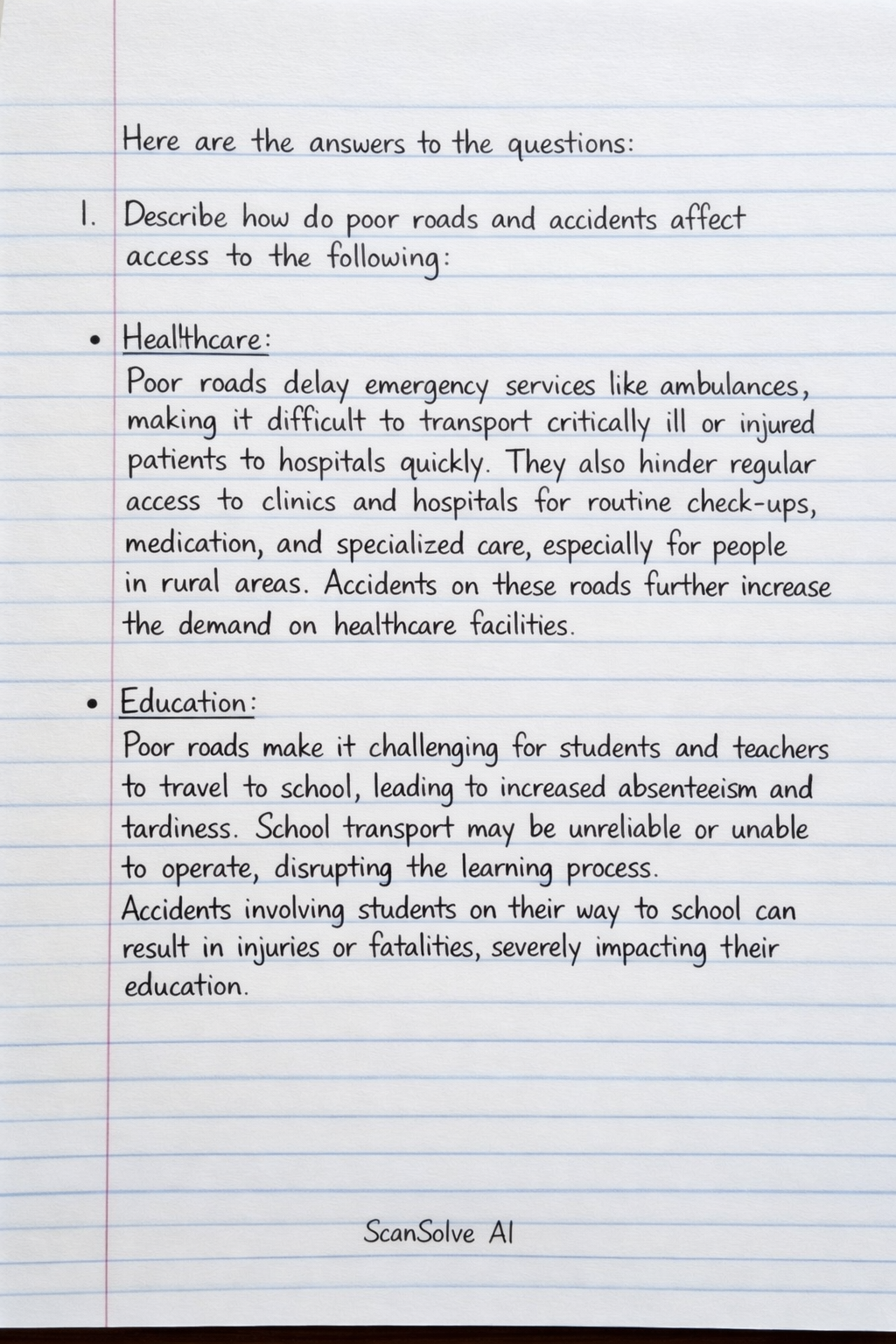
Here are the answers to the questions: 1. Describe how do poor roads and accidents affect access to the following: Healthcare: Poor roads delay emergency services like ambulances, making it difficult to transport critically ill or injured patients to hospitals quickly. They also hinder regular access to clinics and hospitals for routine check-ups, medication, and specialized care, especially for people in rural areas. Accidents on these roads further increase the demand on healthcare facilities. Education: Poor roads make it challenging for students and teachers to travel to school, leading to increased absenteeism and tardiness. School transport may be unreliable or unable to operate, disrupting the learning process. Accidents involving students on their way to school can result in injuries or fatalities, severely impacting their education. Employment: Poor roads increase commuting times and costs for workers, affecting punctuality and productivity. Businesses struggle to transport goods and services efficiently, leading to supply chain disruptions, higher operational costs, and reduced economic opportunities. Accidents can cause injuries that lead to loss of income and employment. 2. Discuss the negative impact of poor roads on vulnerable groups such as: Women: Poor roads disproportionately affect women who often bear the responsibility for household chores, childcare, and caring for the sick. It makes accessing markets, clinics, and schools more time-consuming and dangerous, increasing their workload and limiting their access to essential services and economic opportunities. They may also face increased safety risks when traveling on poorly maintained or isolated roads. Children: Children are at a higher risk of accidents when walking or cycling on poor roads, especially without safe pedestrian infrastructure. Unreliable or delayed school transport due to bad roads can lead to missed schooling and reduced educational attainment. Access to timely healthcare for sick children is also severely hampered, potentially leading to worse health outcomes. The elderly: The elderly are more susceptible to falls and injuries on uneven or poorly maintained roads, which can have severe health consequences. Poor road conditions make it difficult for them to access healthcare facilities for chronic conditions or emergencies, leading to isolation and reduced quality of life. Their limited mobility is further restricted by inadequate road infrastructure. People with disabilities: Poor roads, especially those lacking proper sidewalks, ramps, or smooth surfaces, create significant barriers for people using wheelchairs, crutches, or other mobility aids. This limits their independence and access to essential services, education, and employment opportunities. They face an increased risk of accidents and injuries due to inaccessible infrastructure.