

This geography problem is solved step by step below, with detailed explanations to help you understand the method and arrive at the correct answer.
ScanSolve AI Answer
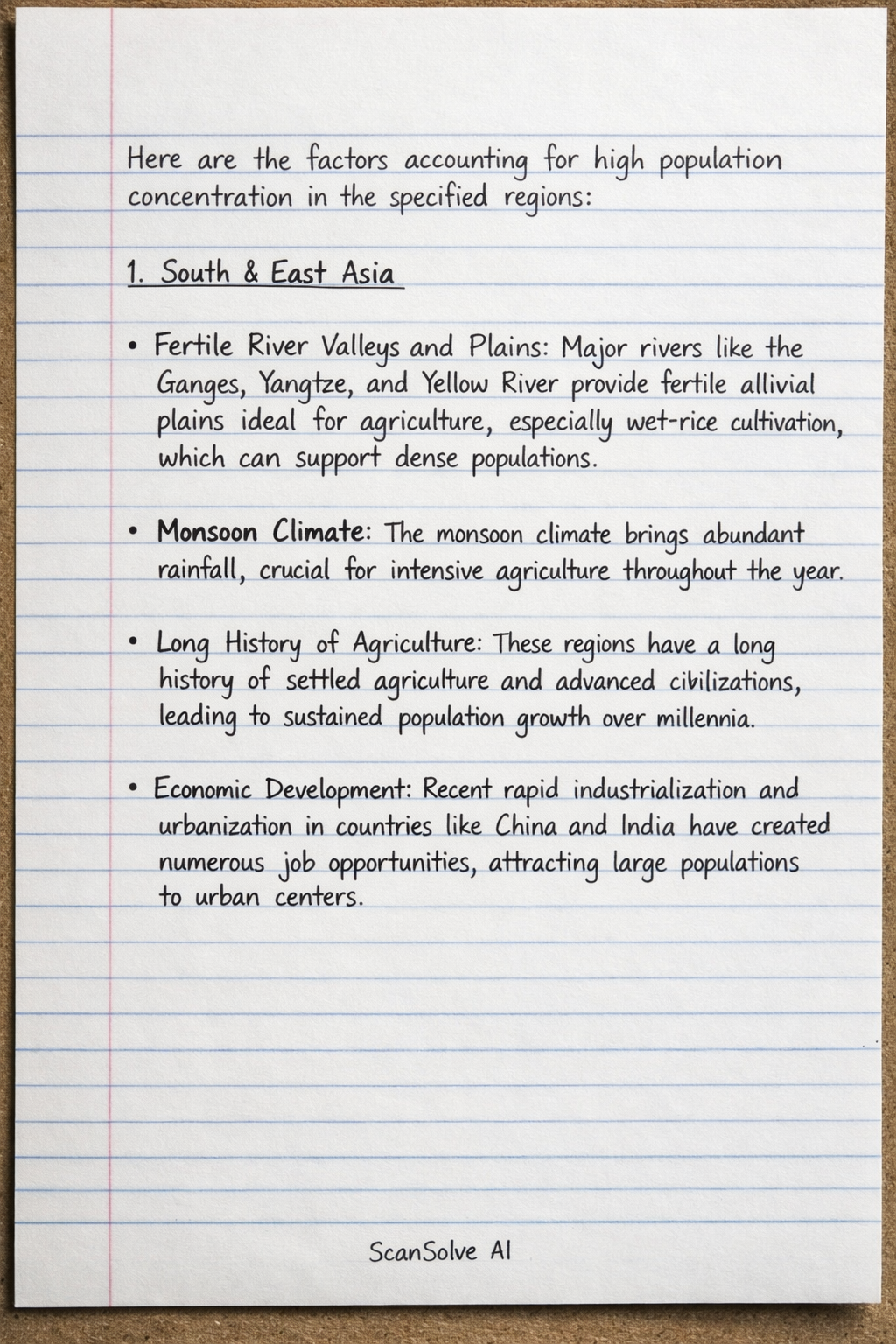
Here are the factors accounting for high population concentration in the specified regions: 1. South & East Asia Fertile River Valleys and Plains: Major rivers like the Ganges, Yangtze, and Yellow River provide fertile alluvial plains ideal for agriculture, especially wet-rice cultivation*, which can support dense populations. Monsoon Climate:* The monsoon climate brings abundant rainfall, crucial for intensive agriculture throughout the year. Long History of Agriculture:* These regions have a long history of settled agriculture and advanced civilizations, leading to sustained population growth over millennia. Economic Development:* Recent rapid industrialization and urbanization in countries like China and India have created numerous job opportunities, attracting large populations to urban centers. 2. Northeastern United States / Southeastern Canada Early Industrialization:* This region was a cradle of industrialization in North America, with abundant resources like coal and iron, leading to the growth of manufacturing and port cities. Major Economic Hubs:* It hosts major financial, commercial, and industrial centers (e.g., New York, Boston, Toronto, Montreal), offering diverse employment opportunities. Transportation Networks:* Well-developed transportation infrastructure, including major ports, rivers, and railway systems, facilitates trade and movement of people. Temperate Climate:* A generally temperate climate supports both agriculture and comfortable living conditions. 3. Europe Early Industrial Revolution:* Europe was the birthplace of the Industrial Revolution, leading to the growth of factories and cities, which attracted large rural populations seeking work. Fertile Plains and Navigable Rivers:* Regions like the North European Plain and major rivers such as the Rhine and Danube provide fertile land for agriculture and efficient transportation routes for trade and industry. Temperate Climate:* Most of Europe enjoys a temperate climate, favorable for agriculture and human settlement. Historical Development:* A long history of settled agriculture, advanced civilizations, and established trade routes has contributed to sustained population growth and urbanization over centuries. Economic Integration:* High levels of economic development, trade, and political stability across many countries have fostered continued population concentration in urban and industrial areas.