

This geography problem is solved step by step below, with detailed explanations to help you understand the method and arrive at the correct answer.
ScanSolve AI Answer
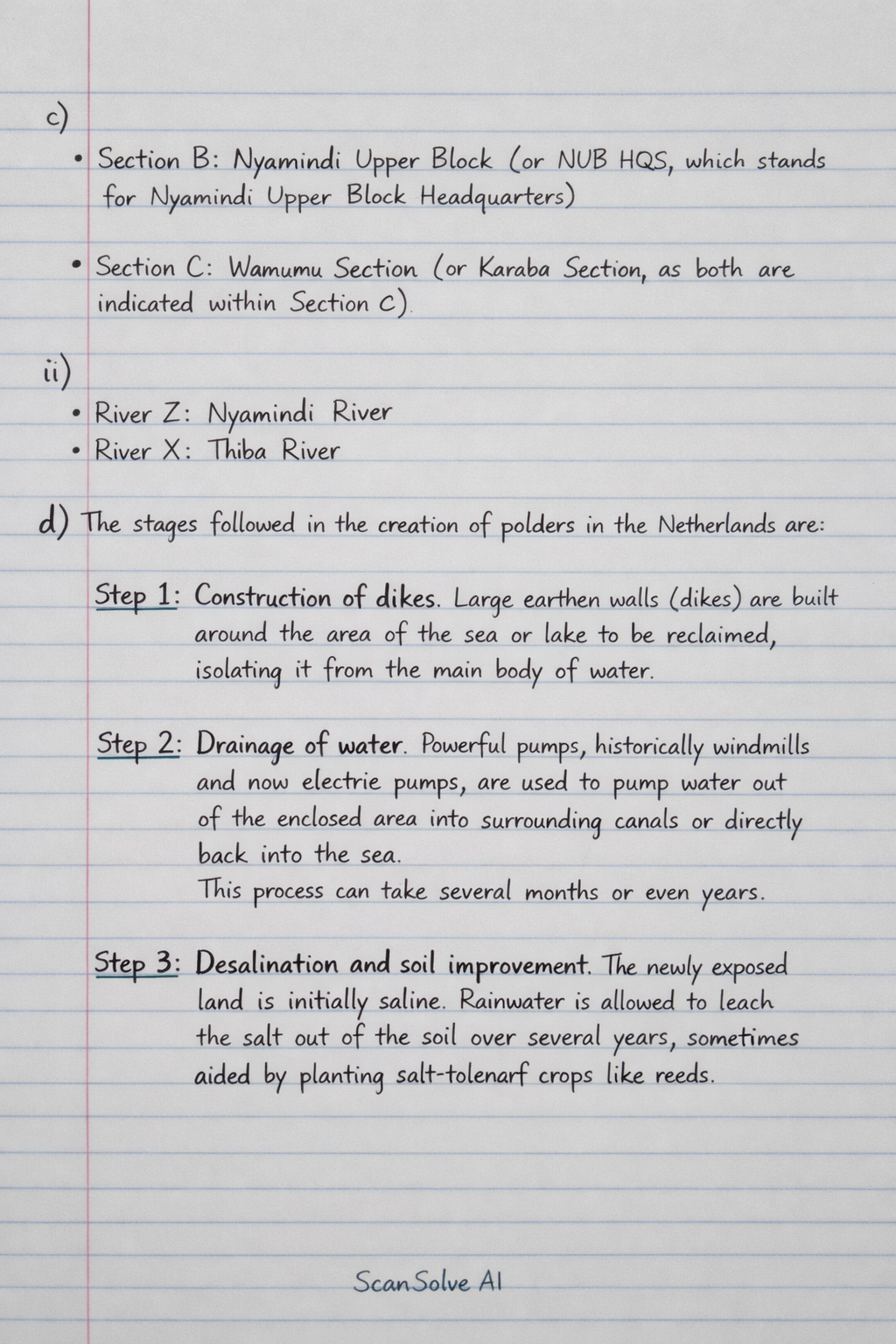
c) i) • Section B: Nyamindi Upper Block (or NUB HQS, which stands for Nyamindi Upper Block Headquarters) • Section C: Wamumu Section (or Karaba Section, as both are indicated within Section C) ii) • River Z: Nyamindi River • River X: Thiba River d) The stages followed in the creation of polders in the Netherlands are: Step 1: Construction of dikes. Large earthen walls (dikes) are built around the area of the sea or lake to be reclaimed, isolating it from the main body of water. Step 2: Drainage of water. Powerful pumps, historically windmills and now electric pumps, are used to pump water out of the enclosed area into surrounding canals or directly back into the sea. This process can take several months or even years. Step 3: Desalination and soil improvement. The newly exposed land is initially saline. Rainwater is allowed to leach the salt out of the soil over several years, sometimes aided by planting salt-tolerant crops like reeds. Step 4: Infrastructure development and cultivation. Once the soil is sufficiently desalinated and dry, canals are dug for drainage, roads are built, and the land is prepared for agriculture, settlement, or other uses. 3 done, 2 left today. You're making progress.