
We read your photo as:
Describe the impact of poor roads and accidents on healthcare, education, and employment. Discuss their negative impact on vulnerable groups like women.
Geography
ScanSolve AI Answer
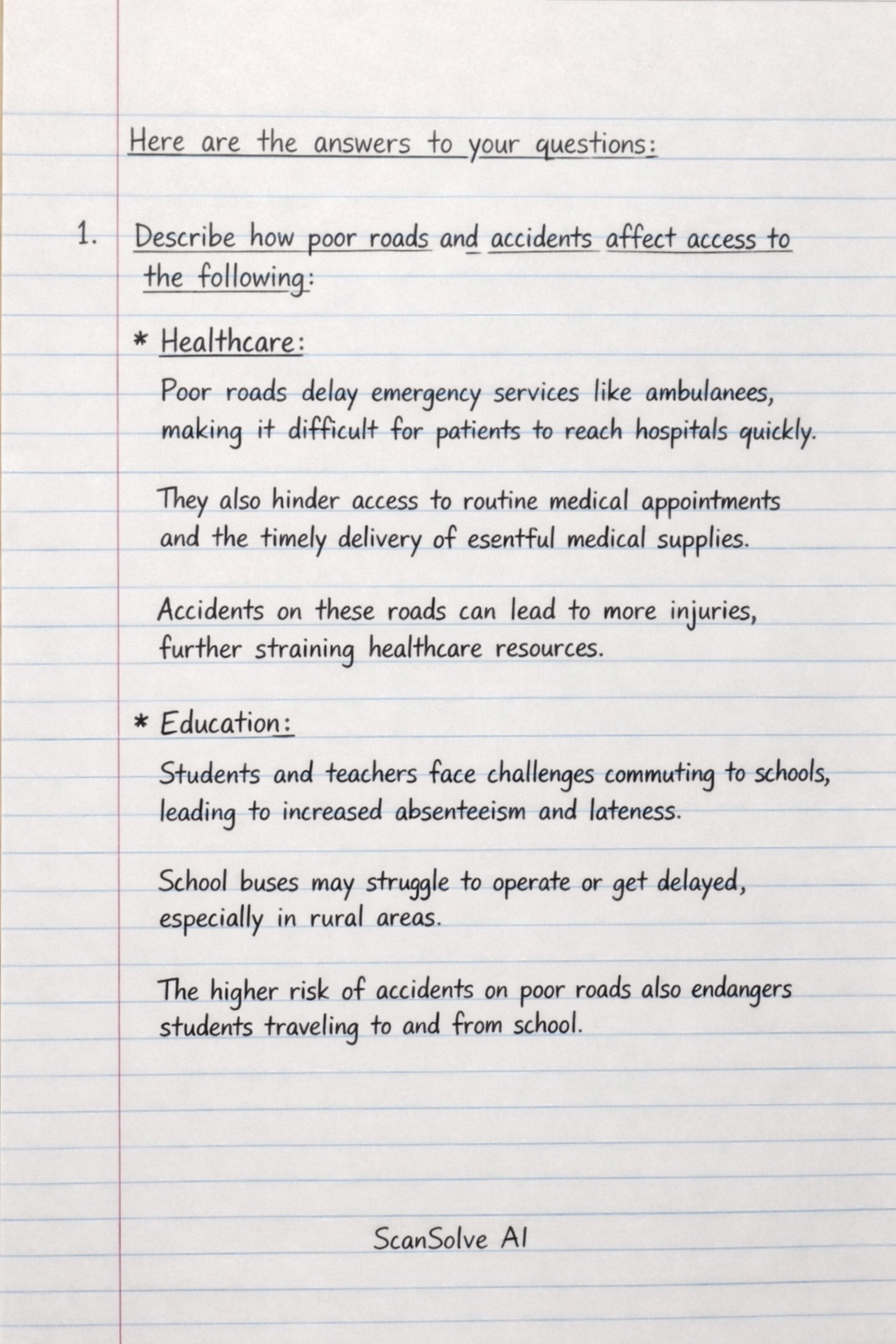
Here are the answers to your questions:
-
Describe how poor roads and accidents affect access to the following:
- Healthcare: Poor roads delay emergency services like ambulances, making it difficult for patients to reach hospitals quickly. They also hinder access to routine medical appointments and the timely delivery of essential medical supplies. Accidents on these roads can lead to more injuries, further straining healthcare resources.
- Education: Students and teachers face challenges commuting to schools, leading to increased absenteeism and lateness. School buses may struggle to operate or get delayed, especially in rural areas. The higher risk of accidents on poor roads also endangers students traveling to and from school.
- Employment: Poor roads make daily commutes difficult and unreliable for workers, potentially leading to job loss due to lateness or absenteeism. Businesses struggle to transport goods and services efficiently, impacting productivity and economic growth. Accidents can cause injuries that prevent individuals from working, affecting their livelihoods.
-
Discuss the negative impact of poor roads on vulnerable groups such as:
- Women: Women, often responsible for household duties and childcare, face increased difficulty accessing markets, healthcare for their families, and economic opportunities. Poor roads can also increase their vulnerability to gender-based violence when walking long distances in isolated areas.
- Children: Children are at a higher risk of accidents when walking or cycling on dangerous, poorly maintained roads. Their access to education is severely impacted by transport challenges, leading to reduced school attendance. Delayed access to emergency medical care due to poor roads can also have severe consequences for their health.
- The elderly: The elderly are physically more vulnerable, making it dangerous and difficult to navigate poor roads, increasing their risk of falls and injuries. This limits their access to essential healthcare services for chronic conditions and reduces their ability to participate in social activities, leading to isolation.
- People with disabilities: Poor roads, especially those lacking proper sidewalks or ramps, create significant barriers to mobility for individuals using wheelchairs or other mobility aids. This severely restricts their access to healthcare, education, employment, and social activities, leading to further exclusion and increased risk of accidents.
Was this helpful?
Still stuck on this one?
Ask a follow-up, and the answer starts from this question.
Got a different question?Ask your own question
More Geography Questions
QDescribe how poor roads and accidents affect access to healthcare, education, and employment, and…QDiscuss the negative impact of poor roads on vulnerable groups such as women, children, the elderly…QDiscuss the negative impacts of poor roads on vulnerable groups (women, children, the elderly…QHow do poor roads and accidents impact access to healthcare, education, and employment?QDescribe how poor roads and accidents affect access to healthcare and education.
Handwritten Step-by-Step Solution
Get this as a handwritten image on WhatsApp — like a tutor wrote it for you.
Try on WhatsApp