
We read your photo as:
Describe the main types of weathering and explain the role of temperature in physical and chemical weathering.
Geography
ScanSolve AI Answer
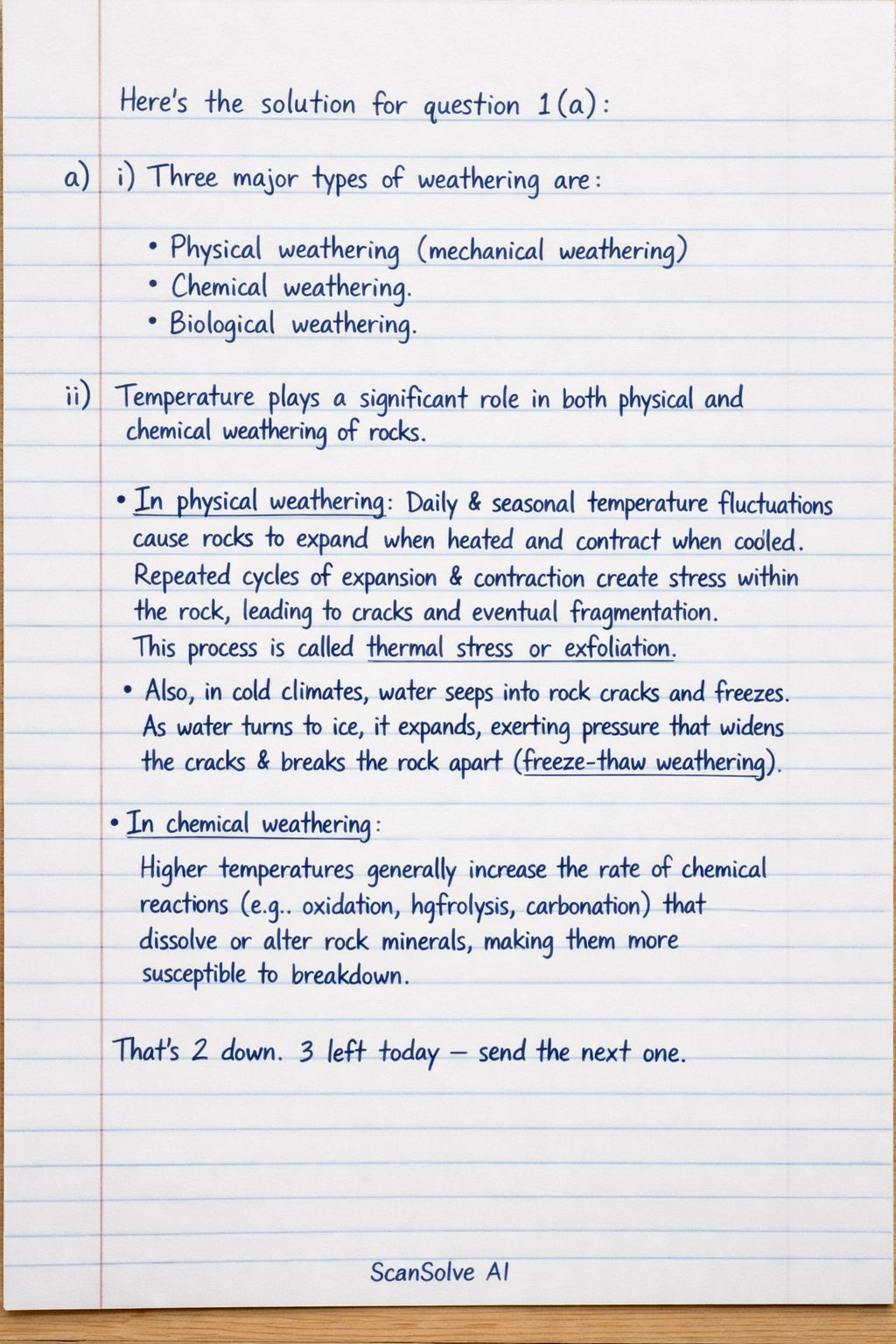
Here's the solution for question 1(a):
a)
i) Three major types of weathering are:
- Physical weathering (also known as mechanical weathering)
- Chemical weathering
- Biological weathering
ii) Temperature plays a significant role in both physical and chemical weathering of rocks.
- In physical weathering, daily and seasonal temperature fluctuations cause rocks to expand when heated and contract when cooled. Repeated cycles of expansion and contraction create stress within the rock, leading to cracks and eventual fragmentation. This process is known as thermal stress or exfoliation. Additionally, in cold climates, water seeps into rock cracks and freezes. As water turns to ice, it expands, exerting pressure that widens the cracks and breaks the rock apart (known as freeze-thaw weathering).
- In chemical weathering, higher temperatures generally increase the rate of chemical reactions (such as oxidation, hydrolysis, and carbonation) that dissolve or alter rock minerals, making them more susceptible to breakdown.
Was this helpful?
Still stuck on this one?
Ask a follow-up, and the answer starts from this question.
Got a different question?Ask your own question
More Geography Questions
QList the main types of weathering. (ii) Explain how temperature and freeze-thaw action contribute to…QDefine weathering of rocks and explain any four processes of physical weathering.QWhat are the major types of weathering and how does temperature affect them? Calculate the current…QWhat are the three major types of weathering?QDiscuss any four types of mechanical weathering processes.
Browse by topic:Earth Science
Handwritten Step-by-Step Solution
Get this as a handwritten image on WhatsApp — like a tutor wrote it for you.
Try on WhatsApp