
We read your photo as:
Define responsible citizenship, give two examples for a Grade 12 learner, and state four factors contributing to youth hesitancy.
ScanSolve AI Answer
Step-by-step solution
5 stepsDefine "responsible citizenship".
Responsible citizenship refers to the active participation of individuals in their community and society, upholding laws, respecting the rights of others, and contributing to the common good.
Provide two examples of responsible citizenship for a Grade 12 learner.
- Participating in school clean-up campaigns or community service projects.
- Volunteering to tutor younger students or mentor peers.
State four factors contributing to youth hesitancy in acting as responsible citizens.
- Lack of awareness or education about civic duties and rights.
- Perception of corruption or ineffectiveness in leadership.
- Fear of reprisal or negative consequences for speaking out.
- Lack of opportunities for meaningful participation.
Investigate how human rights violations negatively affect a community.
A high prevalence of human rights violations erodes trust in institutions, fosters social instability, and can lead to economic decline due to insecurity. It also causes psychological trauma, fear, and a breakdown of social cohesion, hindering community development and well-being.
Discuss how a lack of responsible citizenship leads to further human rights violations.
A lack of responsible citizenship creates an environment where human rights violations can proliferate. When citizens are apathetic or disengaged, they may fail to report abuses, hold leaders accountable, or participate in democratic processes that protect rights. This inaction allows perpetrators to act with impunity, weakening the rule of law and enabling further violations as the community's collective vigilance and commitment to justice diminish.
Still stuck on this one?
Ask a follow-up, and the answer starts from this question.
More Geography Questions
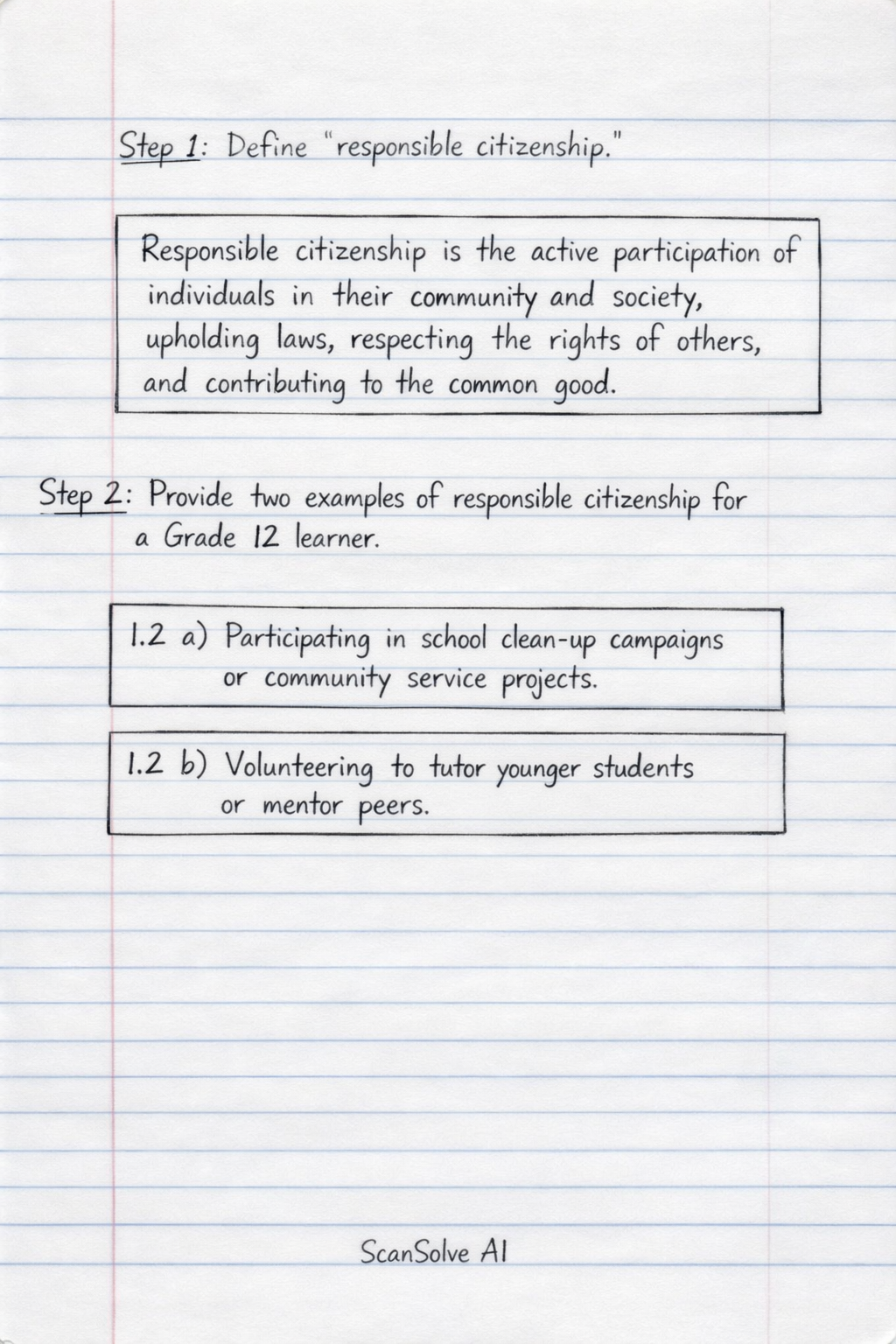
Handwritten Step-by-Step Solution
Get this as a handwritten image on WhatsApp — like a tutor wrote it for you.
Try on WhatsApp