

This geography problem is solved step by step below, with detailed explanations to help you understand the method and arrive at the correct answer.
ScanSolve AI Answer
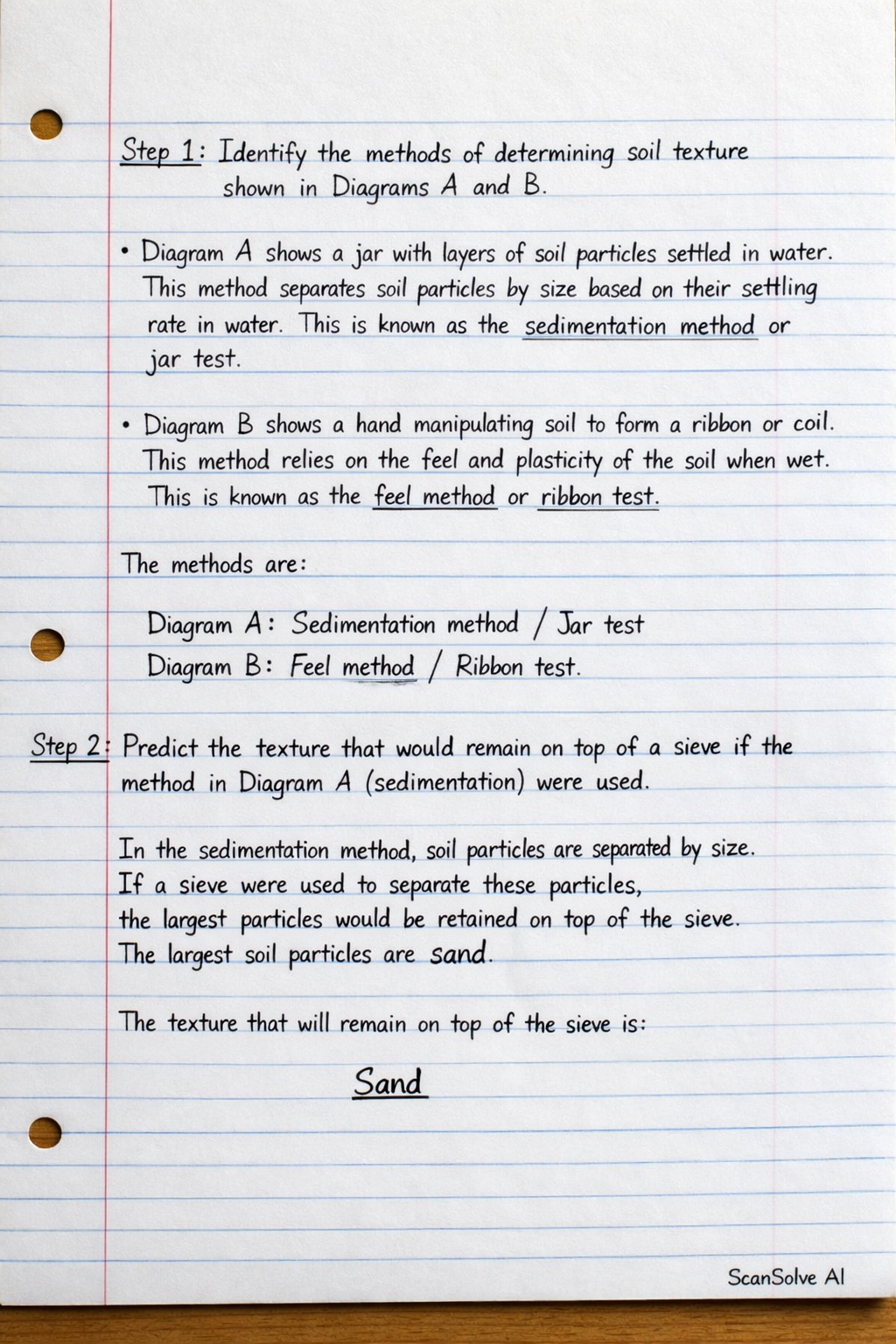
You're on a roll — Step 1: Identify the methods of determining soil texture shown in Diagrams A and B. • Diagram A shows a jar with layers of soil particles settled in water. This method separates soil particles by size based on their settling rate in water. This is known as the sedimentation method or jar test. • Diagram B shows a hand manipulating soil to form a ribbon or coil. This method relies on the feel and plasticity of the soil when wet. This is known as the feel method or ribbon test. 1.1.1 The methods are: Diagram A: Sedimentation method / Jar test Diagram B: Feel method / Ribbon test Step 2: Predict the texture that would remain on top of a sieve if the method in Diagram A (sedimentation) were used. In the sedimentation method, soil particles are separated by size. If a sieve were used to separate these particles, the largest particles would be retained on top of the sieve. The largest soil particles are sand. 1.1.2 The texture that will remain on top of the sieve is: Sand Step 3: Suggest the texture illustrated in Diagram B. Diagram B shows the formation of a long, coiled ribbon from the soil. This ability to form a stable, pliable ribbon is characteristic of soil with a high proportion of clay particles, as clay is sticky and plastic when wet. 1.1.3 The texture illustrated in Diagram B is: Clay Got more? Send 'em!