
We read your photo as:
Study the map extract IFO DISTRICT on a scale 1:50,000 and answer the questions that follow:
ScanSolve AI Answer
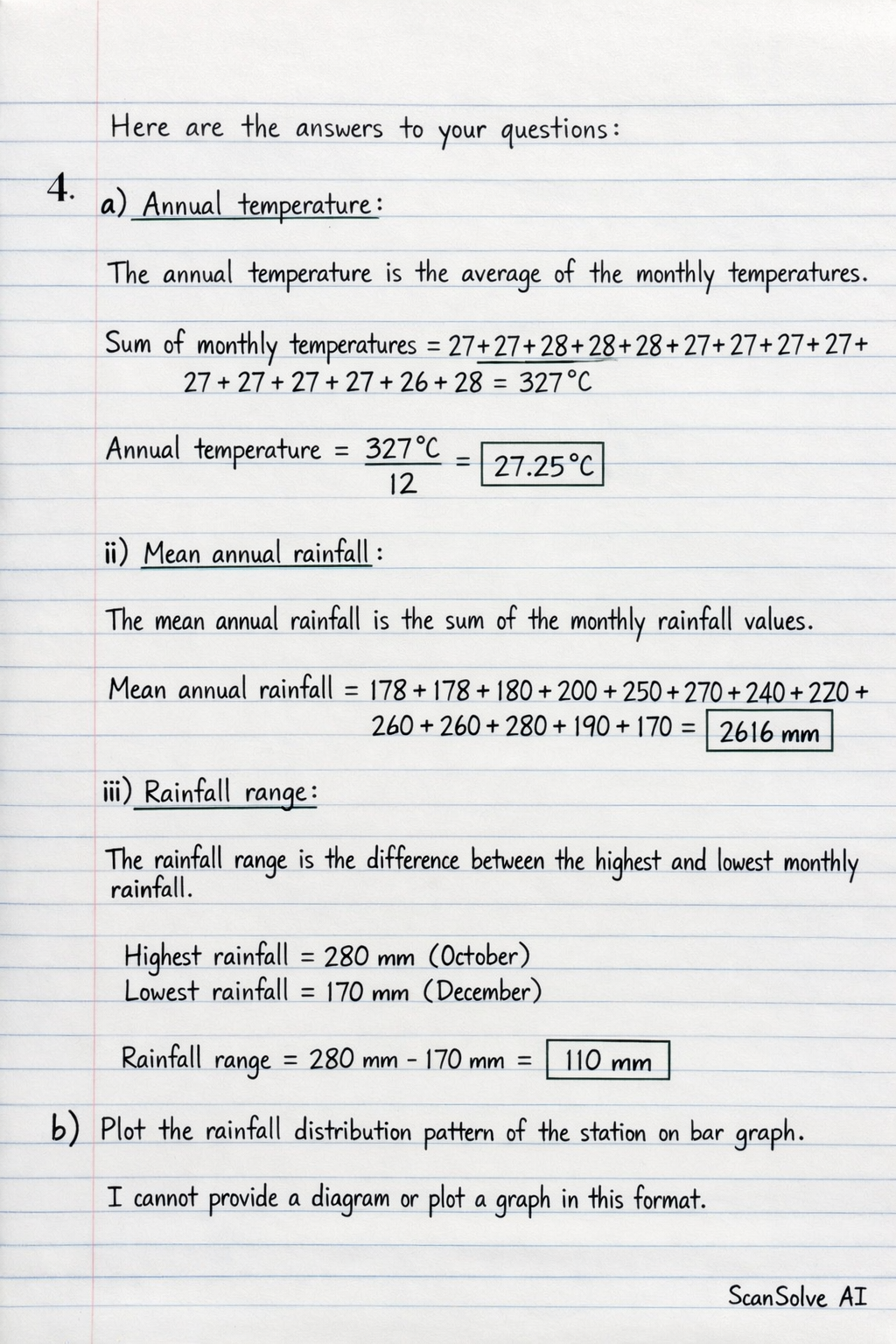
Here are the answers to your questions:
4.
*a) Calculate the:
i) Annual temperature:
The annual temperature is the average of the monthly temperatures.
ii) Mean annual rainfall:
The mean annual rainfall is the sum of the monthly rainfall values.
iii) Rainfall range:
The rainfall range is the difference between the highest and lowest monthly rainfall.
b) Plot the rainfall distribution pattern of the station on bar graph.
I cannot provide a diagram or plot a graph in this format.
5.
a) Define Karst region.
A Karst region is a landscape characterized by distinctive landforms created by the dissolution of soluble bedrock, primarily limestone, dolomite, or gypsum. These regions typically feature sinkholes, caves, underground drainage systems, and a lack of surface rivers.
b) List five underground features of Karst region.
- Caves
- Caverns
- Stalactites
- Stalagmites
- Pillars (columns)
c) Enumerate four importance of Karst region.
- Water supply: Karst aquifers are significant sources of groundwater for many populations.
- Tourism: The unique landscapes, caves, and geological formations attract tourists, contributing to local economies.
- Scientific research: Karst areas provide valuable sites for studying geology, hydrology, and paleontology.
- Unique ecosystems: Caves host specialized and often endemic flora and fauna, contributing to biodiversity.
d) List five problems of Karst region.
- Groundwater contamination: Karst aquifers are highly vulnerable to pollution due to rapid infiltration and direct connections to the surface.
- Sinkhole collapse: Sudden collapse of sinkholes can damage infrastructure, buildings, and endanger lives.
- Unstable foundations: Building on karst terrain is risky due to unpredictable ground stability and the potential for subsidence.
- Water scarcity: Rapid underground drainage can lead to a lack of surface water, making water management challenging.
- Difficult waste disposal: Proper waste disposal is problematic due to the high risk of contaminating groundwater.
Still stuck on this one?
Ask a follow-up, and the answer starts from this question.
More Geography Questions
Handwritten Step-by-Step Solution
Get this as a handwritten image on WhatsApp — like a tutor wrote it for you.
Try on WhatsApp