
We read your photo as:
Summarize hydrological patterns observed, relationships between physical factors and water movement and impact of human activities.
Geography
ScanSolve AI Answer
Step-by-step solution
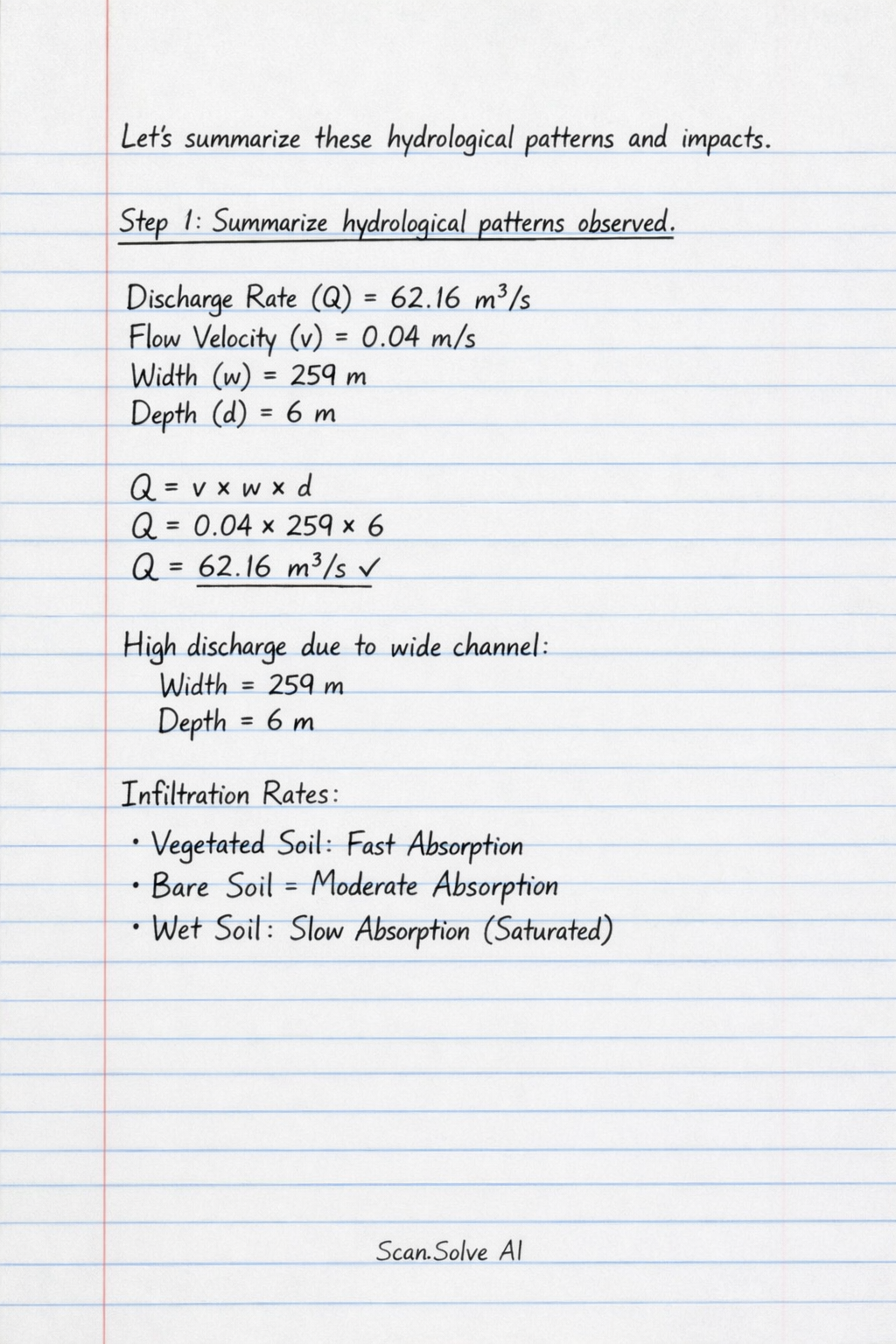
3 stepsLet's summarize these hydrological patterns and impacts.
Summarize hydrological patterns observed.
The Kofiando River tributary exhibits a high discharge rate of , despite a low flow velocity of . This high discharge is attributed to the tributary's significant width (259 m) and depth (6 m). In terms of infiltration, vegetated soil shows the fastest water absorption, followed by bare soil with a moderate rate, while wet soil has the slowest infiltration due to saturation.
Relationships between physical factors and water movement.
- Slope: The gentle slope of the river, along with obstructions, directly contributes to the low flow velocity.
- Vegetation: Areas with vegetation (like grass) significantly enhance water infiltration by creating root channels and soil spaces, thus reducing surface runoff. Conversely, sparse vegetation on river banks leads to loose soil and increased erosion.
- Soil Type: The physical structure of the soil dictates infiltration. Vegetated soil is porous, allowing fast infiltration. Bare soil is denser, resulting in moderate infiltration. Wet soil is saturated, preventing further water movement and leading to very slow infiltration.
Impact of human activities.
Human activities have a detrimental impact on the hydrological system:
- Construction: Building houses and roads compacts the soil, creating impermeable surfaces. This drastically reduces infiltration and increases surface runoff, elevating flood risk.
- Pollution/Dumping: The disposal of trash blocks soil pores, further decreasing infiltration and contributing to increased runoff.
- Bank Disturbance: Human activities near the river banks, combined with sparse vegetation, lead to soil erosion. These combined impacts collectively diminish the land's natural capacity to absorb water, thereby increasing the likelihood of flooding.
Was this helpful?
Still stuck on this one?
Ask a follow-up, and the answer starts from this question.
Got a different question?Ask your own question
More Geography Questions
QSummarize the factors affecting water infiltration and river bank erosion, and explain the link to…QAnalyze the provided hydrograph data, identifying baseflow, peak flow, rising limb, falling limb…QSummarize the key points about the states of matter and the water cycle from the provided mind map.QWhat is hydrological cycleQExplain three factors that influence surface runoff and describe the hydrological cycle using arrows…
Handwritten Step-by-Step Solution
Get this as a handwritten image on WhatsApp — like a tutor wrote it for you.
Try on WhatsApp