
We read your photo as:
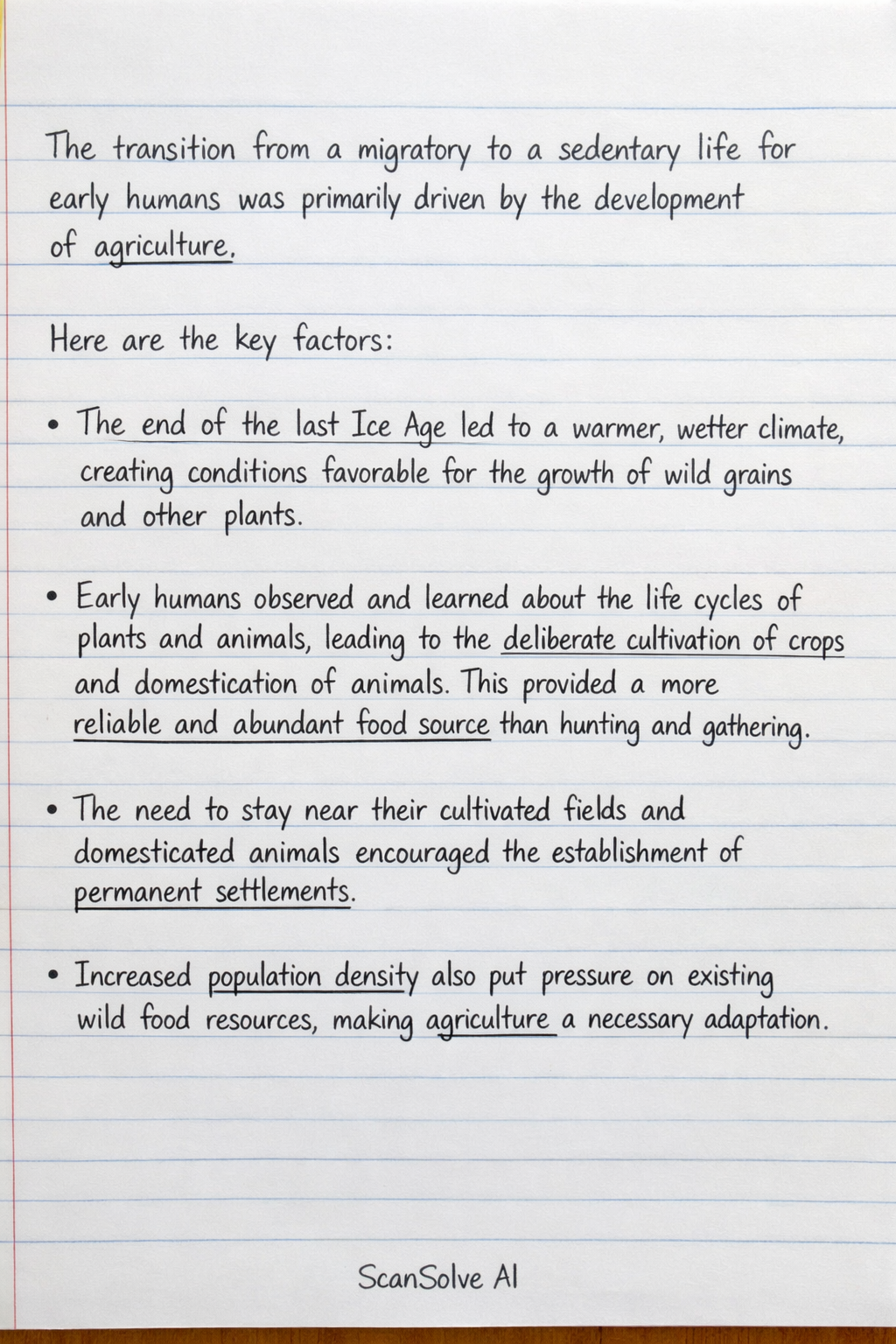
The transition from a migratory to a sedentary life for early humans was primarily driven by the development of agriculture.
Geography
ScanSolve AI Answer
The transition from a migratory to a sedentary life for early humans was primarily driven by the development of agriculture.
Here are the key factors:
- The end of the last Ice Age led to a warmer, wetter climate, creating conditions favorable for the growth of wild grains and other plants.
- Early humans observed and learned about the life cycles of plants and animals, leading to the deliberate cultivation of crops and the domestication of animals. This provided a more reliable and abundant food source than hunting and gathering.
- The need to stay near their cultivated fields and domesticated animals encouraged the establishment of permanent settlements.
- Increased population density also put pressure on existing wild food resources, making agriculture a necessary adaptation.
Was this helpful?
Still stuck on this one?
Ask a follow-up, and the answer starts from this question.
Got a different question?Ask your own question
More Geography Questions
Handwritten Step-by-Step Solution
Get this as a handwritten image on WhatsApp — like a tutor wrote it for you.
Try on WhatsApp