
We read your photo as:
Using the table below, classify each of the following rocks according to their mode of formation: marble, gabbro, dolomite, limestone, slate.
ScanSolve AI Answer
Here are the answers to the questions based on the image provided.
i) horizon A: This is the topsoil, characterized by a high concentration of organic matter (humus), making it dark in color and rich in biological activity.
ii) horizon B: This is the subsoil, where clay, iron, and aluminum compounds accumulate, leached from the A horizon. It is denser and has less organic matter than horizon A.
iii) horizon C: This is the parent material, consisting of partially weathered rock or unconsolidated sediment from which the soil developed. It contains very little organic matter.
iv) horizon D: This is typically the bedrock (R horizon), which is the unweathered, solid rock layer found beneath the C horizon.
b) Classification of rocks by mode of formation:
- Marble: Metamorphic
- Gabbro: Igneous
- Dolomite: Sedimentary
- Limestone: Sedimentary
- Slate: Metamorphic
Still stuck on this one?
Ask a follow-up, and the answer starts from this question.
More Geography Questions
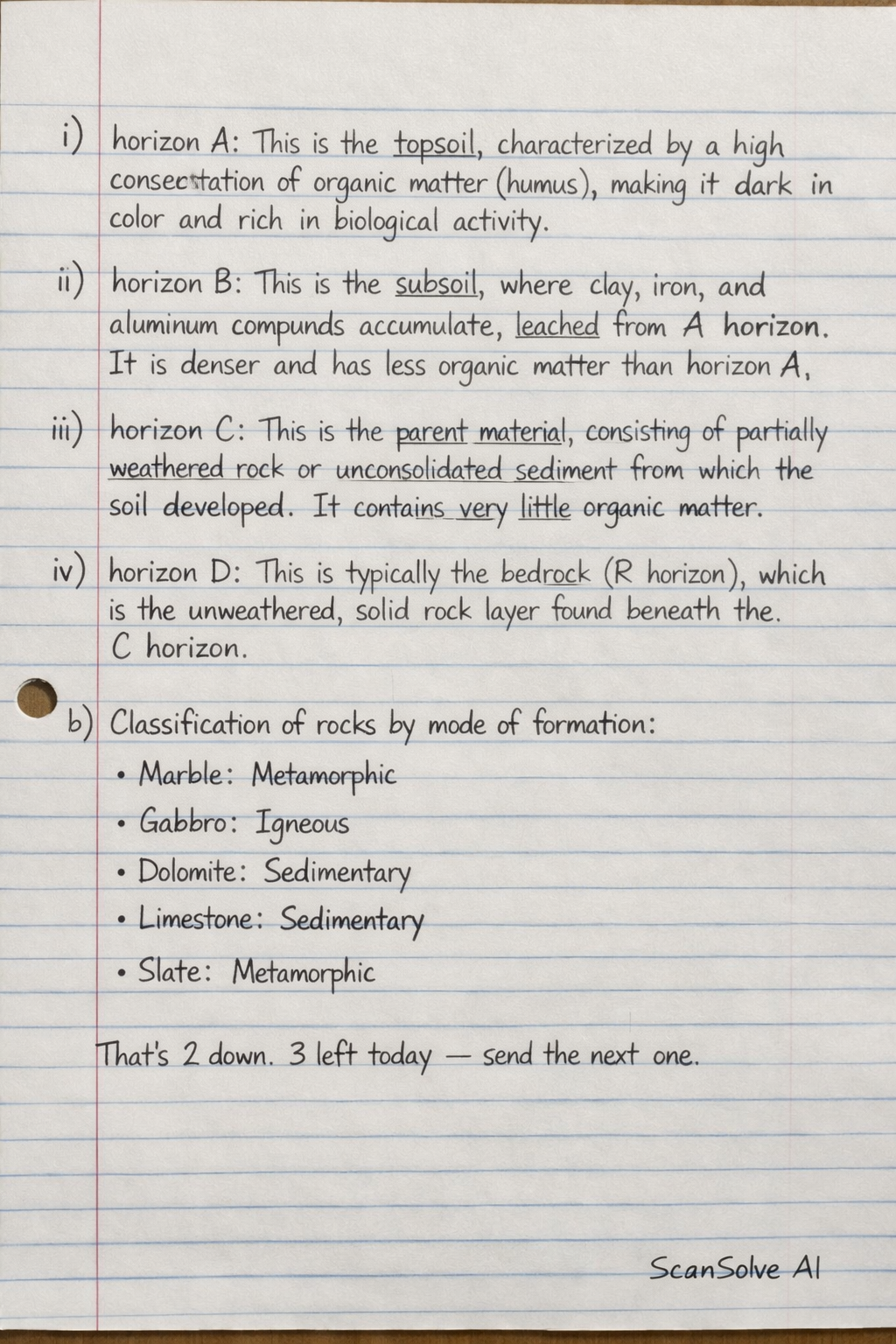
Handwritten Step-by-Step Solution
Get this as a handwritten image on WhatsApp — like a tutor wrote it for you.
Try on WhatsApp