

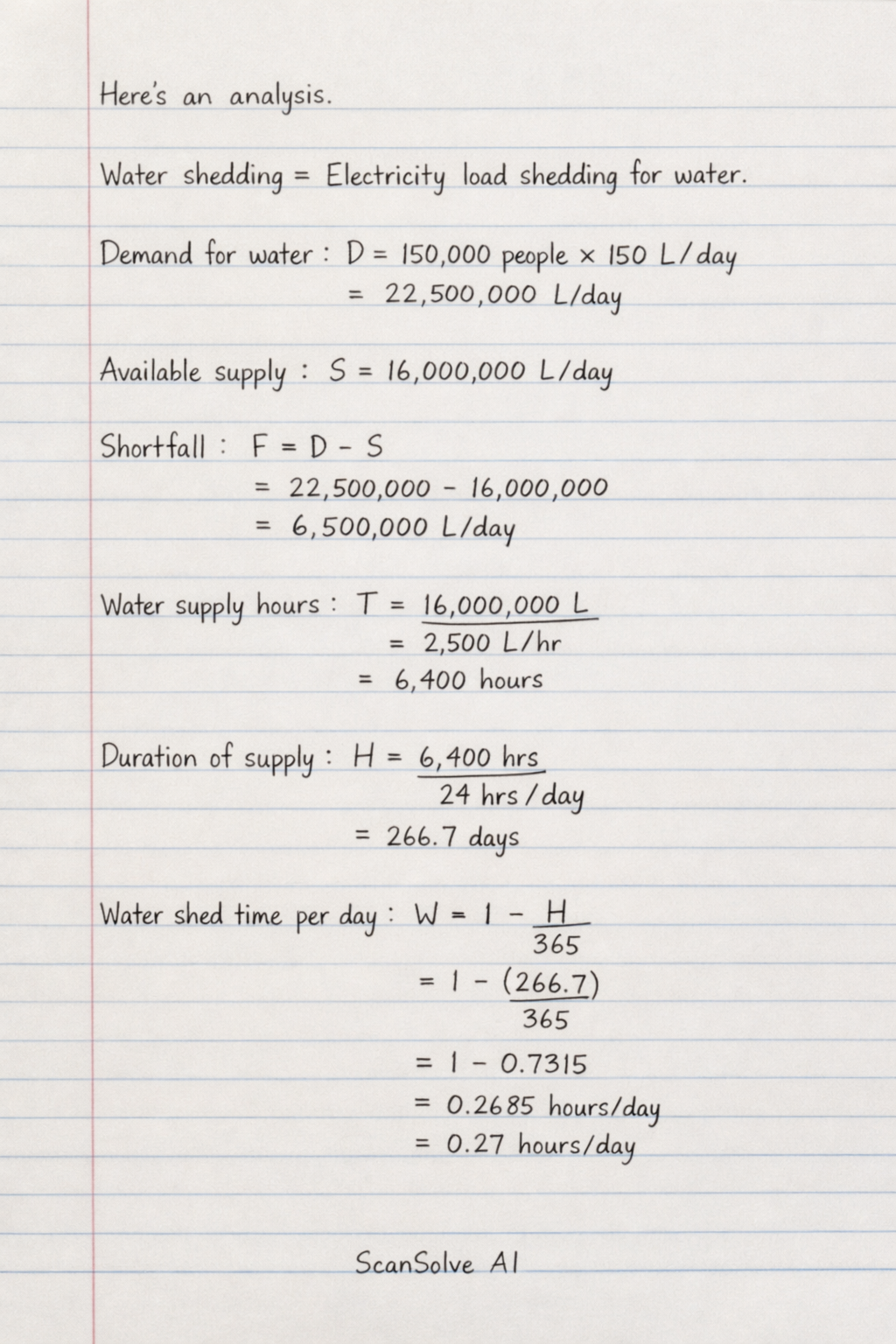
This geography problem is solved step by step below, with detailed explanations to help you understand the method and arrive at the correct answer.
ScanSolve AI Answer
Water shedding, often likened to electricity load shedding, refers to the deliberate or involuntary interruption of water supply to specific areas for a period. This critical issue arises when the demand for water exceeds the available supply or when infrastructure limitations prevent efficient distribution. It is a growing concern globally, particularly in regions facing water scarcity and rapid urbanization, posing significant challenges to public health, economic stability, and social equity. The primary problems associated with water shedding are multifaceted. Foremost is the severe impact on public health. Without a consistent supply of clean water, communities struggle with basic hygiene and sanitation, leading to an increased risk of waterborne diseases such as cholera, typhoid, and dysentery. Access to safe drinking water becomes compromised, forcing residents to rely on potentially unsafe alternative sources. Furthermore, daily life is severely disrupted; households cannot perform essential tasks like cooking, cleaning, and bathing, creating immense inconvenience and stress. The sources of water shedding are complex and interconnected. Climate change plays a crucial role, manifesting as prolonged droughts and unpredictable rainfall patterns that deplete water reserves. Aging and inadequate infrastructure are also major contributors; leaky pipes, inefficient treatment plants, and insufficient storage capacity result in significant water loss and inability to meet demand. Rapid population growth and urbanization place immense pressure on existing water systems, often outstripping the capacity for supply. Additionally, poor water resource management, including insufficient investment in infrastructure maintenance, lack of effective conservation policies, and sometimes corruption, exacerbates the problem. Water pollution from industrial and agricultural activities further reduces the availability of potable water. The effects of water shedding ripple through society. Economically, businesses, especially those reliant on water for production or sanitation, face operational challenges, leading to reduced productivity, job losses, and increased costs. Agriculture, a major water consumer, suffers significantly, impacting food security. Socially, the burden disproportionately falls on vulnerable populations, particularly women and children, who often spend hours fetching water, diverting time from education and productive activities. This can deepen existing inequalities and lead to social unrest. Environmentally, the desperate search for water can lead to over-extraction of groundwater, damaging ecosystems and exacerbating long-term water scarcity. Addressing water shedding requires a holistic approach, combining infrastructure upgrades, sustainable water management, and public awareness campaigns for conservation. What's next? Send 'em! 📸