
We read your photo as:
Describe the world climatic zones with the aid of a diagram. Outline four factors that affect climate.
Geography
ScanSolve AI Answer
here are the answers to your questions:
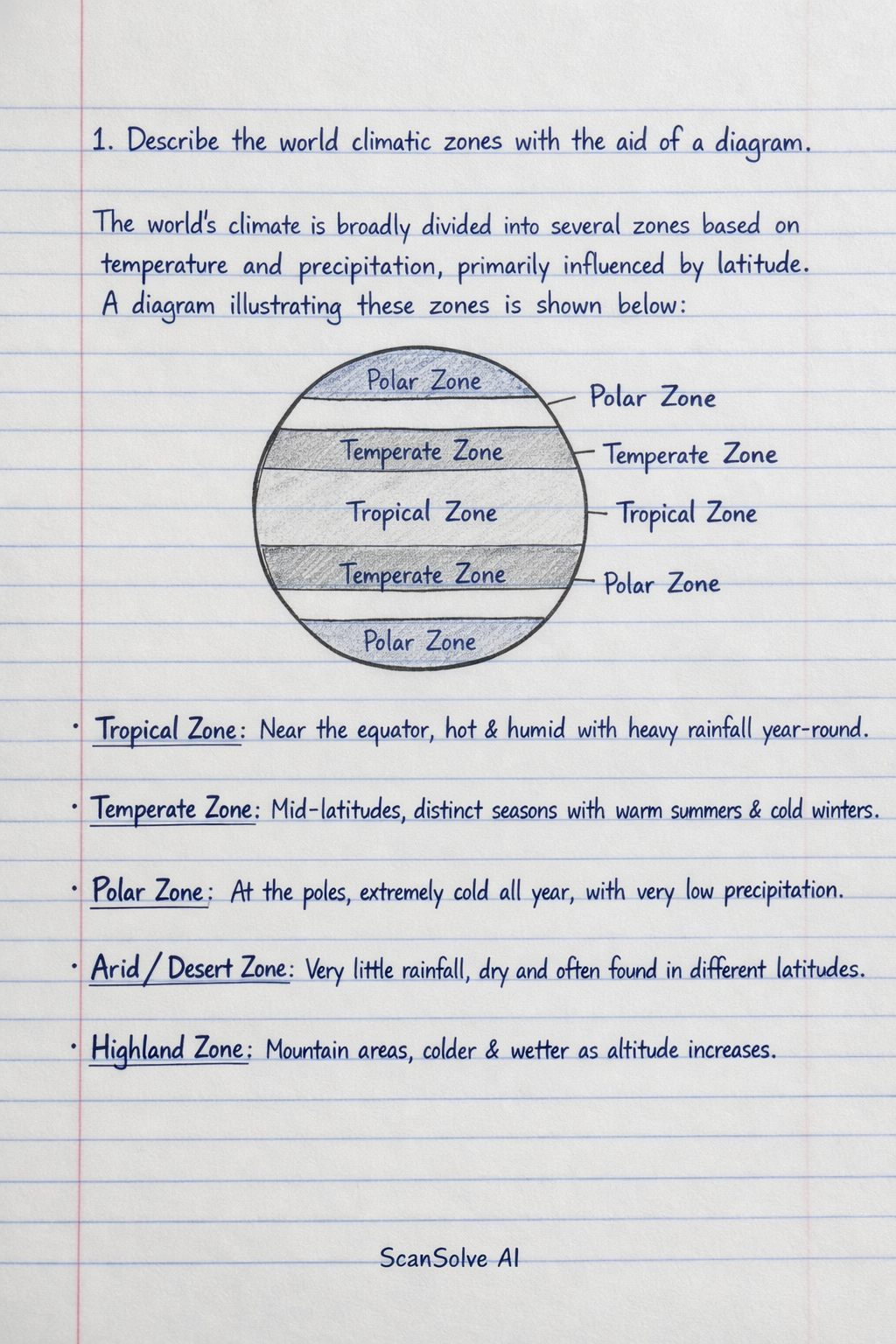
1. Describe the world climatic zones with the aid of a diagram.
The world's climate is broadly divided into several zones based on temperature and precipitation patterns, primarily influenced by latitude. A diagram would typically show these zones as bands around the Earth.
- Tropical Zone: Located near the equator, characterized by high temperatures and significant rainfall throughout the year.
- Temperate Zone: Found in the mid-latitudes, experiencing distinct seasons with warm summers and cool to cold winters, and moderate precipitation.
- Polar Zone: Situated at the highest latitudes (near the poles), characterized by extremely cold temperatures year-round and very low precipitation, mostly as snow.
- Arid/Desert Zone: These zones receive very little rainfall and can be found in various latitudes, often associated with high-pressure systems.
- Highland/Mountain Zone: Climate varies significantly with altitude, generally becoming colder and wetter at higher elevations.
(Note: A diagram showing these latitudinal bands and specific regions would be essential for a complete answer to this question.)
2. Outline four factors that affect climate.
Here are four key factors that influence climate:
- Latitude: The distance from the equator affects the intensity of solar radiation received. Areas closer to the equator receive more direct sunlight and are generally warmer, while areas closer to the poles receive less direct sunlight and are colder.
- Altitude: Height above sea level. As altitude increases, atmospheric pressure and temperature generally decrease. This is why mountain tops are often colder than valleys.
- Distance from the Sea (Continentality): Large bodies of water like oceans moderate temperatures. Coastal areas tend to have smaller temperature ranges (cooler summers, warmer winters) compared to inland areas, which experience more extreme temperature fluctuations.
- Ocean Currents: Warm or cold ocean currents can significantly influence the temperature and moisture content of coastal regions. For example, warm currents can bring milder, wetter conditions, while cold currents can lead to drier climates.
Was this helpful?
Still stuck on this one?
Ask a follow-up, and the answer starts from this question.
Got a different question?Ask your own question
More Geography Questions
QDistinguish between weather and climate, and discuss four factors influencing climate.QDescribe the characteristics of the three major climatic zones (Polar, Temperate, Tropical) and…QWhat are the main climate zones and what determines them?QWhat is world climate zoneQIdentify the climatic regions marked Y, V, Z and describe two differences between weather and…
Handwritten Step-by-Step Solution
Get this as a handwritten image on WhatsApp — like a tutor wrote it for you.
Try on WhatsApp