
We read your photo as:
b) The group of people who set up the Zenj Empire (more accurately, led the Zanj Rebellion) were enslaved East Africans (Zanj), often of Bantu origin, working in the salt marshes and plantatio
ScanSolve AI Answer
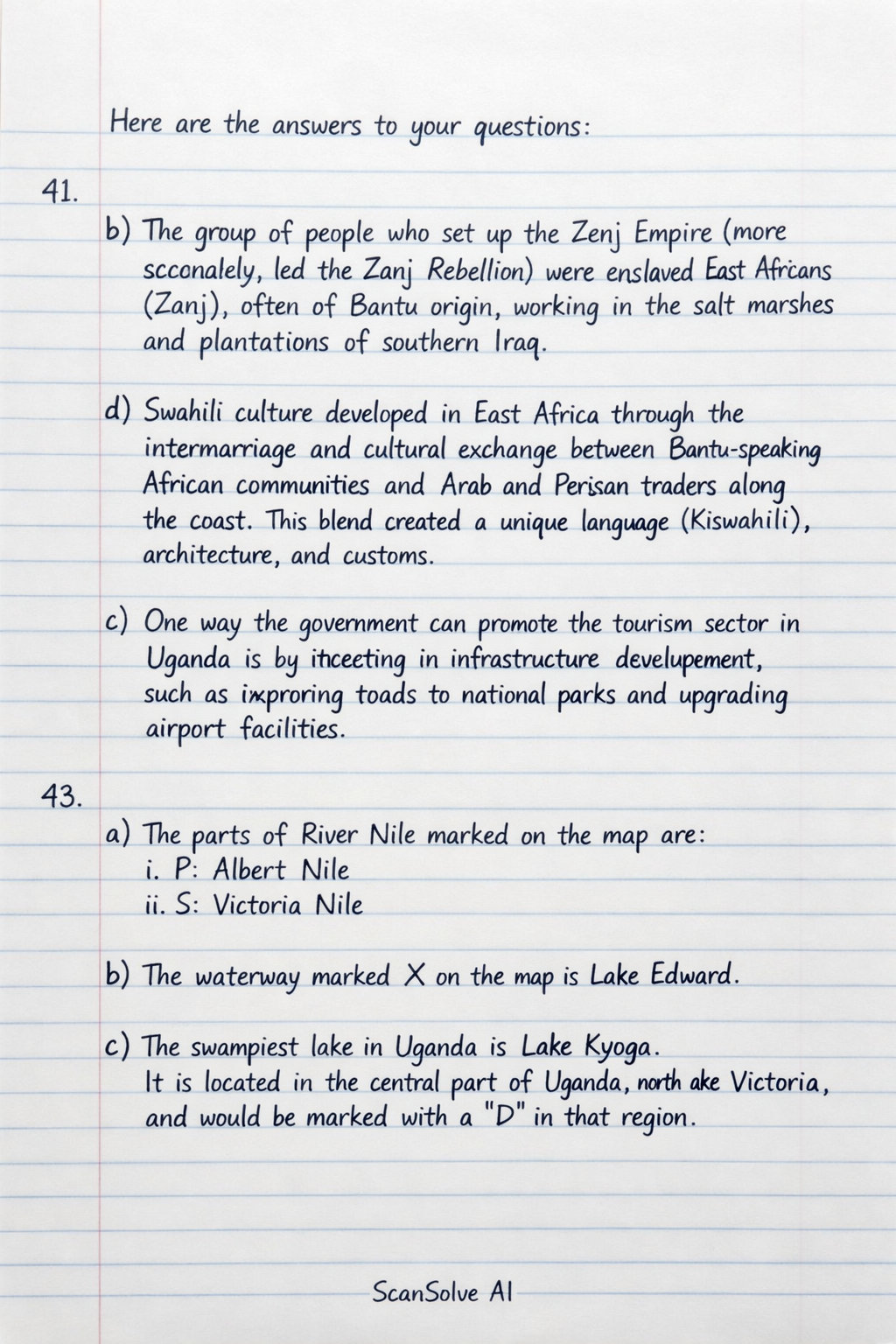
Here are the answers to your questions:
41.
b) The group of people who set up the Zenj Empire (more accurately, led the Zanj Rebellion) were enslaved East Africans (Zanj), often of Bantu origin, working in the salt marshes and plantations of southern Iraq.
d) Swahili culture developed in East Africa through the intermarriage and cultural exchange between Bantu-speaking African communities and Arab and Persian traders along the coast. This blend created a unique language (Kiswahili), architecture, and customs.
c) One way the government can promote the tourism sector in Uganda is by investing in infrastructure development, such as improving roads to national parks and upgrading airport facilities.
43.
a) The parts of River Nile marked on the map are:
i. P: Albert Nile
ii. S: Victoria Nile
b) The waterway marked X on the map is Lake Edward.
c) The swampiest lake in Uganda is Lake Kyoga. It is located in the central part of Uganda, north of Lake Victoria, and would be marked with a 'D' in that region.
44.
a) Besides the legislature, another organ of a democratic government is the Executive (or the Judiciary).
b) Two duties of the legislature are:
i. To make laws for the country.
ii. To approve the national budget and oversee government expenditure.
Still stuck on this one?
Ask a follow-up, and the answer starts from this question.
More History Questions
Handwritten Step-by-Step Solution
Get this as a handwritten image on WhatsApp — like a tutor wrote it for you.
Try on WhatsApp