

This history question requires analysis of historical events, causes, and consequences. The detailed answer below provides context, evidence, and a well-structured explanation.
ScanSolve AI Answer
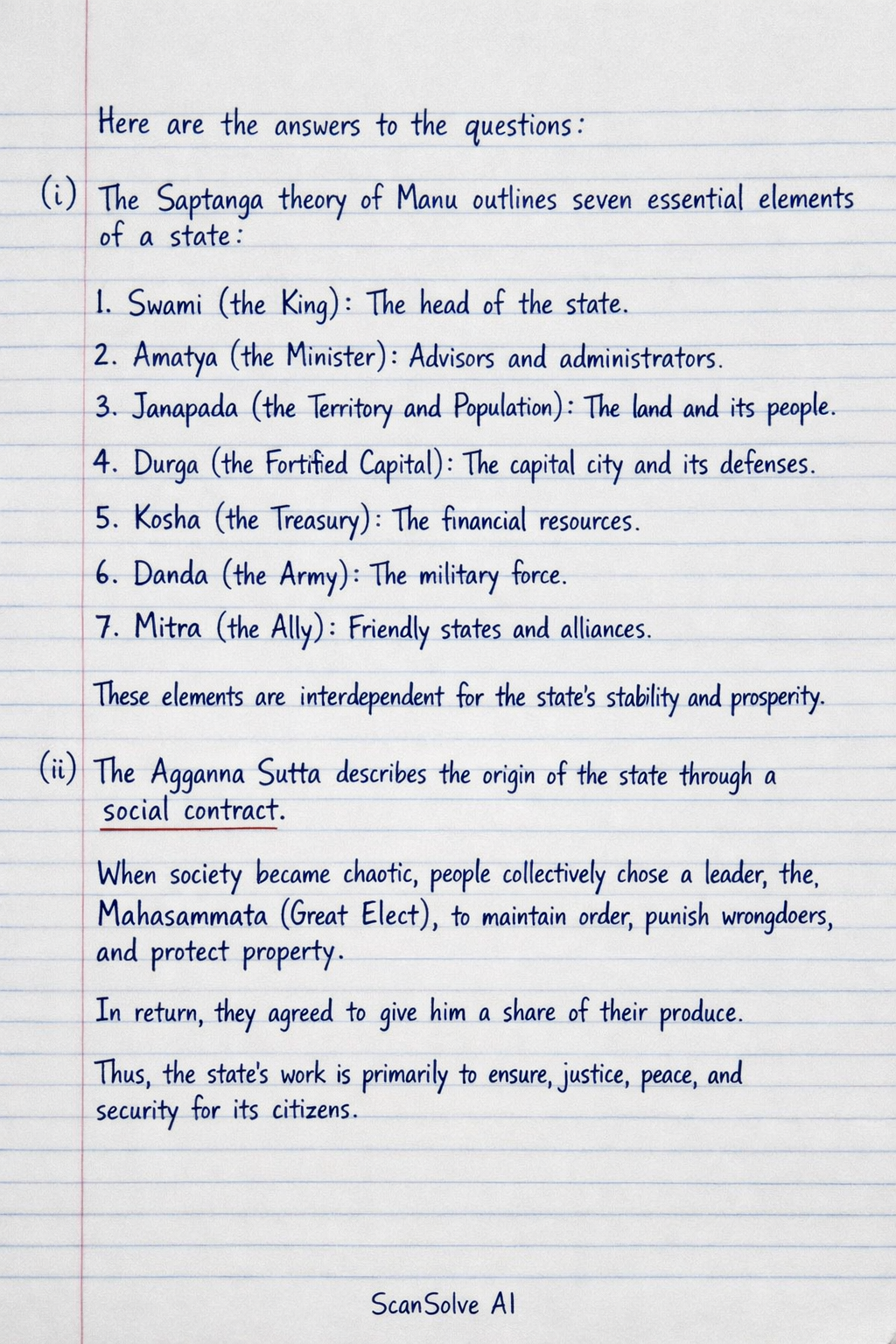
Here are the answers to the questions: i) The Saptanga theory of Manu outlines seven essential elements of a state: 1. Swami (the King): The head of the state. 2. Amatya (the Minister): Advisors and administrators. 3. Janapada (the Territory and Population): The land and its people. 4. Durga (the Fortified Capital): The capital city and its defenses. 5. Kosha (the Treasury): The financial resources. 6. Danda (the Army): The military force. 7. Mitra (the Ally): Friendly states and alliances. These elements are interdependent for the state's stability and prosperity. ii) The Agganna Sutta describes the origin of the state through a social contract. When society became chaotic, people collectively chose a leader, the Mahasammata (Great Elect), to maintain order, punish wrongdoers, and protect property. In return, they agreed to give him a share of their produce. Thus, the state's work is primarily to ensure justice, peace, and security for its citizens. iii) The policy of Sulh-i-Kul, meaning "universal peace," was formulated by Emperor Akbar and articulated by Abul Fazl. It promoted religious tolerance and harmony among all faiths and groups within the Mughal Empire. The policy aimed to create a stable and inclusive society where all subjects, regardless of their religion, were treated equally and lived in peace under the emperor's benevolent rule. iv) Mahadev Govind Ranade advocated for gradual and rational social reforms. He believed that social, political, and economic reforms were interconnected and should progress simultaneously. Ranade championed causes like women's education, widow remarriage, and the abolition of child marriage and caste distinctions. He emphasized using reason and persuasion to bring about societal change, rather than radical upheaval. Send me the next one 📸