
We read your photo as:
Ewo ní a máa n le sójú A) osun B) Làá C) Tíróò D) Àtíkè Qmọ́ tó bá mọwọ wẹ á bágbá jeun jẹmọ aṣa A) iranra-ẹni-lọwọ B) ikomojáde C) Ìbọ̀wọ̀-fágba D) ifowósowópò ki ni ìtúfọ?
ScanSolve AI Answer
Answer
Tíròò
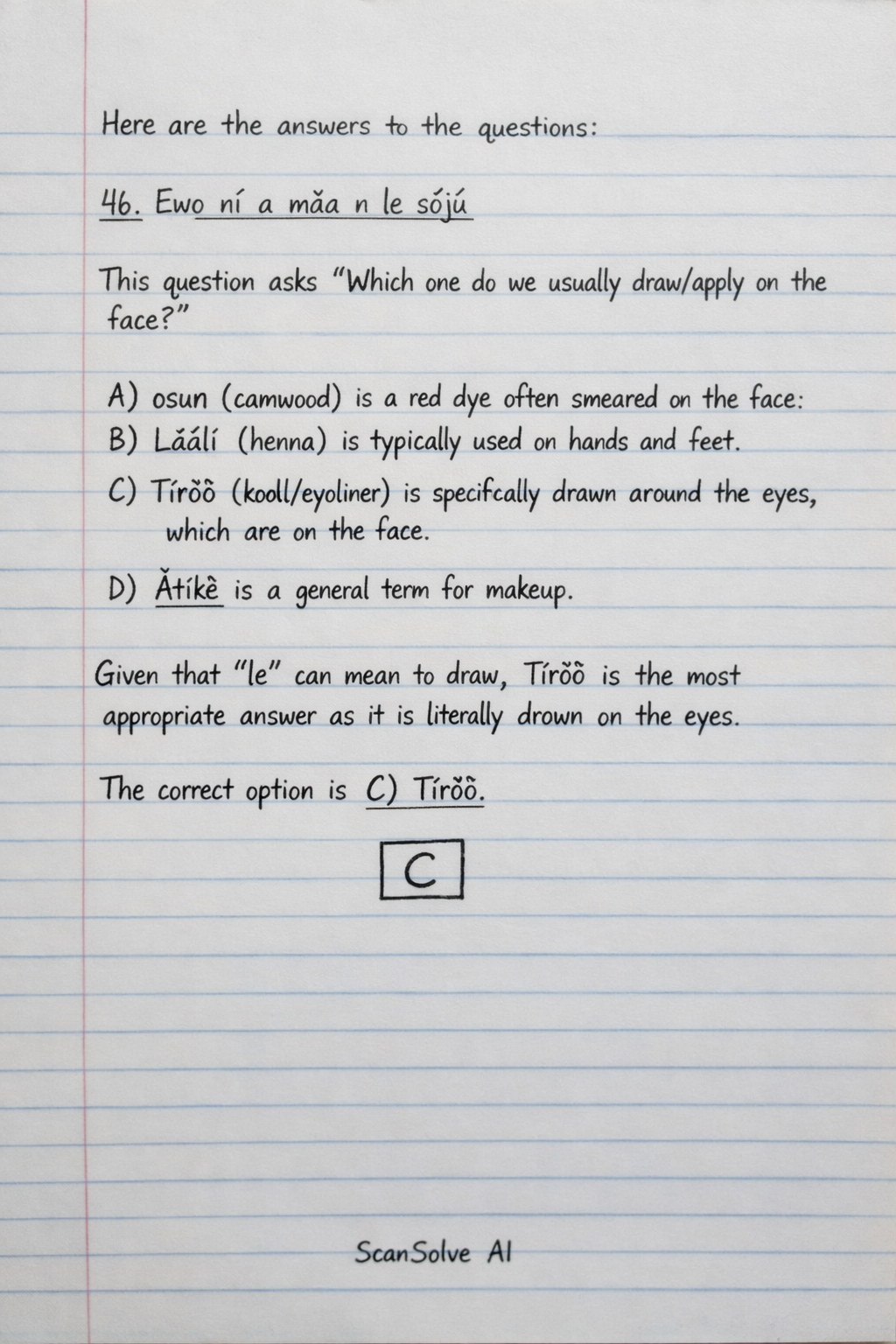
Here are the answers to the questions:
46. Ewo ní a máa n le sójú
This question asks "Which one do we usually draw/apply on the face?".
- A) osun (camwood) is a red dye often smeared on the face.
- B) Làálí (henna) is typically used on hands and feet.
- C) Tíròò (kohl/eyeliner) is specifically drawn around the eyes, which are on the face.
- D) Àtíkè is a general term for makeup. Given that "le" can mean to draw, Tíròò is the most appropriate answer as it is literally drawn on the eyes.
The correct option is C) Tíròò.
47. Ọmọ tó bá mọwọ wẹ á bágbà jẹun jẹmọ aṣa
This Yoruba proverb translates to "A child who knows how to wash their hands will eat with elders, according to tradition." It signifies that a well-behaved and respectful child will be accepted and honored by elders.
- A) iranra-ẹni-lọwọ means helping one another.
- B) ikomọjáde means child naming ceremony.
- C) ìbọwọ̀-fágbà means respect for elders.
- D) ifọwọ́sọwọ́pọ̀ means cooperation. The proverb directly emphasizes the importance of respect and proper conduct towards elders.
The correct option is C) ìbọwọ̀-fágbà.
48. Kí ni ìtúfọ̀?
This question asks "What is ìtúfọ̀?".
- Ìtúfọ̀ is a form of traditional Yoruba oral poetry or incantation. It involves rhythmic and often metaphorical speech used to express deep thoughts, invoke spiritual forces, or achieve specific outcomes, such as blessings, curses, or healing. It is a powerful form of verbal art in Yoruba culture.
Ìtúfọ̀ is a type of traditional Yoruba oral poetry or incantation, often used to express profound thoughts, invoke spiritual entities, or bring about specific results like blessings or healing.
Try one yourself
A new problem that tests the same skill.
Still stuck on this one?
Ask a follow-up, and the answer starts from this question.
More Languages Questions
Handwritten Step-by-Step Solution
Get this as a handwritten image on WhatsApp — like a tutor wrote it for you.
Try on WhatsApp