
We read your photo as:
Identify the ways in which the following are related to the society: 4.5.1 Xenophobia, 4.5.2 Homophobia. 4.6. How can we invent or reduce human rights violance?
ScanSolve AI Answer
Here are the answers to the questions:
4.1 Define the following terms:
4.1.1 Diversity
Diversity refers to the variety of differences among people, including differences in race, ethnicity, gender, age, religion, ability, sexual orientation, and socio-economic background. It acknowledges and values the unique characteristics and perspectives each individual brings.
4.1.2 Human rights
Human rights are fundamental rights inherent to all human beings, regardless of race, sex, nationality, ethnicity, language, religion, or any other status. These rights are universal, inalienable, and interdependent, ensuring dignity and equality for everyone.
4.1.3 Xenophobia
Xenophobia is the intense or irrational dislike or fear of people from other countries or cultures. It often manifests as prejudice, discrimination, or hostility towards foreigners or immigrants.
4.1.4 Patriotism
Patriotism is the feeling of love, devotion, and sense of attachment to one's country. It involves a sense of pride in one's country's achievements and a desire to defend it.
4.2 Identify any TWO causes of violations of human rights.
- Lack of education about human rights can lead to ignorance and disregard for these rights.
- Poverty and inequality can create conditions where basic rights like food, shelter, and healthcare are denied.
- Authoritarian governments often suppress dissent and individual freedoms, leading to widespread human rights abuses.
- Discrimination based on race, gender, religion, or other factors can result in the denial of equal rights and opportunities.
4.3 Explain the difference between discrimination and unfair discrimination.
Discrimination is treating someone differently based on a characteristic, which can sometimes be justifiable (e.g., age limits for driving). Unfair discrimination is treating someone differently in a way that is unjust, prejudicial, or harmful, based on characteristics like race, gender, or religion, and is usually illegal and unethical.
4.4 Explain the following terms pertaining to discrimination:
4.4.1 Racism
Racism is prejudice, discrimination, or antagonism directed against someone of a different race based on the belief that one's own race is superior. It involves systemic oppression and power imbalances.
4.4.2 Sexism
Sexism is prejudice, stereotyping, or discrimination, typically against women, on the basis of sex. It often involves the belief that one sex is inherently superior to the other.
4.5 Critically discuss the impact of the following to the society:
4.5.1 Prejudice
Prejudice negatively impacts society by fostering division, mistrust, and conflict between groups. It can lead to discrimination, social exclusion, and violence, hindering social cohesion and progress. It also limits individual opportunities and potential.
4.5.2 Stereotypes
Stereotypes oversimplify and generalize characteristics about entire groups of people, often inaccurately. They can lead to prejudice and discrimination, reinforce harmful biases, and limit individuals' self-perception and societal roles, preventing people from being seen as unique individuals.
4.6 How can we prevent or reduce human rights violations?
We can prevent or reduce human rights violations through education on human rights, promoting tolerance and respect for diversity, strengthening legal frameworks and enforcement mechanisms, and fostering active citizen participation in advocating for rights. Additionally, addressing root causes like poverty and inequality, and holding perpetrators accountable, are crucial.
Still stuck on this one?
Ask a follow-up, and the answer starts from this question.
More Law Questions
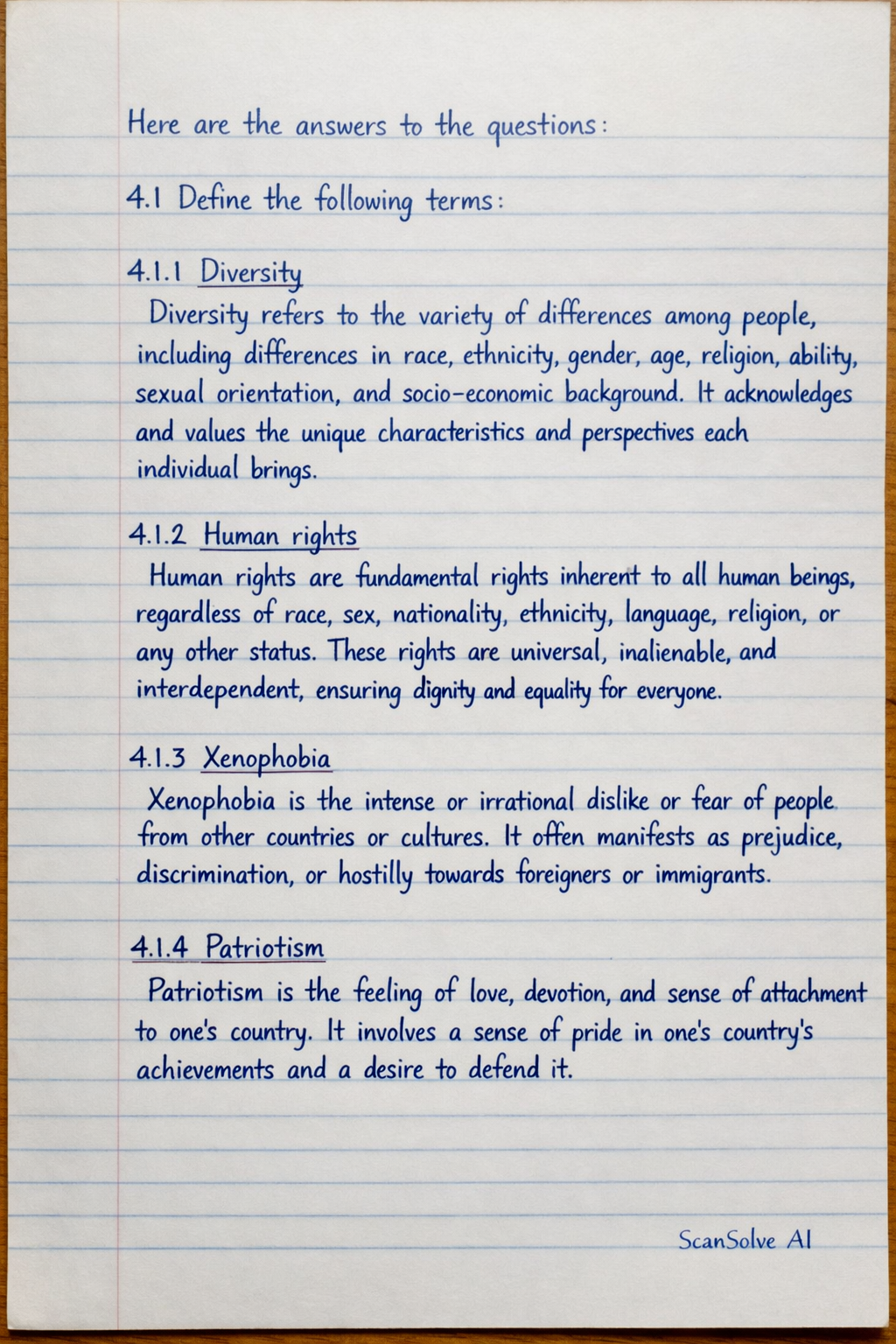
Handwritten Step-by-Step Solution
Get this as a handwritten image on WhatsApp — like a tutor wrote it for you.
Try on WhatsApp