
We read your photo as:
Explain human rights violation, freedom of expression, discrimination, state three forms of GBV, two institutions dealing with HR violations in SA, and three causes of GBV in your community.
ScanSolve AI Answer
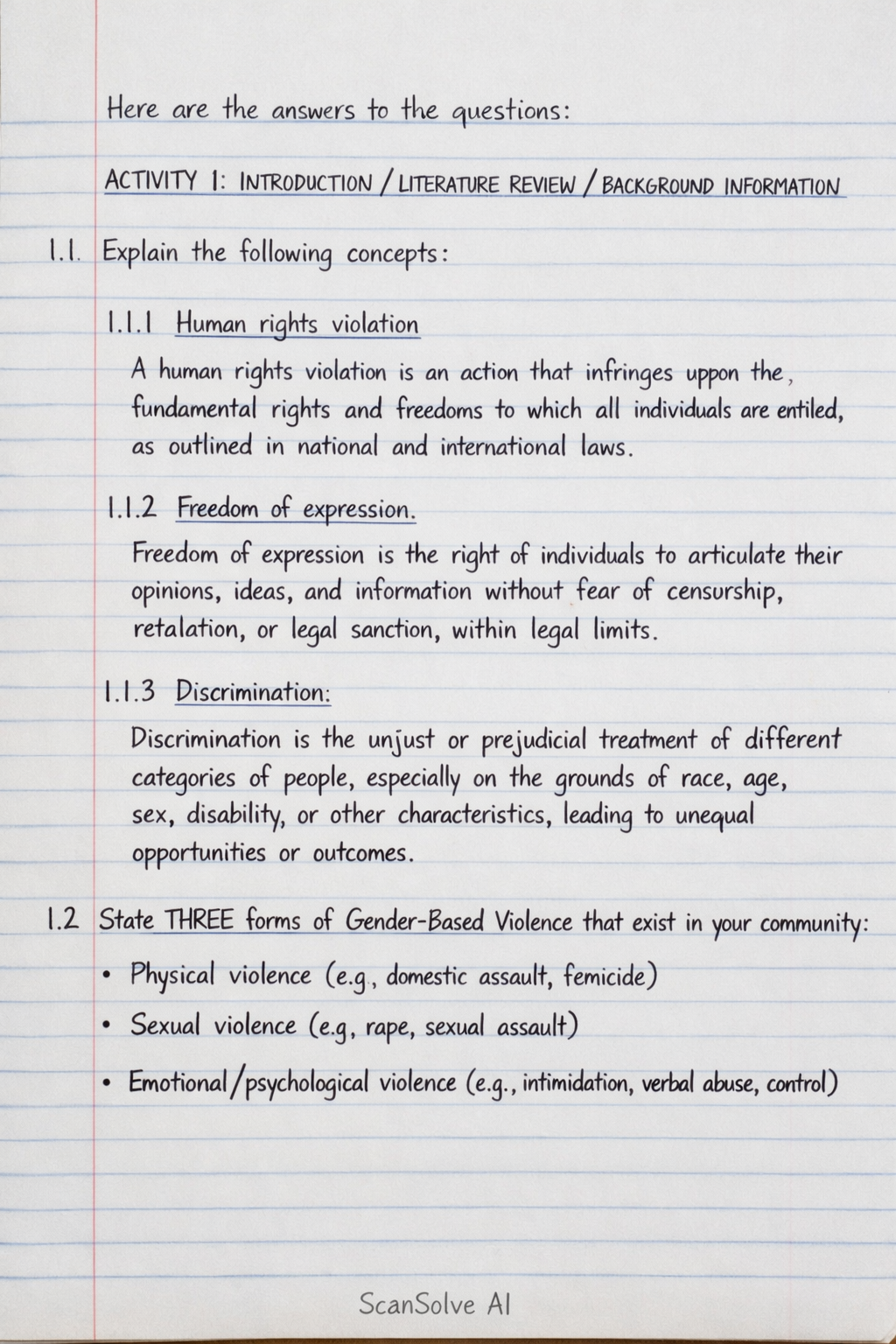
Here are the answers to the questions:
ACTIVITY 1: INTRODUCTION / LITERATURE REVIEW / BACKGROUND INFORMATION
1.1 Explain the following concepts:
1.1.1 Human rights violation
A human rights violation is an action that infringes upon the fundamental rights and freedoms to which all individuals are entitled, as outlined in national and international laws.
1.1.2 Freedom of expression
Freedom of expression is the right of individuals to articulate their opinions, ideas, and information without fear of censorship, retaliation, or legal sanction, within legal limits.
1.1.3 Discrimination
Discrimination is the unjust or prejudicial treatment of different categories of people, especially on the grounds of race, age, sex, disability, or other characteristics, leading to unequal opportunities or outcomes.
1.2 State THREE forms of Gender-Based Violence that exist in your community.
- Physical violence (e.g., domestic assault, femicide)
- Sexual violence (e.g., rape, sexual assault)
- Emotional/psychological violence (e.g., intimidation, verbal abuse, control)
1.3 Mention TWO state institutions that deal with human rights violation in South Africa.
- South African Human Rights Commission (SAHRC)
- Commission for Gender Equality (CGE)
1.4 Discuss THREE causes of gender-based violence in your community.
- Patriarchal norms and gender inequality: Societal structures that grant men more power and privilege, leading to a sense of entitlement and control over women.
- Poverty and unemployment: Economic stress can exacerbate tensions within households, leading to increased aggression and violence as a coping mechanism.
- Substance abuse: Alcohol and drug abuse can impair judgment and increase aggressive behavior, contributing to incidents of violence.
ACTIVITY 2
2.1 Name ONE law that protects South African citizens against Gender Based violence.
- Domestic Violence Act (No. 116 of 1998)
2.2 Describe TWO ways in which the above law protects citizens against human right violations.
- Protection Orders: The Act allows victims to obtain protection orders from a court, legally prohibiting the abuser from committing further acts of violence or harassment.
- Arrest without warrant: It empowers police officers to arrest an abuser without a warrant if they reasonably suspect that a protection order has been breached, ensuring immediate safety for the victim.
2.3 Recommend strategies that responsible citizens may use to help victims of Gender Based violence.
- Provide emotional support: Listen to victims without judgment, validate their experiences, and assure them that the violence is not their fault.
- Help access resources: Assist victims in finding and contacting support organizations, shelters, legal aid, and counseling services.
- Challenge harmful norms: Educate themselves and others about GBV, its causes, and effects, and actively challenge harmful stereotypes and patriarchal attitudes in their communities.
ACTIVITY 3
3.1 Define Gender Based Violence.
Gender-Based Violence (GBV) is violence directed against a person because of their gender. It is rooted in gender inequality, the abuse of power, and harmful norms, encompassing physical, sexual, emotional, and economic abuse.
3.2 Give FOUR reasons why victims of gender-based violence may feel hesitant to report this human right violation.
- Fear of retaliation: Victims often fear that reporting will lead to further violence or harm from the perpetrator.
- Stigma and shame: Societal stigma, cultural norms, and personal shame can prevent victims from disclosing their experiences.
- Economic dependence: Many victims are financially dependent on their abusers, making it difficult to leave or report for fear of losing financial support or housing.
- Lack of trust in the justice system: Victims may believe that the police or courts will not take their case seriously, or that they will not receive adequate protection or justice.
3.3 Briefly discuss the impact of gender-based violence in the:
-
Family GBV can lead to severe emotional trauma for family members, especially children, who may witness or experience the violence. It disrupts family stability, can lead to the breakdown of relationships, and perpetuates cycles of violence across generations.
-
Community GBV erodes social cohesion and trust within communities. It creates an environment of fear, limits women's participation in public life, and strains community resources (e.g., healthcare, social services) due to increased demand for support for victims.
3.4 Recommend THREE ways in which the government can combat gender-based violence in the society.
- Strengthen and enforce laws: Implement and rigorously enforce comprehensive laws against GBV, ensuring swift prosecution and appropriate sentencing for perpetrators.
- Provide support services: Establish and adequately fund shelters, counseling services, legal aid, and healthcare for victims of GBV.
- Public awareness campaigns and education: Launch national campaigns to raise awareness about GBV, challenge harmful gender norms, and educate the public on prevention and reporting mechanisms.
ACTIVITY 4
These are guided interview questions for the learner to conduct with community members, not questions to be answered directly.
Still stuck on this one?
Ask a follow-up, and the answer starts from this question.
More Law Questions
Handwritten Step-by-Step Solution
Get this as a handwritten image on WhatsApp — like a tutor wrote it for you.
Try on WhatsApp