Dismissal differs from resignation because dismissal: A. Is voluntary B. Is punitive C. Grants automatic pension D. Is temporary

Law
Dismissal differs from resignation because dismissal: A. Is voluntary B. Is punitive C. Grants automatic pension D. Is temporary

ScanSolve AI Answer

Answer

B

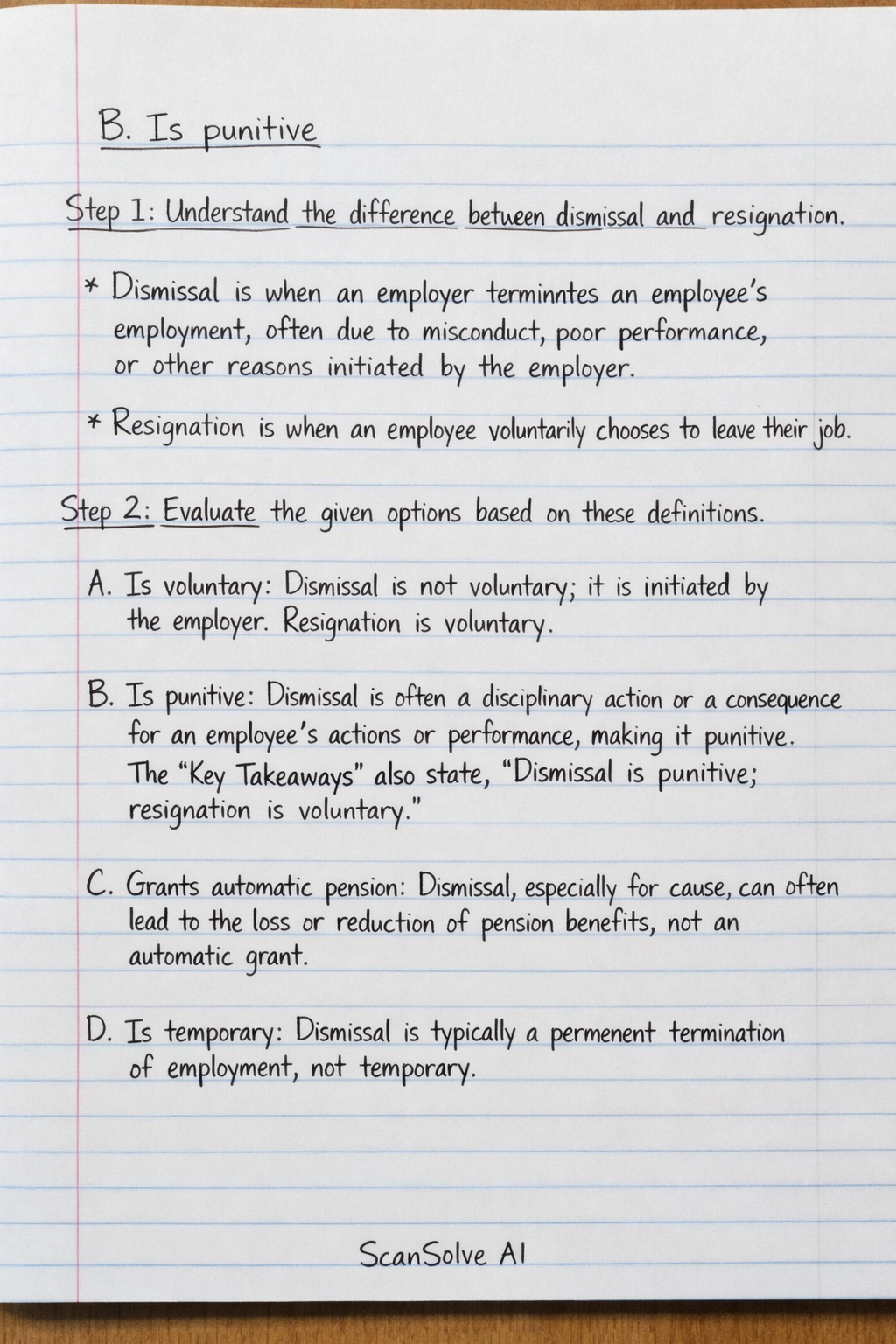
B. Is punitive

Step 1: Understand the difference between dismissal and resignation.

  • Dismissal is when an employer terminates an employee's employment, often due to misconduct, poor performance, or other reasons initiated by the employer.
  • Resignation is when an employee voluntarily chooses to leave their job.

Step 2: Evaluate the given options based on these definitions.

  • A. Is voluntary: Dismissal is not voluntary; it is initiated by the employer. Resignation is voluntary.
  • B. Is punitive: Dismissal is often a disciplinary action or a consequence for an employee's actions or performance, making it punitive. The "Key Takeaways" also state, "Dismissal is punitive; resignation is voluntary."
  • C. Grants automatic pension: Dismissal, especially for cause, can often lead to the loss or reduction of pension benefits, not an automatic grant.
  • D. Is temporary: Dismissal is typically a permanent termination of employment, not temporary.

Step 3: Select the option that accurately describes how dismissal differs from resignation. Based on the definitions and the provided hint, dismissal is punitive, while resignation is voluntary.

The final answer is B\boxed{B}. Send me the next one 📸

Was this helpful?

Need help with your own homework?

Get instant step-by-step solutions to any question. Free to start.

Ask Your Question
Handwritten step-by-step solution preview

Handwritten Step-by-Step Solution

Get this as a handwritten image on WhatsApp — like a tutor wrote it for you.

Try on WhatsApp

Still have questions?

Quick Answer

B. Is punitive Step 1: Understand the difference between dismissal and resignation.

Dismissal differs from resignation because dismissal: A. Is voluntary B. Is punitive C. Grants automatic pension D. Is temporary
Law

This law problem is solved step by step below, with detailed explanations to help you understand the method and arrive at the correct answer.

ScanSolve AI Answer
B. Is punitive Step 1: Understand the difference between dismissal and resignation. Dismissal* is when an employer terminates an employee's employment, often due to misconduct, poor performance, or other reasons initiated by the employer. Resignation* is when an employee voluntarily chooses to leave their job. Step 2: Evaluate the given options based on these definitions. A. Is voluntary: Dismissal is not* voluntary; it is initiated by the employer. Resignation is voluntary. B. Is punitive: Dismissal is often a disciplinary action or a consequence for an employee's actions or performance, making it punitive*. The "Key Takeaways" also state, "Dismissal is punitive; resignation is voluntary." C. Grants automatic pension: Dismissal, especially for cause, can often lead to the loss or reduction of pension benefits, not an automatic grant. D. Is temporary: Dismissal is typically a permanent termination of employment, not temporary. Step 3: Select the option that accurately describes how dismissal differs from resignation. Based on the definitions and the provided hint, dismissal is punitive, while resignation is voluntary. The final answer is B. Send me the next one 📸