

This law problem is solved step by step below, with detailed explanations to help you understand the method and arrive at the correct answer.
ScanSolve AI Answer
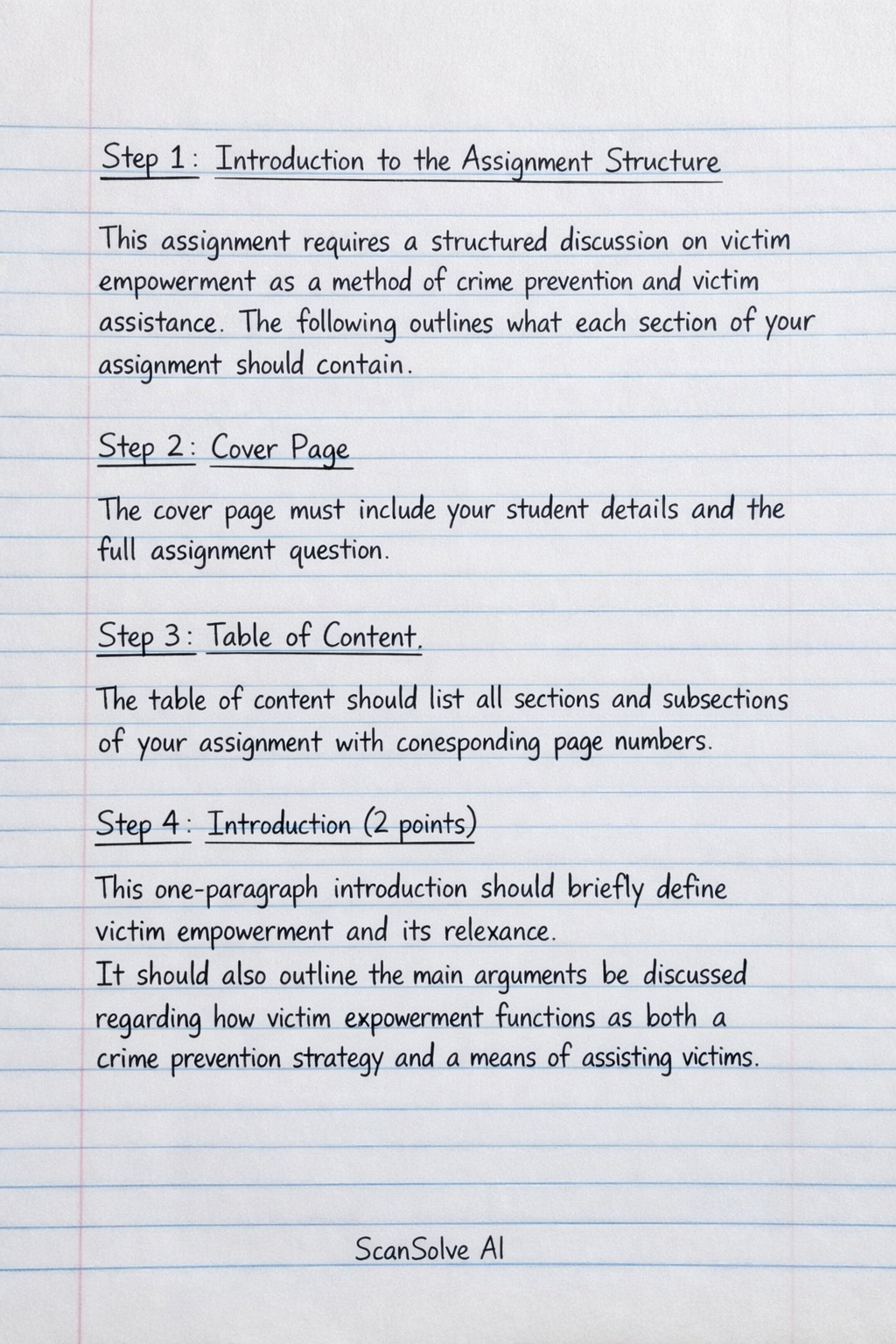
Step 1: Introduction to the Assignment Structure This assignment requires a structured discussion on victim empowerment as a method of crime prevention and victim assistance. The following outlines what each section of your assignment should contain. Step 2: Cover Page The cover page must include your student details and the full assignment question. Step 3: Table of Content The table of content should list all sections and subsections of your assignment with corresponding page numbers. Step 4: Introduction (2 points) This one-paragraph introduction should briefly define victim empowerment and its relevance. It should also outline the main arguments to be discussed regarding how victim empowerment functions as both a crime prevention strategy and a means of assisting victims. Step 5: Definition of Concepts (4 points) Crime prevention:* Explain this as proactive measures taken to reduce the likelihood of criminal acts and their negative consequences. Victim:* Define a victim as an individual who has suffered harm, including physical, emotional, or financial injury, as a result of a criminal offense. Victimisation:* Describe this as the process or experience of being harmed by a crime, encompassing the immediate and long-term impacts on the individual. Empathy:* Define empathy as the ability to understand and share the feelings of another, crucial for effective victim support. Step 6: Basic Rights of Victims (10 points) This section should detail the fundamental rights afforded to victims of crime. These typically include the right to information, protection, participation in the criminal justice process, and restitution or compensation for damages. Step 7: Steps to Assist Victims (5 points) Outline practical steps involved in providing immediate and ongoing assistance to victims. This may include initial crisis intervention, emotional support, safety planning, and guidance on reporting the crime. Step 8: Broad Guidelines for Dealing with a Victim (10 points) Discuss general principles for interacting with victims sensitively and effectively. Key guidelines include showing respect, maintaining confidentiality, avoiding re-victimization, offering non-judgmental support, and empowering the victim to make their own decisions. Step 9: Referral to Assist Victims (5 points) Explain the importance of referring victims to appropriate specialized services. This includes connecting them with medical care, psychological counseling, legal aid, social support networks, and financial assistance programs. Step 10: Benefits to Victims and Benefits to the Criminal Justice System (10 points) Benefits to victims:* Discuss how empowerment leads to psychological recovery, reduced feelings of helplessness, increased self-efficacy, and a lower risk of future victimization. Benefits to the criminal justice system:* Explain how empowered victims are more likely to cooperate with law enforcement, provide reliable testimony, and contribute to more effective prosecution, thereby enhancing public trust and overall crime prevention efforts. Step 11: Conclusion (2 points) This one-paragraph conclusion should summarize the main points discussed, reiterating how victim empowerment is a multifaceted approach that simultaneously aids victims in their recovery and contributes to broader crime prevention goals. Step 12: List of References (2 points) Provide a comprehensive list of all sources consulted and cited in your assignment, adhering to a consistent citation style. You must consult at least eight sources.