

This law problem is solved step by step below, with detailed explanations to help you understand the method and arrive at the correct answer.
ScanSolve AI Answer
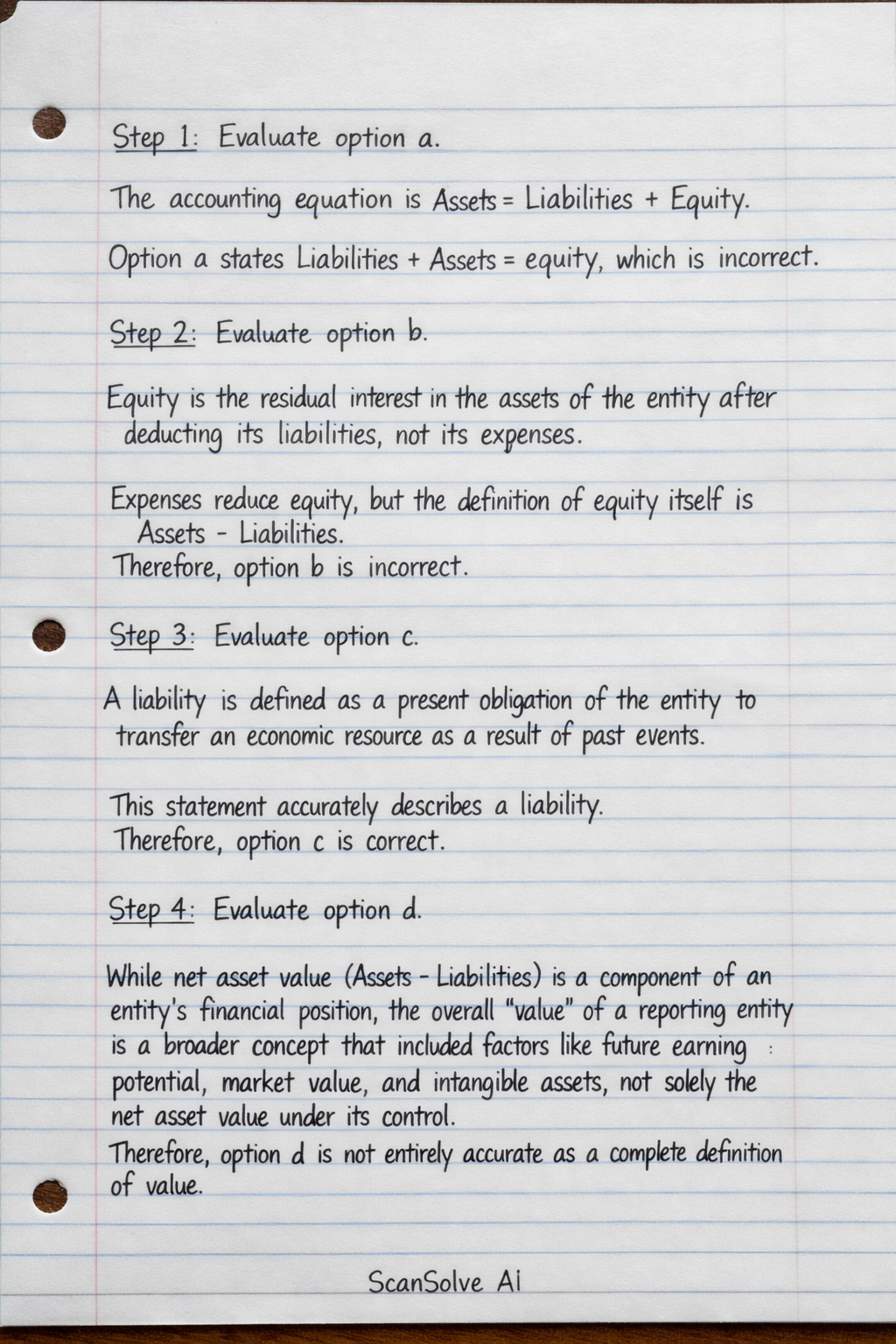
Step 1: Evaluate option a. The accounting equation is Assets = Liabilities + Equity. Option a states Liabilities + Assets = equity, which is incorrect. Step 2: Evaluate option b. Equity is the residual interest in the assets of the entity after deducting its liabilities, not its expenses. Expenses reduce equity, but the definition of equity itself is Assets - Liabilities. Therefore, option b is incorrect. Step 3: Evaluate option c. A liability is defined as a present obligation of the entity to transfer an economic resource as a result of past events. This statement accurately describes a liability. Therefore, option c is correct. Step 4: Evaluate option d. While net asset value (Assets - Liabilities) is a component of an entity's financial position, the overall "value" of a reporting entity is a broader concept that includes factors like future earning potential, market value, and intangible assets, not solely the net asset value under its control. Therefore, option d is not entirely accurate as a complete definition of value. The correct statement is: c) A liability is a future obligation of a reporting entity to transfer an economic resource as a result of a past event.