
We read your photo as:
There is no homework question visible in this image. The image shows a young woman sitting outdoors.
Physics
ScanSolve AI Answer
Answer
Rounding to three significant figures:
The acceleration due to gravity on the surface of Jupiter is approximately .
Was this helpful?
Try one yourself
A new problem that tests the same skill.
Still stuck on this one?
Ask a follow-up, and the answer starts from this question.
Got a different question?Ask your own question
More Physics Questions
QExtract the homework question from this image.QThe image contains a QR code. It is not possible to extract a homework question from it.QPlease extract the homework question from this image. Identify the academic subject.QExtract the homework question from this image. State the question concisely (under 200 chars)…
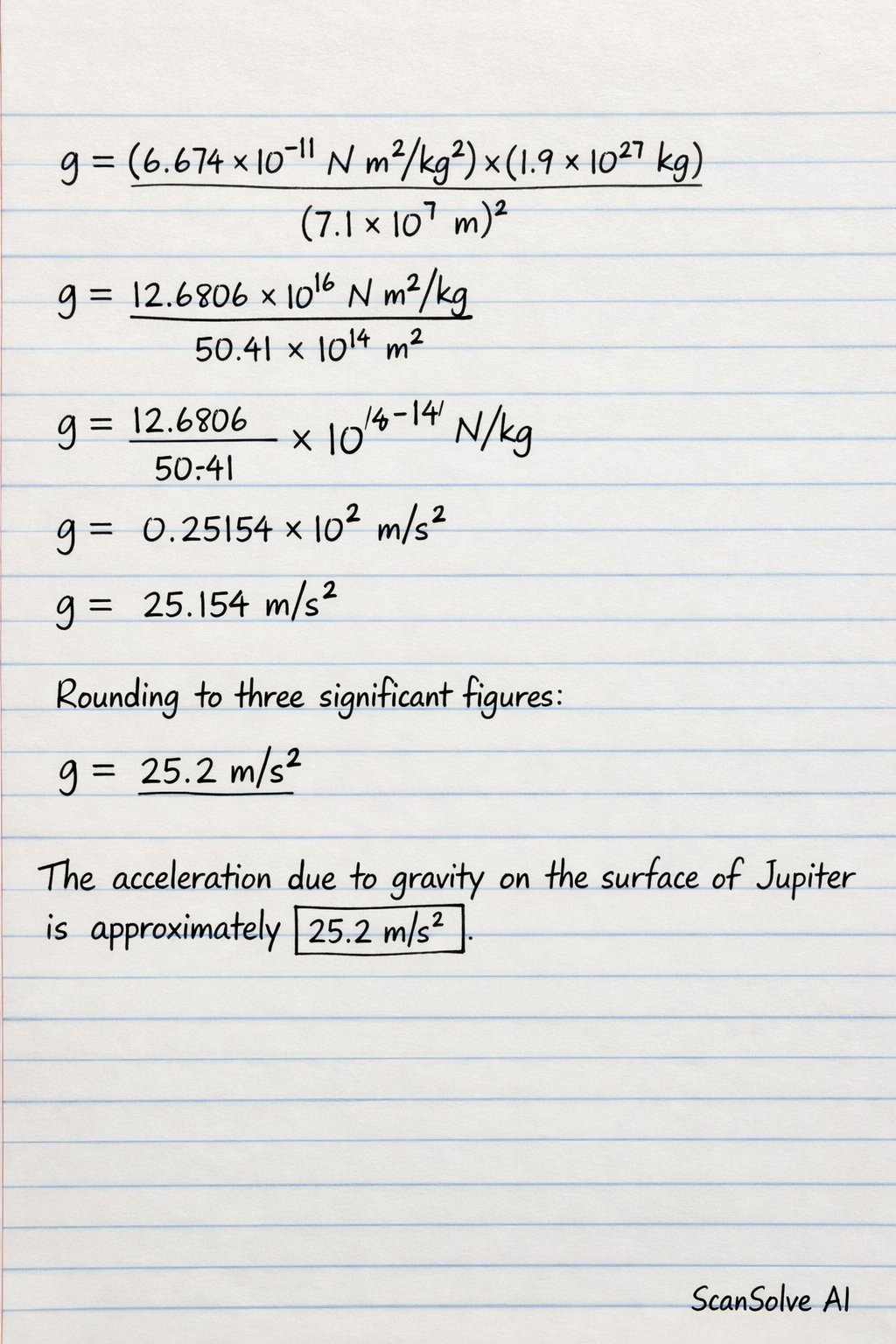
Handwritten Step-by-Step Solution
Get this as a handwritten image on WhatsApp — like a tutor wrote it for you.
Try on WhatsApp