
In hexadecimal if u borrow one does it mean u borrowed 16?
Mathematics
ScanSolve AI Answer
✅ Correct!
In hexadecimal (base 16), when you borrow 1 from the digit in the column to its left, it means you are adding (which is ) to the value of the digit in the current column.
This is similar to how in decimal (base 10) subtraction, when you borrow 1 from the tens place, you are adding to the ones place. The value you borrow is always equal to the base of the number system.
Was this helpful?
Still stuck on this one?
Ask a follow-up, and the answer starts from this question.
Got a different question?Ask your own question
More Mathematics Questions
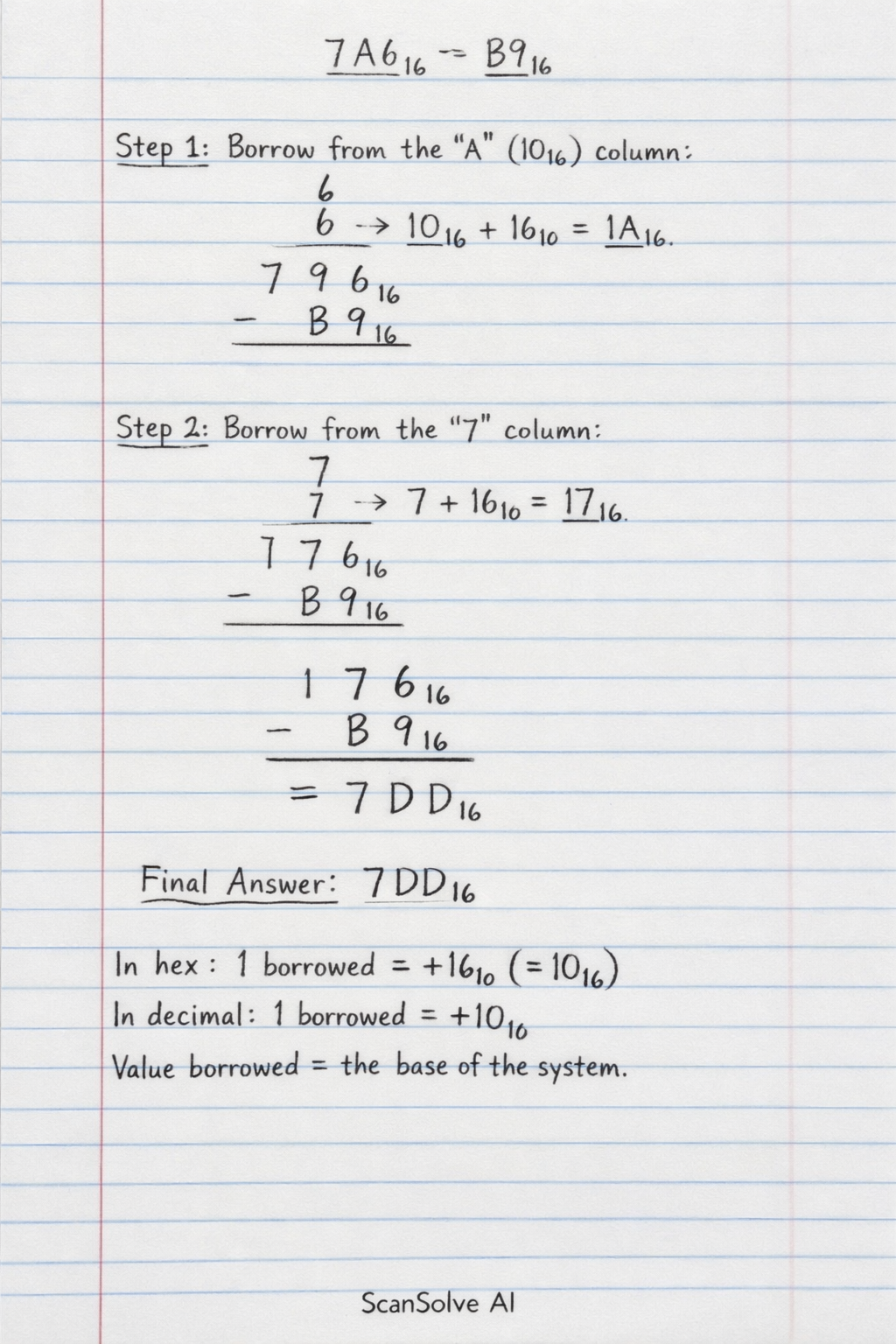
Handwritten Step-by-Step Solution
Get this as a handwritten image on WhatsApp — like a tutor wrote it for you.
Try on WhatsApp