

This mathematics problem involves applying core mathematical principles and formulas. Below you will find a complete step-by-step solution with detailed explanations for each step, helping you understand not just the answer but the method behind it.
ScanSolve AI Answer
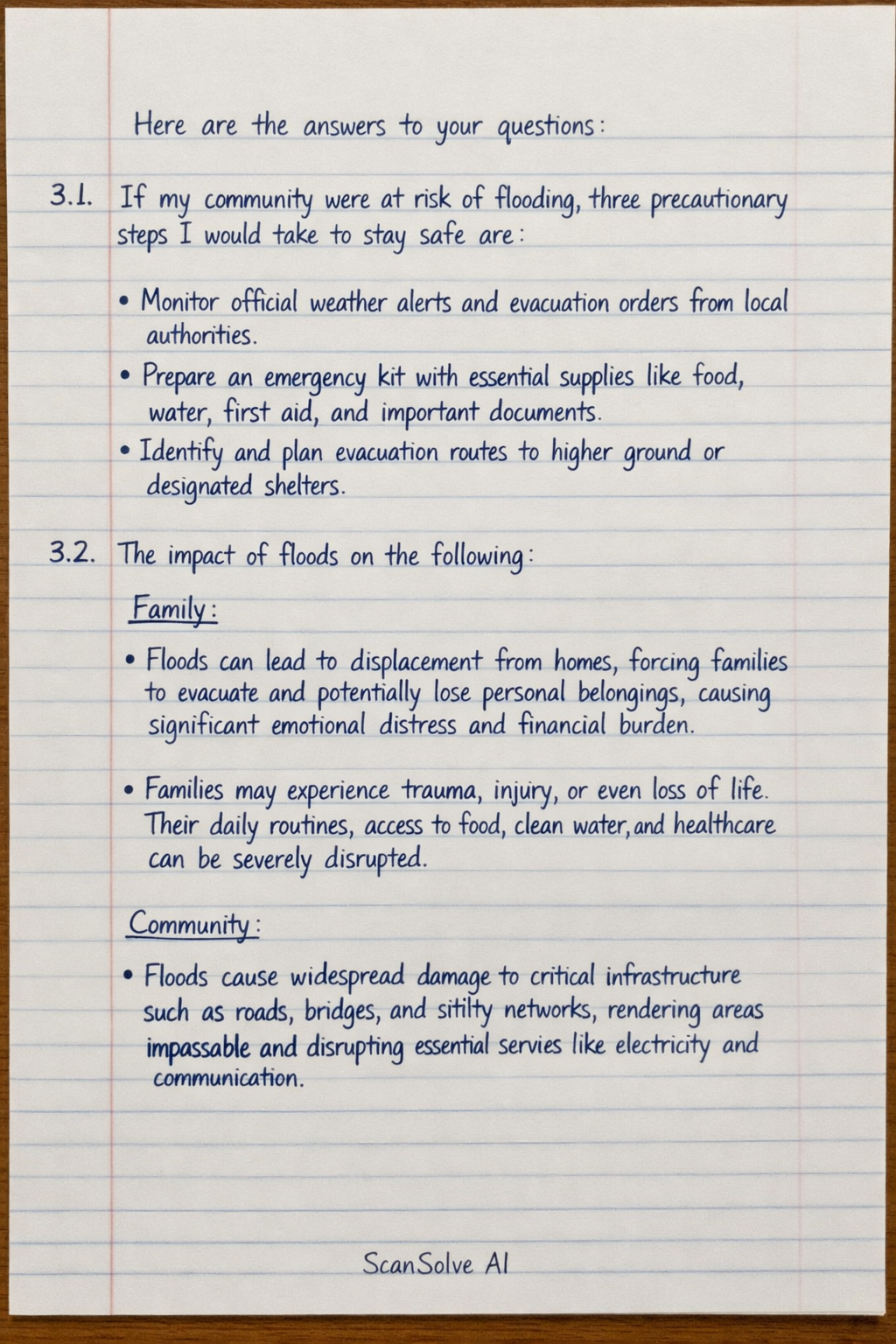
Here are the answers to your questions: 3.1. If my community were at risk of flooding, three precautionary steps I would take to stay safe are: Monitor official weather alerts and evacuation orders* from local authorities. Prepare an emergency kit* with essential supplies like food, water, first aid, and important documents. Identify and plan evacuation routes* to higher ground or designated shelters. 3.2. The impact of floods on the following: Family: Floods can lead to displacement from homes*, forcing families to evacuate and potentially lose personal belongings, causing significant emotional distress and financial burden. Families may experience trauma, injury, or even loss of life*, and their daily routines, access to food, clean water, and healthcare can be severely disrupted. Community: Floods cause widespread damage to critical infrastructure* such as roads, bridges, and utility networks, rendering areas impassable and disrupting essential services like electricity and communication. Communities face economic losses* due to damaged businesses, agricultural land, and property, alongside an increased risk of waterborne diseases and public health crises. Teaching and learning: Floods often result in the suspension of schooling*, as mentioned in the text, leading to significant loss of valuable learning time for students and disruption of academic calendars. School buildings and facilities can suffer severe structural damage*, making them unsafe or unusable for teaching, which further prolongs the disruption to education. 3.3. ONE way the government could deal with flooding in affected areas of Limpopo is to: Invest in and implement robust early warning systems and flood control infrastructure.* This would involve enhancing weather monitoring capabilities to predict heavy rainfall and potential floods more accurately, and then effectively communicating these warnings to communities in real-time. Simultaneously, the government could construct or upgrade physical infrastructure such as dams, levees, and improved drainage systems in flood-prone areas to mitigate the impact of rising water levels and protect communities and essential services.