
We read your photo as:
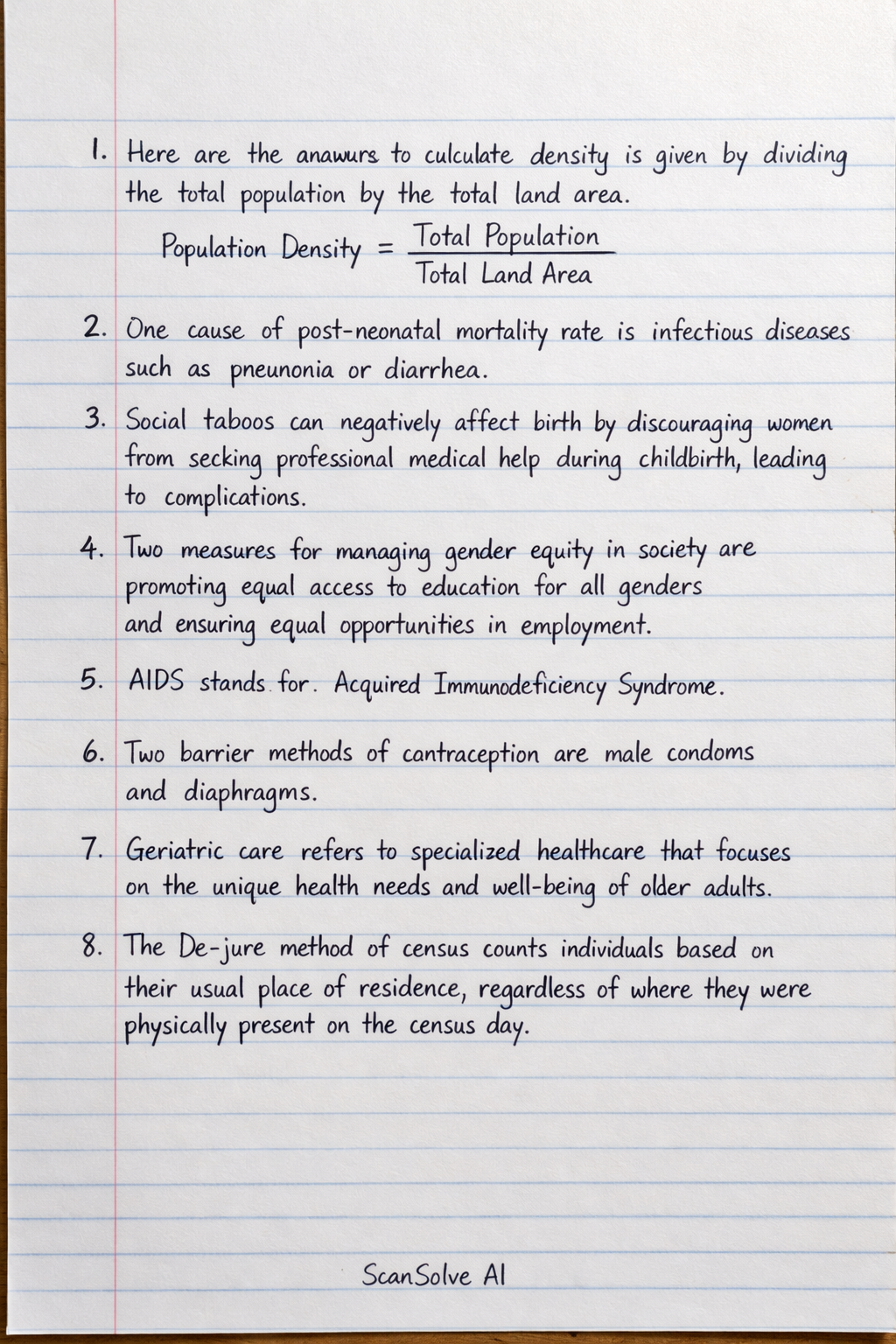
The formula to calculate population density is given by dividing the total population by the total land area.
Physics
ScanSolve AI Answer
Here are the answers to the questions:
- The formula to calculate population density is given by dividing the total population by the total land area.
- One cause of post-neonatal mortality rate is infectious diseases such as pneumonia or diarrhea.
- Social taboos can negatively affect birth by discouraging women from seeking professional medical help during childbirth, leading to complications.
- Two measures for managing gender equity in society are promoting equal access to education for all genders and ensuring equal opportunities in employment.
- AIDS stands for Acquired Immunodeficiency Syndrome.
- Two barrier methods of contraception are male condoms and diaphragms.
- Geriatric care refers to specialized healthcare that focuses on the unique health needs and well-being of older adults.
- The De-jure method of census counts individuals based on their usual place of residence, regardless of where they were physically present on the census day.
- The first census in Nepal was taken in 1911 A.D.
- The last goal (Goal 17) of the Sustainable Development Goals is Partnerships for the Goals.
- The median is the middle value in a dataset when the values are arranged in ascending or descending order.
Was this helpful?
Still stuck on this one?
Ask a follow-up, and the answer starts from this question.
Got a different question?Ask your own question
More Physics Questions
Handwritten Step-by-Step Solution
Get this as a handwritten image on WhatsApp — like a tutor wrote it for you.
Try on WhatsApp