
We read your photo as:
Identify electrical conductors in your environment. Make a list of materials or objects in your home that can conduct electricity.
Physics
ScanSolve AI Answer
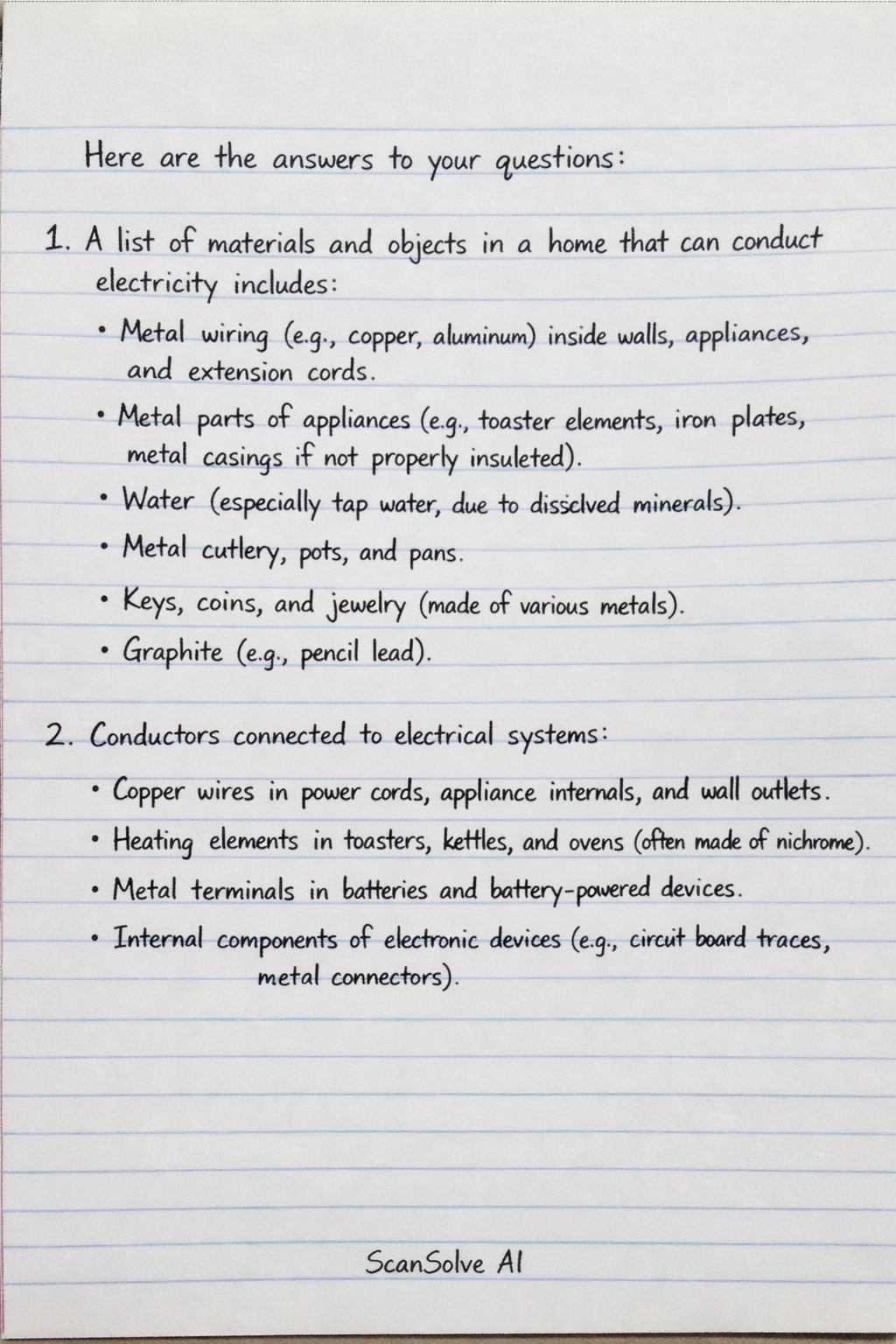
Here are the answers to your questions:
-
A list of materials and objects in a home that can conduct electricity includes:
- Metal wiring (e.g., copper, aluminum) inside walls, appliances, and extension cords.
- Metal parts of appliances (e.g., toaster elements, iron plates, metal casings if not properly insulated).
- Water (especially tap water, due to dissolved minerals).
- Metal cutlery, pots, and pans.
- Keys, coins, and jewelry (made of various metals).
- Graphite (e.g., pencil lead).
-
• Conductors connected to electrical systems:
- Copper wires in power cords, appliance internals, and wall outlets.
- Heating elements in toasters, kettles, and ovens (often made of nichrome).
- Metal terminals in batteries and battery-powered devices.
- Internal components of electronic devices (e.g., circuit board traces, metal connectors).
- Conductors not connected to electrical systems but often used near them:
- Metal cutlery (forks, knives, spoons).
- Metal pots and pans.
- Water in sinks, bathtubs, or spilled on surfaces.
- Keys, coins, and jewelry.
- Metal tools (e.g., screwdrivers, wrenches).
-
A leaflet on how to use electrical conductors safely could include:
- Never touch electrical outlets or exposed wires with wet hands or metal objects.
- Keep water away from electrical appliances and power sources.
- Always use insulated tools when working with electricity.
- Ensure electrical cords are not frayed or damaged and replace them if they are.
- Do not overload electrical sockets with too many appliances.
- Teach children about electrical safety and the dangers of touching conductors.
Was this helpful?
Still stuck on this one?
Ask a follow-up, and the answer starts from this question.
Got a different question?Ask your own question
More Physics Questions
QList the properties of materials suitable for making pots, electrical wires, and barbed wire fences…QIdentify dangers with electrical conductors. Look at the pictures and answer the questions that…QConductors and non-conductors/Insulator week 1-2 Use the words in the bars to complete the Paragraph…QWhy do electricians wear rubber gloves? 5. Why is it important to know if a material is a conductor…QThe table shows the resistivity of some materials at 20°C. Which of the following is the best…
Handwritten Step-by-Step Solution
Get this as a handwritten image on WhatsApp — like a tutor wrote it for you.
Try on WhatsApp