
We read your photo as:
As a learner of physics; (a) Determine whether the balloon will fly or not. (b) Address the demands of the co-operator
ScanSolve AI Answer
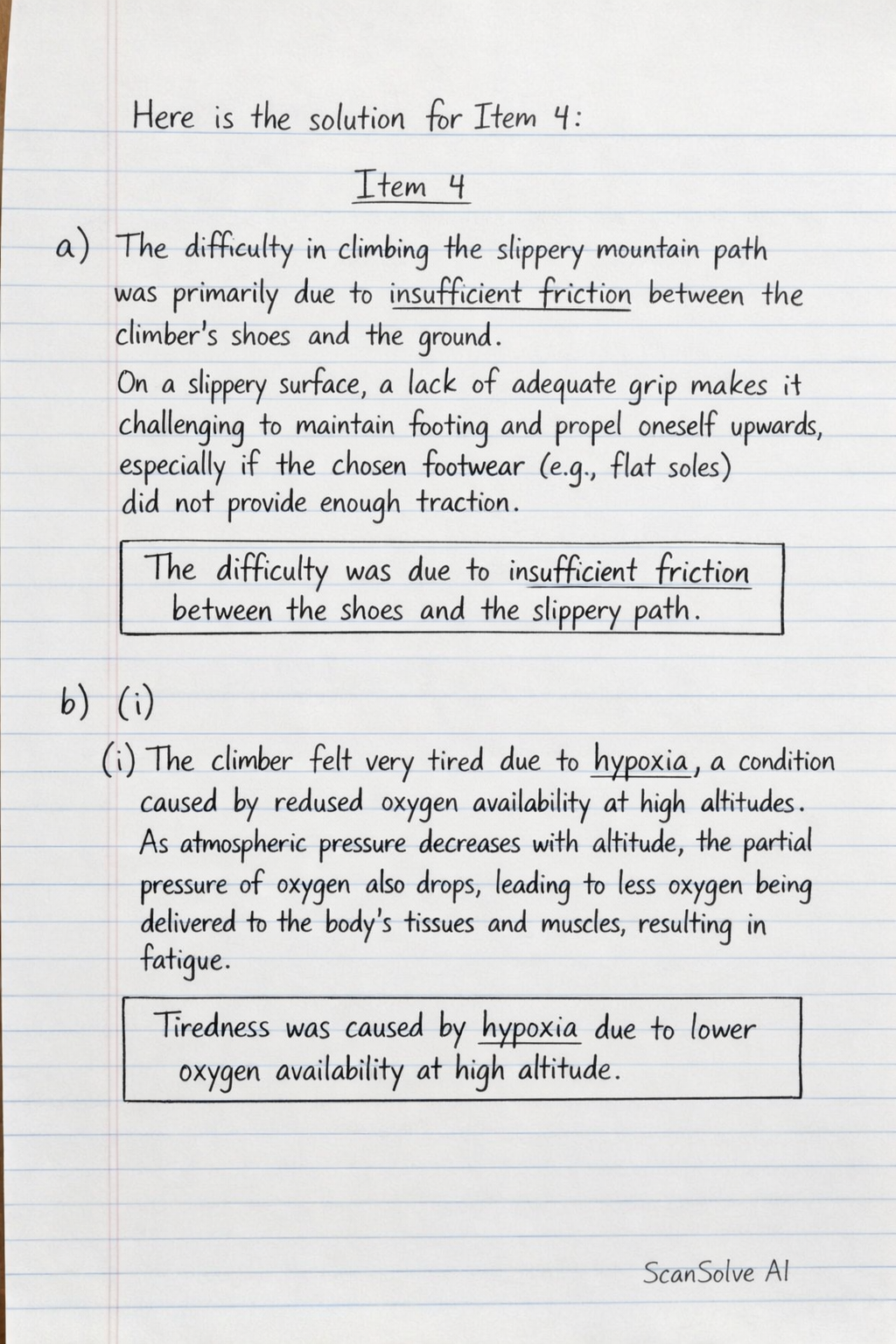
Here is the solution for Item 4:
Item 4
a) The difficulty in climbing the slippery mountain path was primarily due to insufficient friction between the climber's shoes and the ground. On a slippery surface, a lack of adequate grip makes it challenging to maintain footing and propel oneself upwards, especially if the chosen footwear (e.g., flat soles) did not provide enough traction.
b)
(i) The climber felt very tired due to hypoxia, a condition caused by reduced oxygen availability at high altitudes. As atmospheric pressure decreases with altitude, the partial pressure of oxygen also drops, leading to less oxygen being delivered to the body's tissues and muscles, resulting in fatigue.
(ii) Nose bleeding occurred because of the reduced atmospheric pressure at higher altitudes. This lower external pressure increases the relative internal pressure within the delicate capillaries in the nose, making them more susceptible to rupture and bleeding.
c) Difficulty in getting food ready (cooking) is attributed to the lower boiling point of water at higher altitudes. With decreased atmospheric pressure, water boils at a temperature below , meaning food cooked in boiling water will take longer to cook thoroughly at this lower temperature.
Still stuck on this one?
Ask a follow-up, and the answer starts from this question.
More Physics Questions
Handwritten Step-by-Step Solution
Get this as a handwritten image on WhatsApp — like a tutor wrote it for you.
Try on WhatsApp