

This physics problem tests your understanding of fundamental physical laws and their applications. The step-by-step solution below breaks down the problem using relevant equations and physical reasoning.
ScanSolve AI Answer
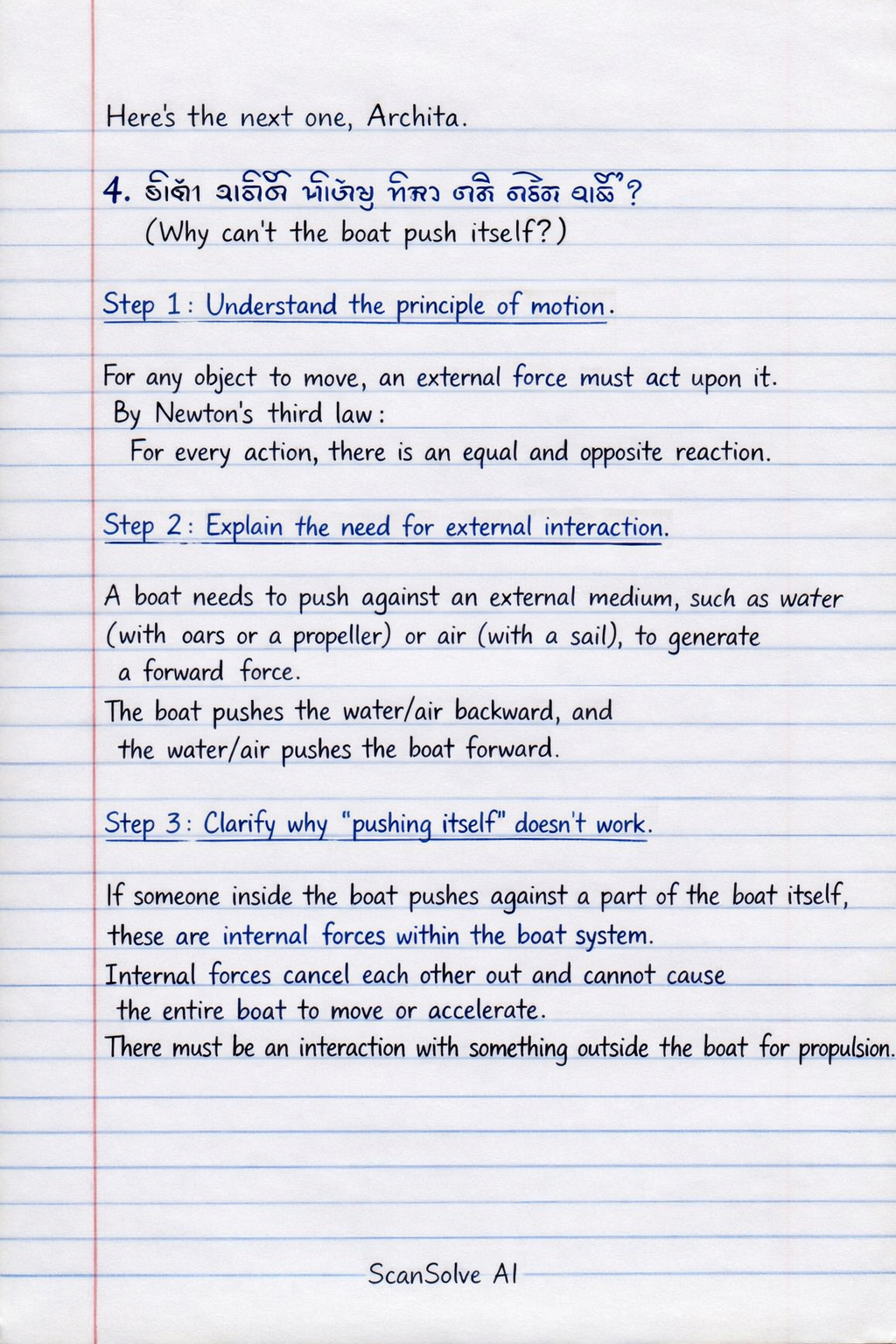
Here's the next one, Archita. ୪. ଡିଙ୍ଗା କାହିଁକି ନିଜକୁ ନିଜେ ଠେଲି ପାରିବ ନାହିଁ? (Why can't the boat push itself?) Step 1: Understand the principle of motion. For any object to move, an external force must act upon it. This is based on Newton's third law of motion, which states that for every action, there is an equal and opposite reaction. Step 2: Explain the need for external interaction. A boat needs to push against an external medium, such as water (with oars or a propeller) or air (with a sail), to generate a forward force. The boat pushes the water/air backward, and the water/air pushes the boat forward. Step 3: Clarify why "pushing itself" doesn't work. If someone inside the boat pushes against a part of the boat itself, these are internal forces within the boat system. Internal forces cancel each other out and cannot cause the entire boat to move or accelerate. There must be an interaction with something outside the boat for propulsion. ଡଙ୍ଗା ନିଜକୁ ନିଜେ ଠେଲି ପାରିବ ନାହିଁ କାରଣ ଗତି କରିବା ପାଇଁ ଏକ ବାହ୍ୟ ଶକ୍ତିର ଆବଶ୍ୟକତା ରହିଛି। ନ୍ୟୁଟନଙ୍କ ତୃତୀୟ ନିୟମ ଅନୁଯାୟୀ, ପ୍ରତ୍ୟେକ କ୍ରିୟା ପାଇଁ ଏକ ସମାନ ଏବଂ ବିପରୀତ ପ୍ରତିକ୍ରିୟା ରହିଛି। ଡଙ୍ଗାକୁ ଆଗକୁ ବଢ଼ାଇବା ପାଇଁ, ଏହାକୁ ପାଣି କିମ୍ବା ପବନ ଭଳି କୌଣସି ବାହ୍ୟ ମାଧ୍ୟମକୁ ପଛକୁ ଠେଲିବାକୁ ପଡିବ। ଡଙ୍ଗା ଭିତରେ ଥିବା କୌଣସି ବସ୍ତୁକୁ ଠେଲିବା ଦ୍ୱାରା କେବଳ ଆଭ୍ୟନ୍ତରୀଣ ଶକ୍ତି ସୃଷ୍ଟି ହୁଏ, ଯାହା ସମଗ୍ର ଡଙ୍ଗାକୁ ଗତି କରାଇ ପାରେ ନାହିଁ। 3 done, 2 left today. You're making progress.